Glossary: Dutch exam words
The 54 Dutch words of the car theory exam (B), with what they mean, the law that defines them and the sections that explain them. Free, no account needed.
Words the exam keeps in Dutch
Even in the English exam these stay Dutch. Know them by their Dutch name.
Subject 1 of 8Use of the road
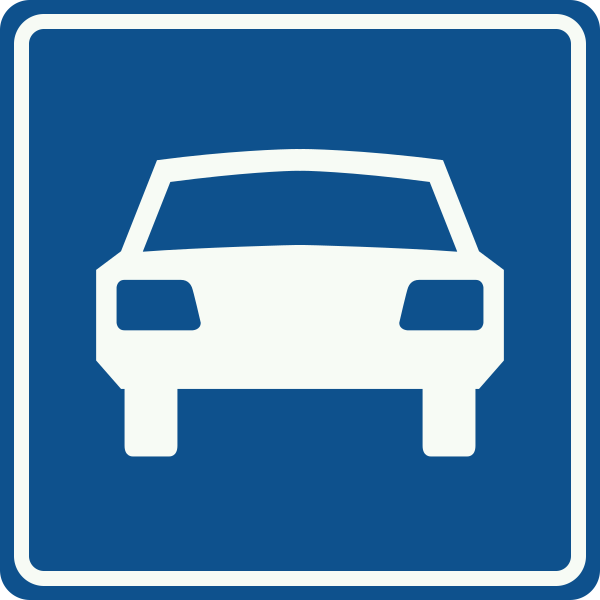
autoweg
- A road with sign G3. Without other signs 100 km/h applies there.
- In the law: RVV 1990 art. 1
- Explained in
bebouwde kom
built-up area- The area between sign H1 and sign H2. Without other signs 50 km/h applies there.
- Explained in
berm
verge- The strip beside the carriageway, often grass or gravel. It is not part of the carriageway.
- Explained in
brommobiel
- A small car that may not go faster than 45 km/h. It follows the rules for cars.
- In the law: RVV 1990 art. 2a
- Explained in
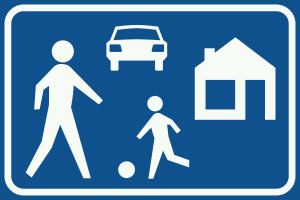
erf
- A residential area with sign G5, where people walk and play on the street too. You drive at 15 km/h at most.
- Explained in
fiets-strook
cycle lane- A part of the carriageway between lines, with bicycles painted on it. With a solid line it is for cyclists only.
- In the law: RVV 1990 art. 1
- Explained in
parkeerschijf
parking disc- A blue disc behind the windscreen showing the whole or half hour you started parking.
- In the law: RVV 1990 art. 25 lid 3
- Explained in
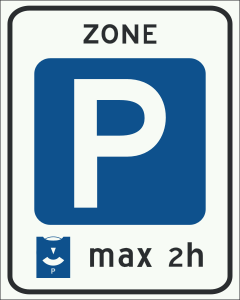
parkeerschijf-zone
parking-disc zone- An area between sign E10 and sign E11. You only park in bays or along a blue line there, with your parking disc.
- In the law: RVV 1990 art. 25 lid 1
- Explained in
parkeren
parking- Leaving your vehicle standing for anything other than getting in or out or loading and unloading straight away.
- In the law: RVV 1990 art. 1
- Explained in
rij-strook
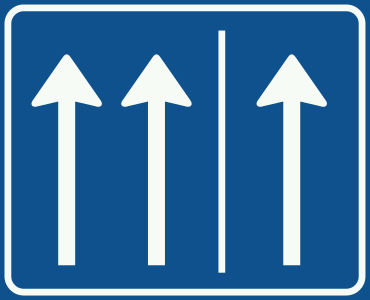
lane- A part of the carriageway between lines, wide enough for a car.
- In the law: RVV 1990 art. 1
- Explained in
rijbaan
carriageway- The part of the road where cars drive. A cycle lane is part of it; a cycle path, the verge and the pavement are not.
- In the law: RVV 1990 art. 1
- Explained in
snorfiets
- A moped that can't go faster than 25 km/h, with a blue number plate. It follows the rules for cyclists.
- In the law: RVV 1990 art. 2b
- Explained in
speed pedelec
- A fast electric bicycle that assists up to 45 km/h. It is a moped, with a moped's rules.
- In the law: RVV 1990 art. 1
- Explained in
vluchtstrook
hard shoulder- The strip beside a motorway's carriageway, behind a solid line. Only for breakdowns and emergencies.
- In the law: RVV 1990 art. 1
- Explained in
voorsorteren
getting in lane- Choosing in good time the place on the road that fits the way you want to go.
- In the law: RVV 1990 art. 17 lid 1
- Explained in

Subject 2 of 8Priority
afbuigende voorrangsweg
bending priority road- A priority road that bends at a junction. A plate under sign B1 shows how it runs. Following it counts as going straight on; leaving it counts as turning.
- Explained in
bijzondere manoeuvre
special manoeuvre- Moving off, reversing, turning round, coming out of an exit or changing lanes. You then let all other traffic go first.
- In the law: RVV 1990 art. 54
- Explained in
haaientanden
shark teeth- White triangles on the road, pointing at you. You give way to the traffic on the road you are coming to.
- In the law: RVV 1990 art. 80
- Explained in
kruispunt
junction- A place where roads cross or split. A T-junction is a junction too. An exit is not.
- In the law: RVV 1990 art. 1
- Explained in
onverharde weg
unpaved road- A road without asphalt, bricks or tiles, such as a sand road or a gravel track.
- In the law: RVV 1990 art. 15 lid 2 onderdeel a
- Explained in
uitrit
exit- Where you drive onto the road from a property, a car park or an erf. You then let all traffic go first.
- In the law: RVV 1990 art. 54
- Explained in
verkeersregelaar
traffic controller- Someone in a yellow vest saying verkeersregelaar who directs the traffic. You follow their signals, like a police officer's.
- In the law: RVV 1990 art. 82
- Explained in
voorrang verlenen
give way- Letting the other carry on without having to brake or swerve.
- In the law: RVV 1990 art. 1
- Explained in
voorrangskruispunt
priority intersection- A junction where you have priority, shown by sign B3, B4 or B5 before it.
- Explained in
voorrangsvoertuig
emergency vehicle- A police car, ambulance or fire engine with a flashing blue light and a siren. You always let it go first.
- In the law: RVV 1990 art. 50
- Explained in
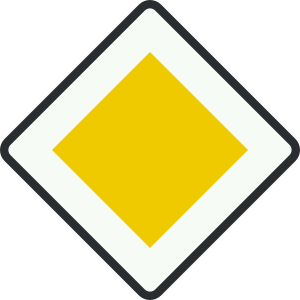
voorrangsweg
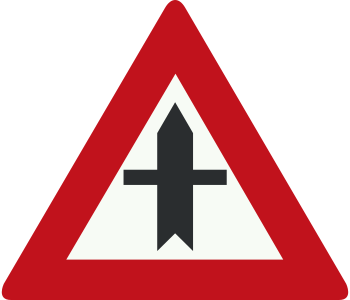
priority road- A road with sign B1. At the junctions along it, you have priority over traffic from the side roads.
- Explained in
Subject 3 of 8Special roads
bus-strook
bus lane- A part of the carriageway between lines with BUS or LIJNBUS on it. Only for buses and trams.
- In the law: RVV 1990 art. 1
- Explained in
hectometerbordje
hectometre board- A small green board along the motorway, every 100 metres. It says where you are.
- Explained in
invoeg-strook
acceleration lane- The strip beside the main carriageway, behind a block marking, that you use to join the road.
- In the law: RVV 1990 art. 1
- Explained in
onderbord
sub-sign- A small sign under a traffic sign. It says for whom, when or where the sign above holds.
- In the law: RVV 1990 art. 67 lid 1
- Explained in
overweg
level crossing- A place where the road crosses a railway. A train always goes first there.
- In the law: RVV 1990 art. 15a lid 2
- Explained in
spits-strook
rush-hour lane- A hard shoulder that is a lane while sign C23-01 is shown above it.
- In the law: RVV 1990 art. 1
- Explained in
turborotonde
turbo roundabout- A roundabout with two lanes, separated by a raised divider. You choose your lane before you drive onto it.
- Explained in
uitrij-strook
exit lane- The strip beside the main carriageway, behind a block marking, that you use to leave the road.
- In the law: RVV 1990 art. 1
- Explained in
verdrijvingsvlak
hatched area- An area of white diagonal stripes on the road, often at an exit. You don't drive across it.
- In the law: RVV 1990 art. 77 lid 1
- Explained in
Subject 4 of 8Safe driving and emergencies
dimlicht
dipped headlights- The ordinary headlights for the dark. They shine downwards, so they don't dazzle oncoming traffic.
- In the law: RVV 1990 art. 32 lid 1
- Explained in
gevaren-driehoek
warning triangle- A red triangle you place about 30 metres behind your stopped car when others can't see it in time.
- In the law: RVV 1990 art. 58 lid 2
- Explained in
grootlicht
high beam- Headlights that shine far and high. Only at night, and not when you meet or follow someone.
- In the law: RVV 1990 art. 32 lid 2
- Explained in
mist-achterlicht
rear fog light- A bright red light at the back. Only in fog or snow with less than 50 metres of visibility.
- In the law: RVV 1990 art. 34 lid 2
- Explained in
Subject 6 of 8Responsible and eco-driving
aquaplaning
- Your tyres slide on a layer of water and no longer touch the road. Your steering then feels light.
- Explained in
dode hoek
blind spot- A place beside or behind your vehicle that you can't see in your mirrors.
- Explained in
milieuzone
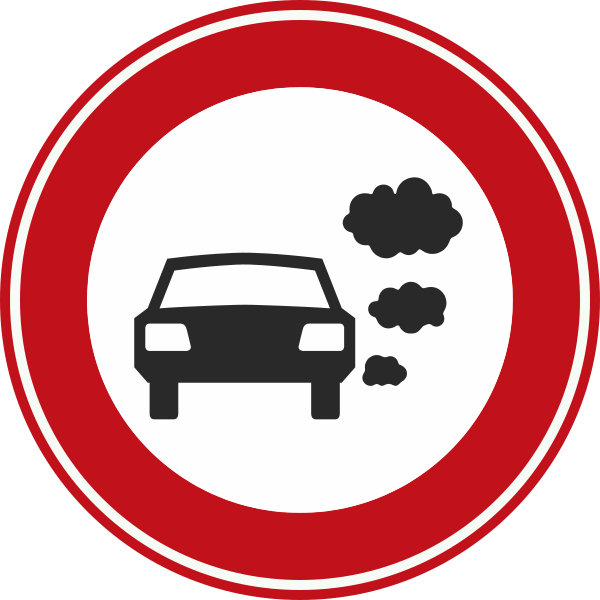
low-emission zone- An area with sign C22e that older diesels may not enter. The sub-sign says which.
- In the law: RVV 1990 art. 86d lid 1
- Explained in
remweg
braking distance- The distance your car travels from the moment you brake until it stands still.
- Explained in
stopafstand
stopping distance- The distance you travel while you react, plus your braking distance.
- Explained in
Subject 7 of 8Legislation
APK
- Your car's periodic roadworthiness test. Once it has expired, you may no longer drive the car.
- In the law: WVW 1994 art. 72
- Explained in
begeleider
supervisor- Someone on your accompanying-driver pass who sits beside you when you are 17 and drive.
- In the law: WVW 1994 art. 111a
- Explained in
beginnend bestuurder
new driver- Someone who has had their licence for less than 5 years. Stricter alcohol limits apply to them.
- In the law: WVW 1994 art. 8 lid 3
- Explained in
beginnersregeling
beginners' scheme- A rule for new drivers: after two serious offences you hand in your licence.
- In the law: WVW 1994 art. 130 lid 2
- Explained in
maximum-massa
maximum authorised mass- The highest weight a vehicle may have with its load. It is on the registration card.
- In the law: Reglement rijbewijzen art. 15 lid 1 onderdeel e
- Explained in
motorrijtuig
motorised vehicle- In the Road Traffic Act: any vehicle with a motor, a moped too. A bicycle with pedal assistance is not one.
- In the law: WVW 1994 art. 1
- Explained in
rij-ontzegging
driving disqualification- A penalty from the court or the public prosecutor: for a time you may not drive any motorised vehicle.
- In the law: WVW 1994 art. 9 lid 1
- Explained in
rij-verbod
driving ban- A ban from the police on driving when you can't do so properly, at most 24 hours.
- In the law: WVW 1994 art. 162 lid 1
- Explained in
Subject 8 of 8Vehicle knowledge
olie-peil
oil level- How much oil is in your engine. You read it on the dipstick, with the car on a level spot.
- Explained in
profiel
tread- The grooves in a tyre's running surface. They drain water. At least 1.6 millimetres deep.
- In the law: Regeling voertuigen art. 5.2.27
- Explained in
Meet these words in questions
- Check yourself after each section, with questions in the exam's format: free with an account.
- Take a mock exam: 50 questions in 30 minutes, on screens like the real exam.