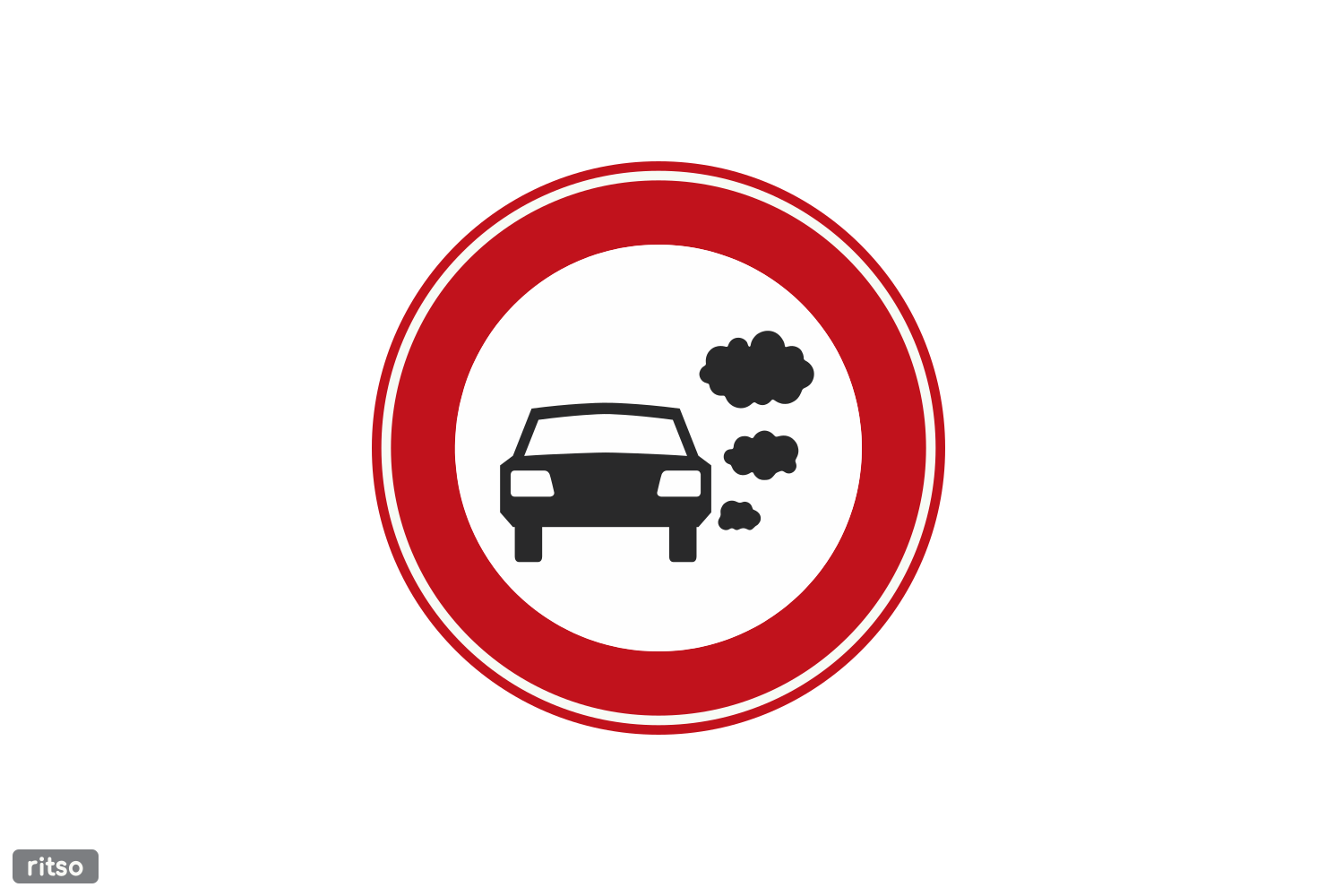
Economical driving and emission zones
The first lesson of every chapter is free to watch. The rest come with a free account.
In short
- Shifting up in time, driving calmly and not too fast: that saves fuel.
- A low-emission zone only applies to diesels. A zero-emission zone only to vans and lorries.
- You make no unnecessary noise with your car.
| How to drive economically | Why |
|---|---|
| Shift up in time | In a high gear the engine runs more calmly |
| Not too fast: 100 instead of 130 | Less air resistance |
| Engine off when stopped for over a minute | Idling costs fuel too |
| Air conditioning off when you don't need it | It uses energy from the engine |
| An empty roof box off | Even empty it causes a lot of air resistance |
| Release the accelerator early for a red light | Rolling costs less than braking hard |
You make no unnecessary noise with your car. Revving your engine for fun is not allowed, and it wastes fuel too.
Show DutchHide Dutch
- C22eEmission zone
- C22e5Diesel cars 5+
- C22e6Diesel cars, vans 4+
- C22e7Diesel cars, vans 5+
- C22e1Zero-emission lorries
- C22fEnd of emission zone
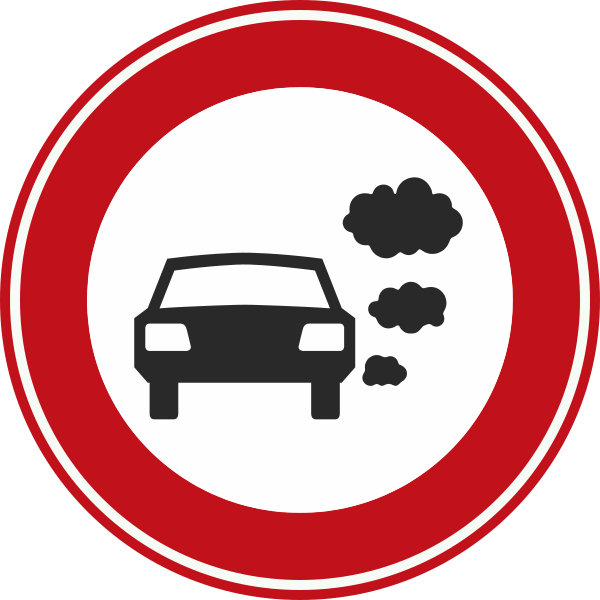
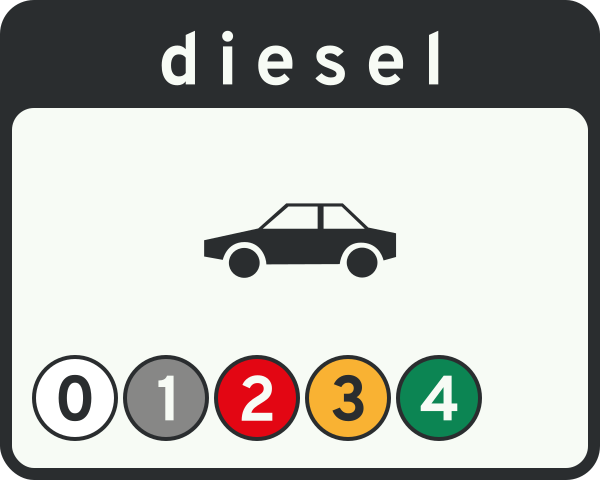
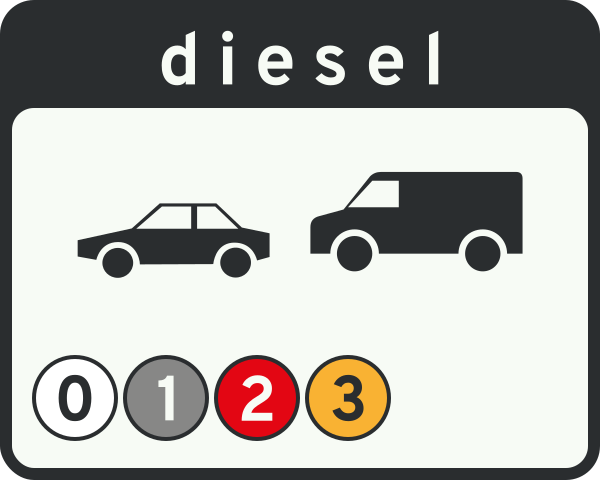
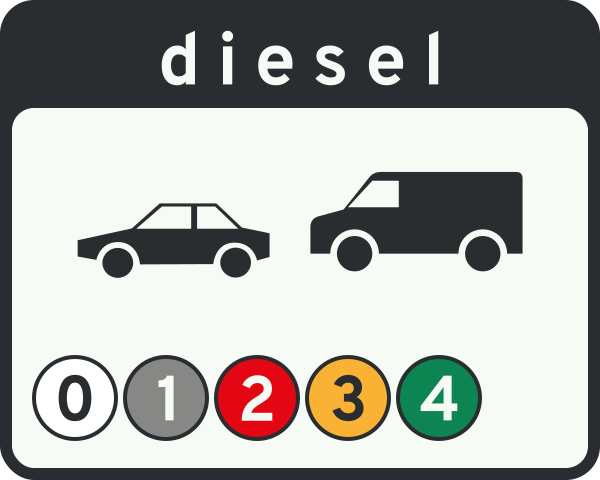
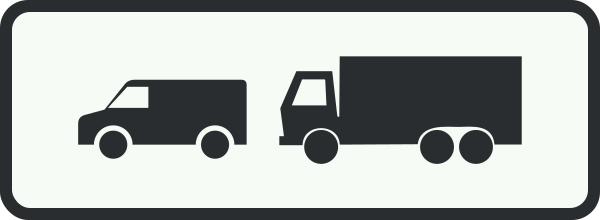
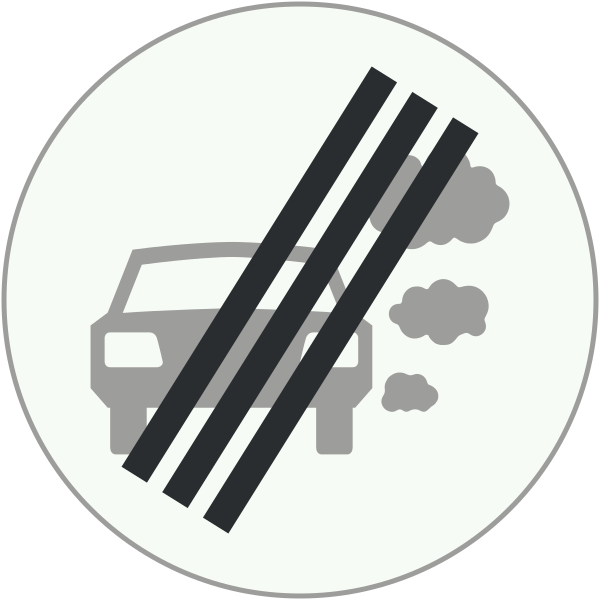
A low-emission zone (milieuzone)An area with sign C22e that older diesels may not enter. The sub-sign says which.All exam words only applies to cars with a diesel engine. With a petrol car you simply drive in. The sub-sign says which emission class may still enter. A car 40 years or older may always go in.
RVV 1990 art. 86d lid 1RVV 1990 art. 86d lid 3
Show DutchHide Dutch
“I may not enter a zero-emission zone in my petrol car.”
A zero-emission zone applies to vans and lorries that aren't emission-free. In your own car you may go in. Older vans get a few more years: class 5 up to the end of 2026, class 6 up to the end of 2027 if it was registered before 2025. A van that is accessible for a wheelchair may go in up to the end of 2029.
RVV 1990 art. 86e lid 1RVV 1990 art. 86e lid 5