What priority means, and who decides
In short
- Giving way: the other can carry on without braking or swerving.
- Who decides: first the police, then traffic lights, then signs and markings, then the rules.
- Traffic light not working? Then the signs decide again.
To give way (voorrang verlenen)Letting the other carry on without having to brake or swerve.All exam words means the other can simply carry on. They don't have to brake or swerve because of you. Sometimes you have to stop for that, sometimes slowing down is enough.
Show DutchHide Dutch
If someone's path doesn't cross yours, you don't have to give them way either. A car going straight on while you go straight on, or someone waiting at another entry of a roundabout, is not in your way.
Show DutchHide Dutch
Priority is between drivers: everyone on the road except pedestrians. So a cyclist, a horse rider and a tram driver are drivers too, and so is anyone on a snorfietsA moped that can't go faster than 25 km/h, with a blue number plate. It follows the rules for cyclists.All exam words, speed pedelecA fast electric bicycle that assists up to 45 km/h. It is a moped, with a moped's rules.All exam words, brommobielA small car that may not go faster than 45 km/h. It follows the rules for cars.All exam words, tractor or mobility scooter. However slow they are, at a junction with no signs they go first from the right. Pedestrians have rules of their own.
Show DutchHide Dutch
On a zebra crossing you let pedestrians go first: those crossing, and those clearly about to. The same goes for someone in a wheelchair or on a mobility scooter. Not when a red pedestrian light applies to them.
Show DutchHide Dutch
At a junction (kruispunt)A place where roads cross or split. A T-junction is a junction too. An exit is not.All exam words, check who decides in this order. First directions from the police or a traffic controller (verkeersregelaar)Someone in a yellow vest saying verkeersregelaar who directs the traffic. You follow their signals, like a police officer's.All exam words. Then the traffic lights. Then the signs and the markings on the road, such as shark teeth (haaientanden)White triangles on the road, pointing at you. You give way to the traffic on the road you are coming to.All exam words. Only when there is none of these do the general rules apply.
RVV 1990 art. 84RVV 1990 art. 64RVV 1990 art. 63
Show DutchHide Dutch
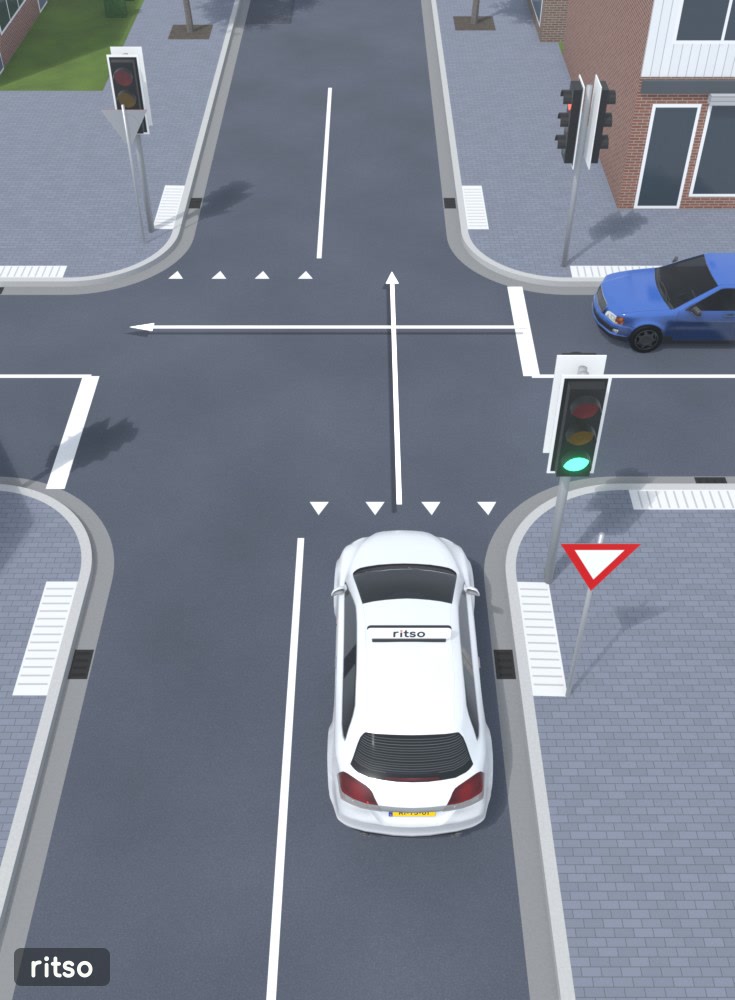
The light works. Your light is green. You go first, even though you have a give-way sign.
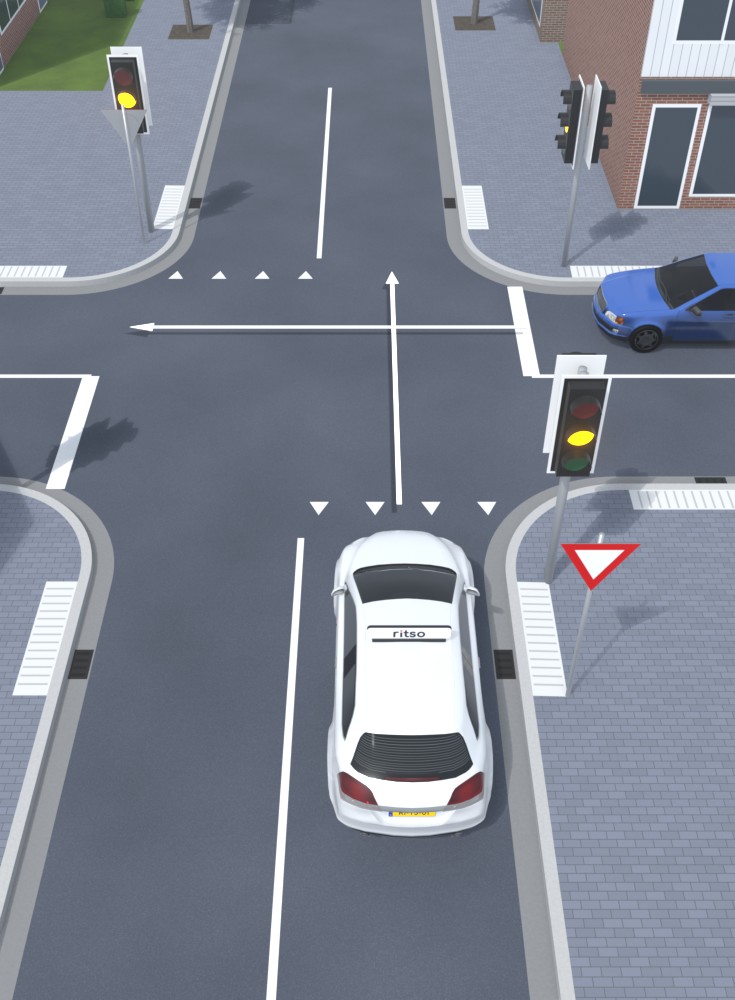
Flashing amber. The light decides nothing. Then your sign applies again: the car goes first.
“Having priority means I don't have to pay attention.”
No. Priority is an agreement, not a guarantee. If you see that someone doesn't give you way, you still have to brake. You may never let an accident happen because you had priority.
Show DutchHide Dutch
Different from home
Many junctions in the Netherlands have no signs and no lights. Then the general rule applies: traffic from the right goes first. That is the next section.