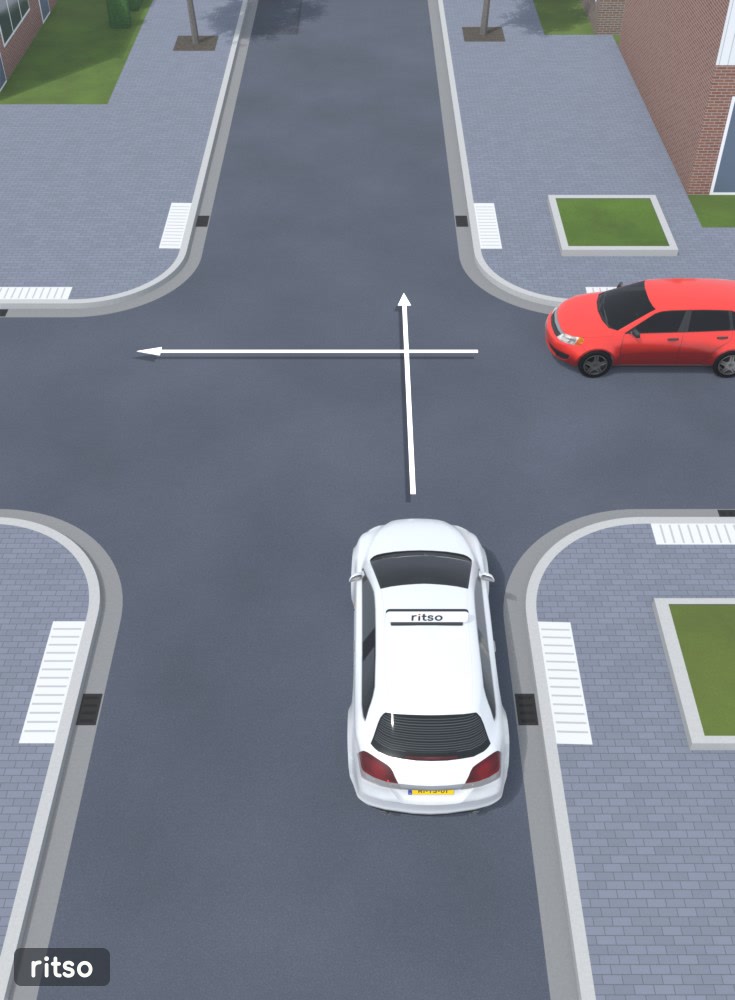
Junctions with no signs: traffic from the right goes first
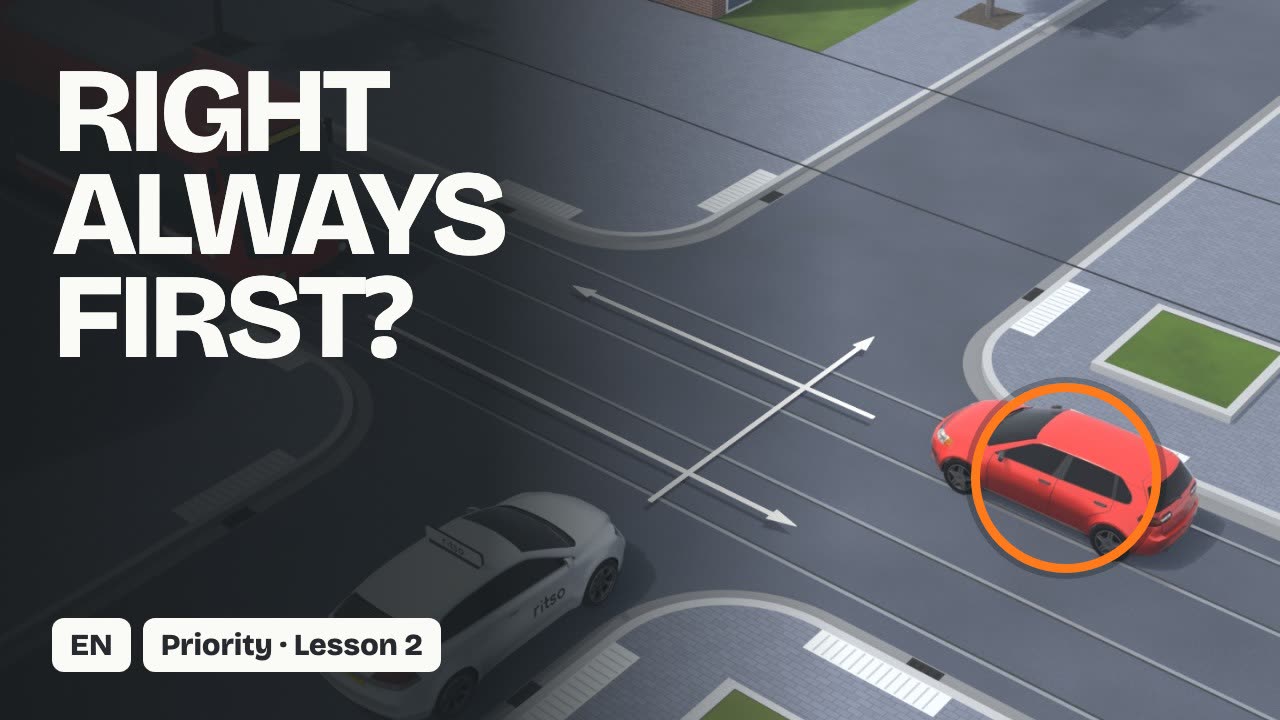
The first lesson of every chapter is free to watch. The rest come with a free account.
In short
- No police, traffic lights or signs? Traffic from the right goes first.
- That includes cyclists and moped riders.
- Two exceptions: a tram, and an unpaved road.
At a junction (kruispunt)A place where roads cross or split. A T-junction is a junction too. An exit is not.All exam words, you give way to drivers coming from your right. It doesn't matter whether it is a car, a lorry, a cyclist or a moped rider. Nor does it matter which way they go next.
Show DutchHide Dutch
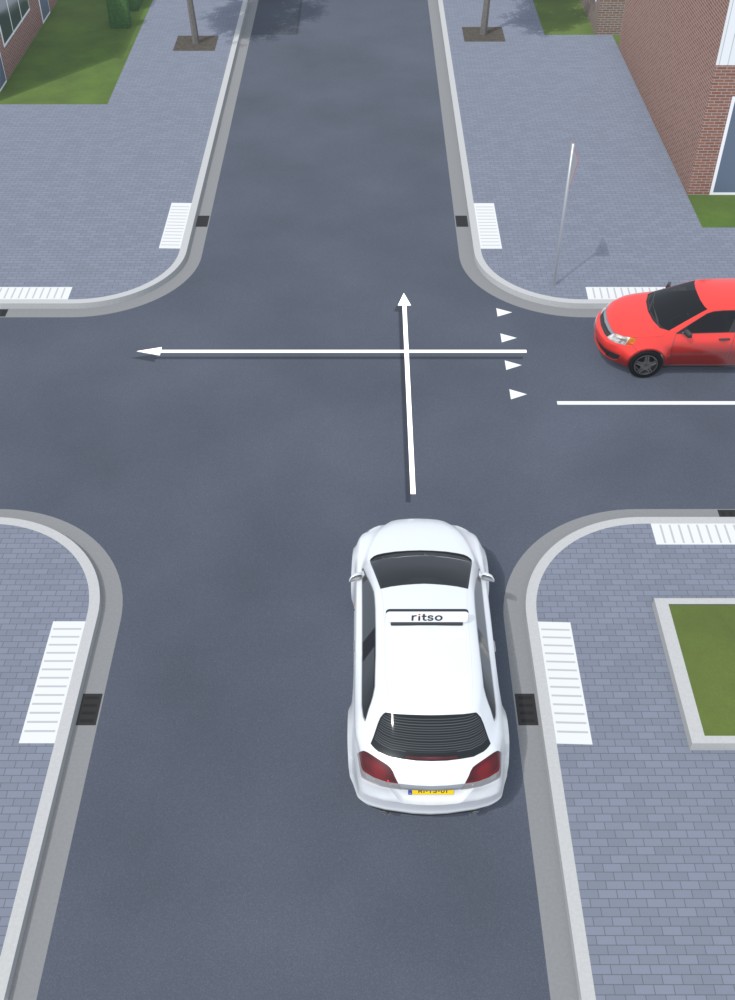
The rule applies only when nothing else decides. So no police, no traffic lights, no priority signs and no shark teeth (haaientanden)White triangles on the road, pointing at you. You give way to the traffic on the road you are coming to.All exam words. Those always come before the general rule. A warning sign such as J8, dangerous junction, doesn't change that: it only warns and says nothing about priority.
Show DutchHide Dutch
“Traffic from the right always goes first.”
Not always. The law makes two exceptions. A tram goes first, even when it comes from the left. And whoever comes off an unpaved road (onverharde weg)A road without asphalt, bricks or tiles, such as a sand road or a gravel track.All exam words gives way to traffic on the paved road. A car from your right comes out of a sand road? Then you go first.
RVV 1990 art. 15 lid 2 onderdeel aRVV 1990 art. 15 lid 2 onderdeel b
Show DutchHide Dutch
Junction. The car comes out of a side road on the right. It goes first.
Exit. Whoever comes out of an exit (uitrit)Where you drive onto the road from a property, a car park or an erf. You then let all traffic go first.All exam words lets all traffic go first. This is no junction. art. 54
Different from home
Where you learned to drive, a bike may give way to cars. Here a cyclist from the right goes first at a junction like this, just like a car. Expect it, and look right early.
Work it out
A junction with no signs. A tram comes from your left, a car from your right turns left. You go straight on.
- The tram goes first. A tram goes first, from whichever side it comes.
- Then the car: it comes from your right.
- Then you.
The order comes from our rules engine, not from a person.