Who goes where?
The first lesson of every chapter is free to watch. The rest come with a free account.
In short
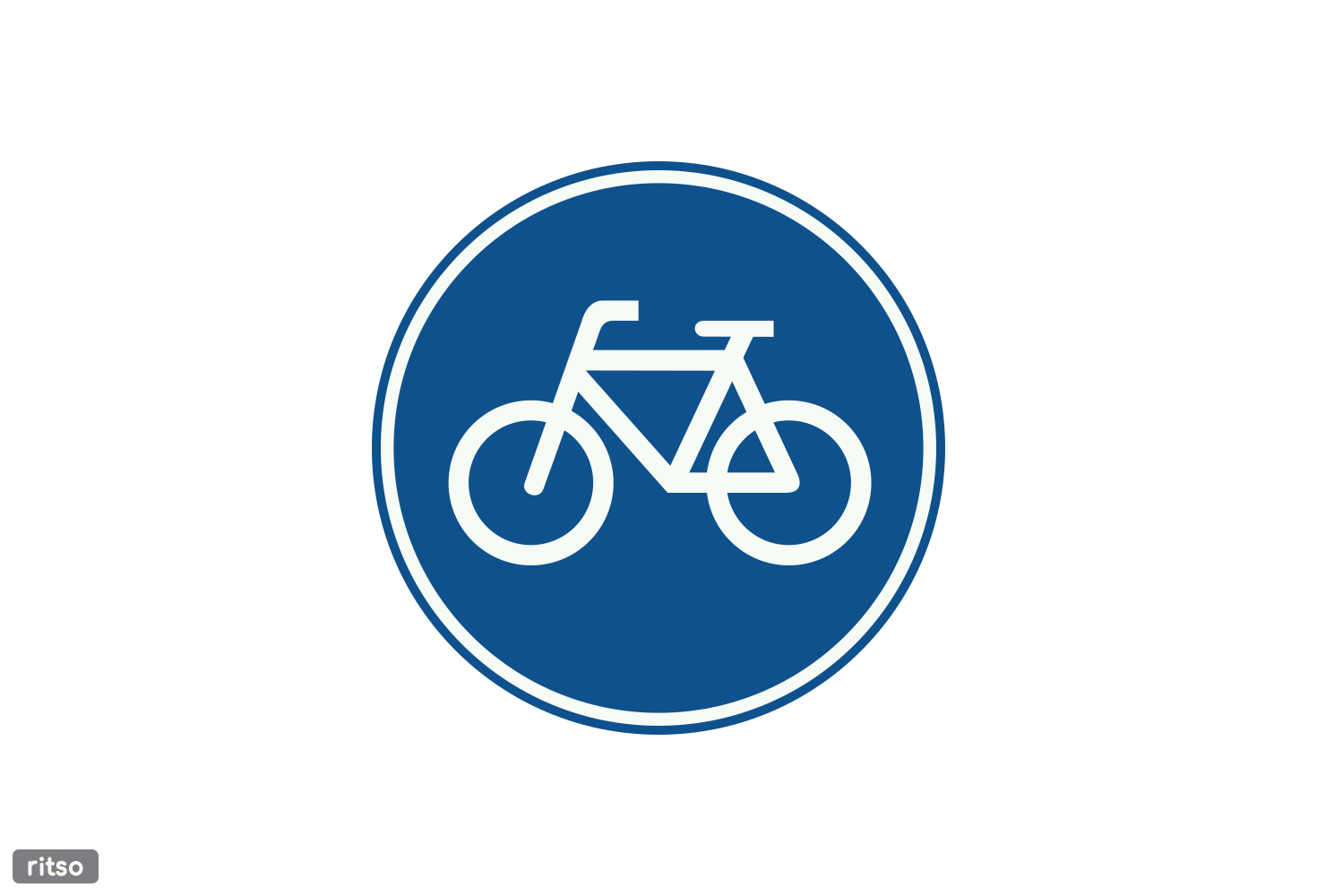
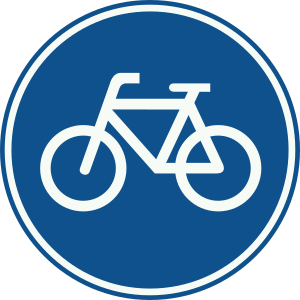
- Cyclists must use a compulsory cycle path (G11); an optional one (G13) they may choose.
- A snorfiets follows the rules for cyclists, a brommobiel those for cars.
- A speed pedelec is a moped: it doesn't ride on a compulsory cycle path.

| Who | Where |
|---|---|
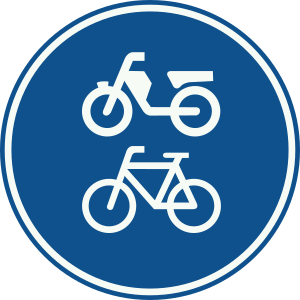
| Cyclist, snorfietsA moped that can't go faster than 25 km/h, with a blue number plate. It follows the rules for cyclists.All exam words | Compulsory cycle path or cycle/moped path; otherwise the carriageway. An optional cycle path is allowed. |
| Moped, speed pedelecA fast electric bicycle that assists up to 45 km/h. It is a moped, with a moped's rules.All exam words | Cycle/moped path; otherwise the carriageway. Never a compulsory cycle path. |
| brommobielA small car that may not go faster than 45 km/h. It follows the rules for cars.All exam words | The carriageway, like a car |
| Pedestrian | Pavement or footpath; otherwise the cycle path; otherwise the verge or the edge of the carriageway |
| Inline skater | Cycle path, pavement or footpath; only when there are none the carriageway |
| Wheelchair, mobility scooter | Pavement, footpath, cycle path or carriageway: free to choose |
| Rider on horseback | Bridle path; otherwise the verge or the carriageway |
| Procession on foot | May use the carriageway, even when there is a pavement |
A snorfiets follows the rules for cyclists. At a compulsory cycle path it rides on the path, unless a sub-sign says snorfiets riders use the carriageway. On an optional cycle path a snorfiets with a petrol engine may only ride with the engine off.
RVV 1990 art. 2bRVV 1990 art. 5 lid 3RVV 1990 art. 5 lid 8
Show DutchHide Dutch
“A speed pedelec is a bicycle, so it belongs on the cycle path.”
A speed pedelec is a moped. It rides on a cycle/moped path, and otherwise on the carriageway. A compulsory cycle path with only sign G11 is not for it. Unlike an ordinary e-bike, its motor keeps helping above 25 km/h.
RVV 1990 art. 6 lid 1RVV 1990 art. 6 lid 2RVV 1990 art. 1
Show DutchHide Dutch
A brommobielA small car that may not go faster than 45 km/h. It follows the rules for cars.All exam words follows the rules for cars. It drives on the carriageway, never on a cycle/moped path. It may only do 45 km/h, though. With four wheels, it weighs less than 350 kg empty, not counting the batteries.
RVV 1990 art. 2aWVW 1994 art. 1 lid 1 onderdeel e
Show DutchHide Dutch
“Beside a compulsory cycle path a cargo bike never belongs on the carriageway.”
A bicycle on more than two wheels, or with a trailer, that is wider than 0.75 metres may use the carriageway. For a wide moped with more wheels or a trailer it is a must: it rides on the carriageway. A disabled person's vehicle is at most 1.10 metres wide.
RVV 1990 art. 5 lid 4RVV 1990 art. 6 lid 3RVV 1990 art. 1
Show DutchHide Dutch
With a disabled parking card you may ride a light electric snorfiets on the pavement. From 16 it is allowed, under 16 it is a must. On the pavement it goes at most 6 km/h.
RVV 1990 art. 5 lid 5RVV 1990 art. 5 lid 6
Show DutchHide Dutch
Someone walking beside their bicycle is a pedestrian. At a zebra crossing you let them go first. If their pedestrian light is red or flashes amber, you don't have to let them go first. Do keep a close eye on them.
RVV 1990 art. 2 lid 2RVV 1990 art. 49 lid 2RVV 1990 art. 49 lid 4
Show DutchHide Dutch
A procession, column or funeral procession on foot may walk on the carriageway. There it follows the rules for vehicles: it keeps right, for example.
RVV 1990 art. 2 lid 3RVV 1990 art. 9
Show DutchHide Dutch
Different from home
In the Netherlands it isn't only cyclists on the cycle path. You see mopeds, snorfiets riders, cargo bikes and mobility scooters there too, each with their own rules.