Getting in lane and arrows on the road
The first lesson of every chapter is free to watch. The rest come with a free account.
In short
- Turning left on a road with traffic both ways: you move to the middle of the road.
- Turning left on a road with traffic one way: you move fully to the left.
- If there are arrows on your lane, you follow their direction.
If you want to turn, you move to the right place in good time. That is getting in lane (voorsorteren)Choosing in good time the place on the road that fits the way you want to go.All exam words. To turn right you keep as far right as you can. To turn left it depends on the road.
Show DutchHide Dutch
| The road | Turning left: where you drive |
|---|---|
| Traffic both ways | As close to the middle of the road as you can |
| Traffic one way | As far left as you can |
“At a one-way sign I always move fully left to turn left.”
Look at the sub-sign. If it says "except" with a bicycle and a moped, they may come towards you. The road then has traffic both ways. To turn left you then stay as close to the middle as you can.
RVV 1990 art. 17 lid 1 onderdeel b
Show DutchHide Dutch
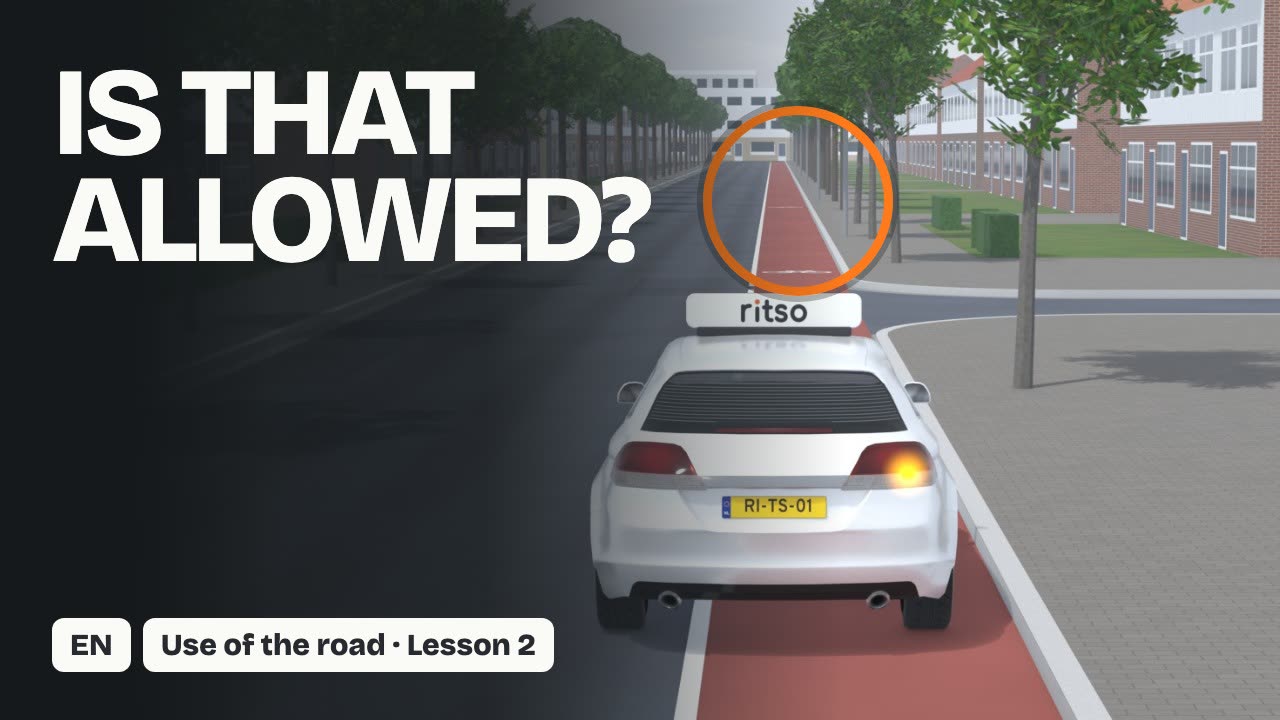
To turn right you may drive onto a cycle lane with a broken line. You don't get in the cyclists' way. You don't go onto a cycle lane with a solid line.
RVV 1990 art. 10 lid 2RVV 1990 art. 17 lid 1 onderdeel a
Show DutchHide Dutch
If you are in a lane with arrows, at the junction you follow the direction of those arrows. If they only point left, you turn left, even if you really wanted to go straight on. A cycle lane inside that lane is part of it. So a cyclist on it follows the same arrows.
Show DutchHide Dutch
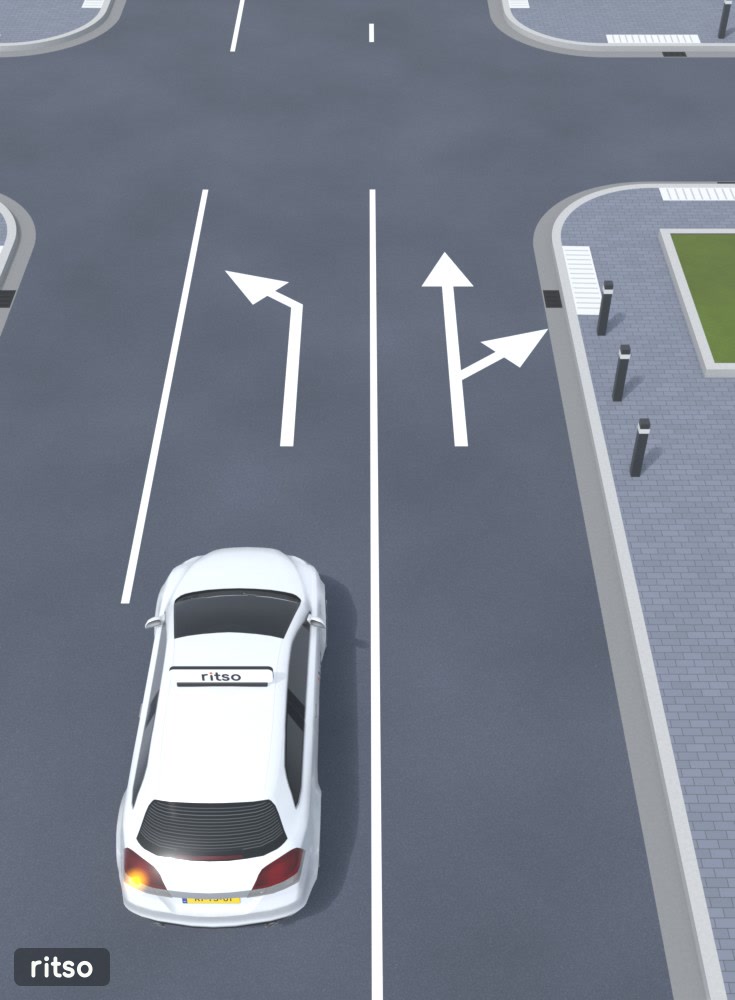 The rule applies
Arrow to the left. The arrows point left. You may turn left.
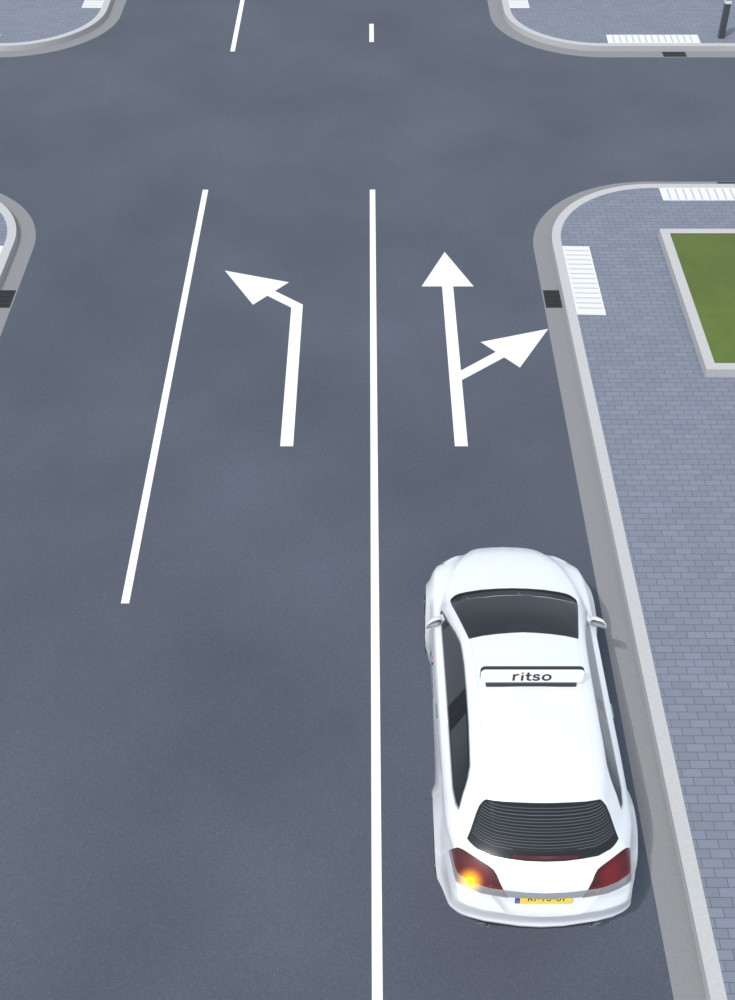 It doesn't
Arrow straight on and right. The arrows don't point left. You may not turn left here.
You don't drive onto a junction if you can't get off it. If the traffic beyond the junction is at a standstill, you wait. That applies at a green light too.