Coming out of an exit, and other special manoeuvres
The first lesson of every chapter is free to watch. The rest come with a free account.
In short
- Coming out of an exit, you let all traffic go first.
- From the left too, and cyclists and pedestrians on the pavement too.
- The same when moving off, reversing, turning round and changing lanes.
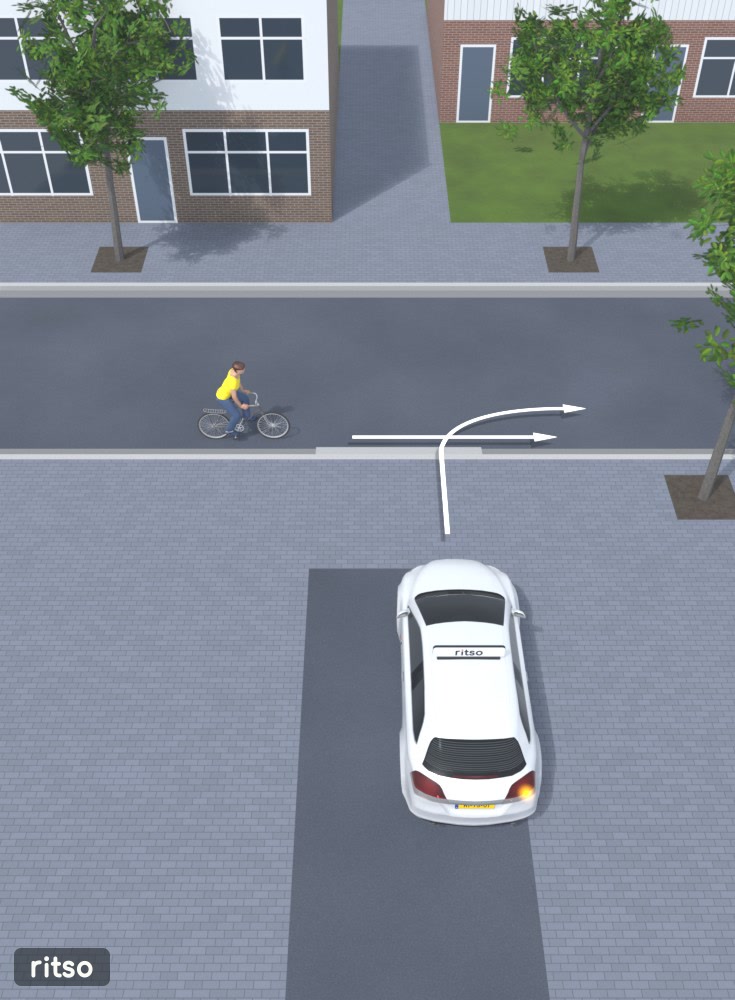
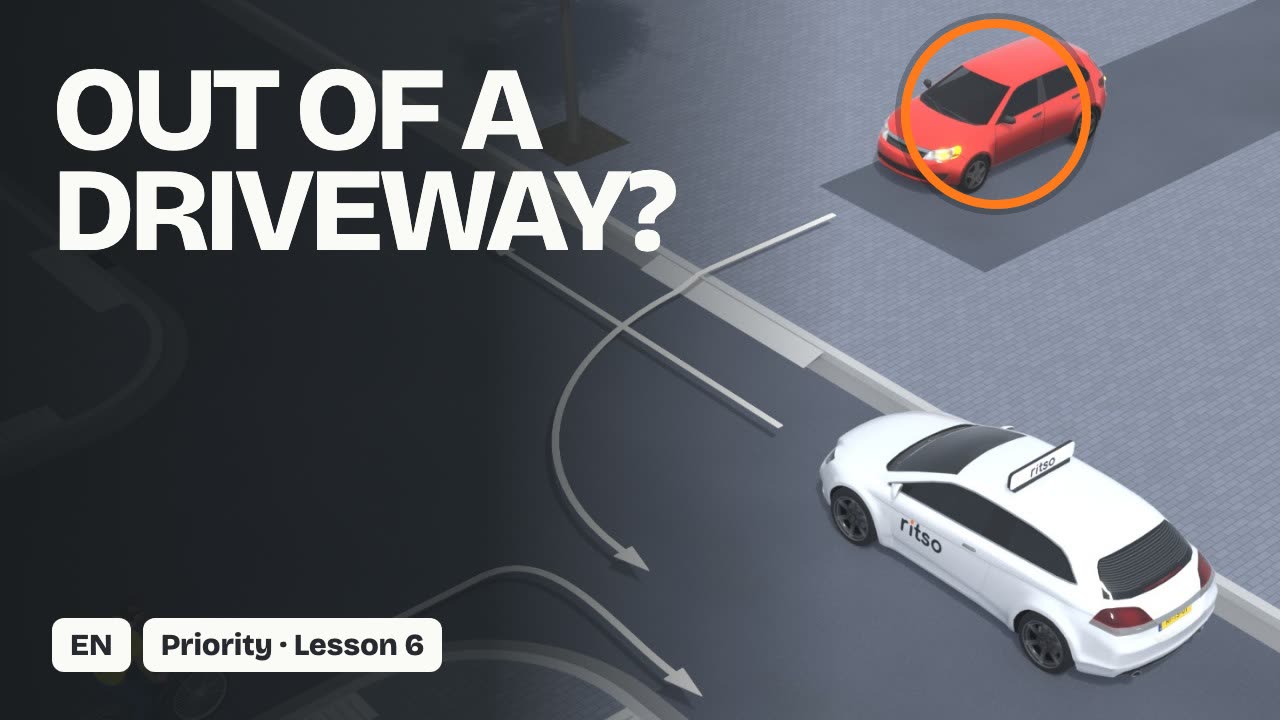
When you drive out of an exit (uitrit)Where you drive onto the road from a property, a car park or an erf. You then let all traffic go first.All exam words onto the road, you let all other traffic go first. From the left and from the right, cyclists and moped riders, and pedestrians on the pavement you cross too. An exit is no junction, so the rule of traffic from the right doesn't help you here.
Show DutchHide Dutch
The same goes for every special manoeuvre (bijzondere manoeuvre)Moving off, reversing, turning round, coming out of an exit or changing lanes. You then let all other traffic go first.All exam words: moving off from a parking space, reversing, turning round, driving into a driveway and changing lanes. Whoever makes such a move lets the rest go first. One exception: in a built-up area (bebouwde kom)The area between sign H1 and sign H2. Without other signs 50 km/h applies there.All exam words you let a bus pull away that indicates at its stop.
RVV 1990 art. 54RVV 1990 art. 56 lid 1
Show DutchHide Dutch
Exit, built like a street. The pavement runs on across the opening. It is an exit: the car from the left goes first.
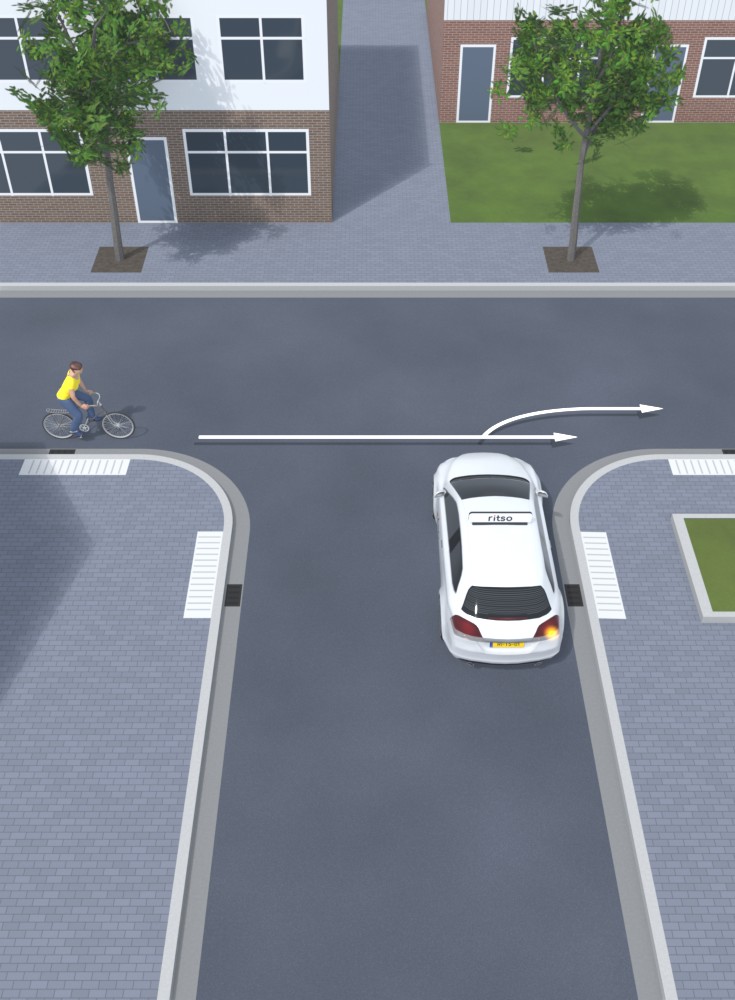
Ordinary side road. A junction with no signs: you come from the car's right and go first.
“It looks like a street, so it's a junction.”
Look at the pavement. If the pavement runs on and you drive over a lowered kerb, you are coming out of an exit. Then you let everyone go first, however wide the opening is.
Show DutchHide Dutch
Different from home
Many residential streets in the Netherlands meet the main road with such a continuous pavement. That is on purpose: everyone knows the traffic from the residential street has to wait.