Speed, distance and the road surface
In short
- On a dry road you keep at least 2 seconds' distance. On a wet or slippery road more.
- Driving twice as fast makes your braking distance four times as long.
- You must always be able to stop within the distance you can see.
On a dry road you keep at least 2 seconds behind the vehicle ahead. Count from the moment it passes a post: if you get there in under two counts, you are too close. On a wet road you keep more.
Show DutchHide Dutch
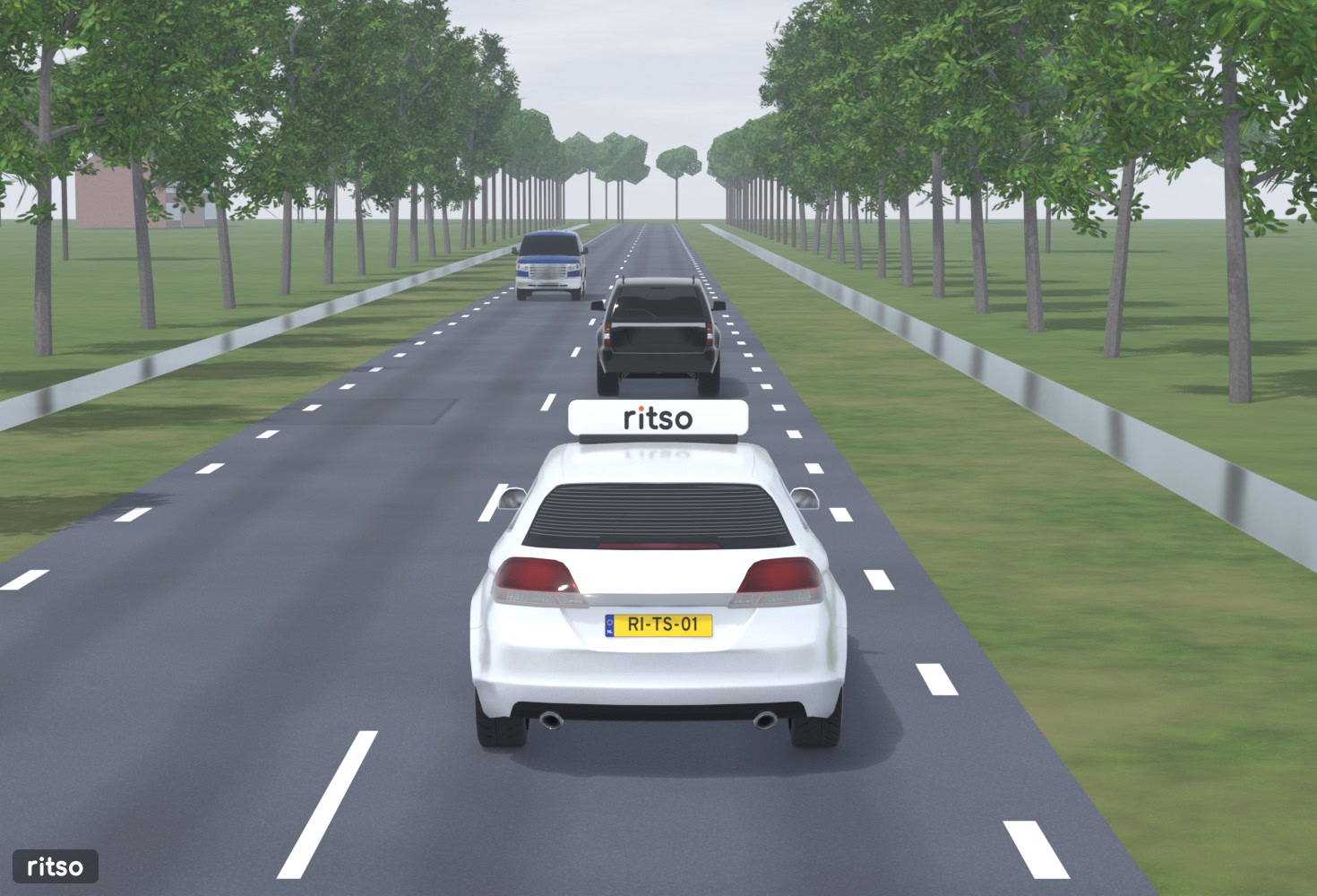
Your stopping distance (stopafstand)The distance you travel while you react, plus your braking distance.All exam words is your reaction distance plus your braking distance (remweg)The distance your car travels from the moment you brake until it stands still.All exam words. When you pay attention it takes about 1 second before you brake; at 50 km/h you drive almost 14 metres in that second. Tired or distracted it takes longer. How long your braking distance is depends on your speed, the road surface, your tyres and your brakes. A braking distance grows with the square of your speed.
Show DutchHide Dutch
“If I drive twice as fast, my braking distance is twice as long.”
No, four times as long. From 50 to 100 km/h makes your braking distance four times as long, braking equally hard.
Show DutchHide Dutch
You must always be able to stop within the distance you can see. So before a sharp bend you can't see round, you drive slowly. At night you see as far as your lights shine: with dipped headlights you drive more slowly.
Show DutchHide Dutch
| What | What you do |
|---|---|
| Wet road | Longer braking distance: more distance |
| First rain after a dry spell | Dust and oil make it slippery: more distance, brake earlier |
| Wet leaves | Slippery: slower and more distance |
| Snow or black ice | Much longer braking distance: far more than 2 seconds' distance |
| Bridge in light frost | Can be slippery while the road is dry |
| Strong crosswind | A bit slower, hold the wheel firmly |
If your steering suddenly feels light in deep puddles, your tyres are sliding on the water. That is aquaplaningYour tyres slide on a layer of water and no longer touch the road. Your steering then feels light.All exam words. Take your foot off the accelerator, keep the wheel straight and don't brake hard. Then your tyres get grip again.
Show DutchHide Dutch
If your car pulls to one side when braking, or your steering wheel shakes at higher speeds, have it checked. The first points to the brakes, the second often to a front wheel. A loaded car often needs a higher tyre pressure: it is in the manual or on a sticker.