A traffic controller's hand signals
The first lesson of every chapter is free to watch. The rest come with a free account.
In short
- One arm straight up: everyone stops.
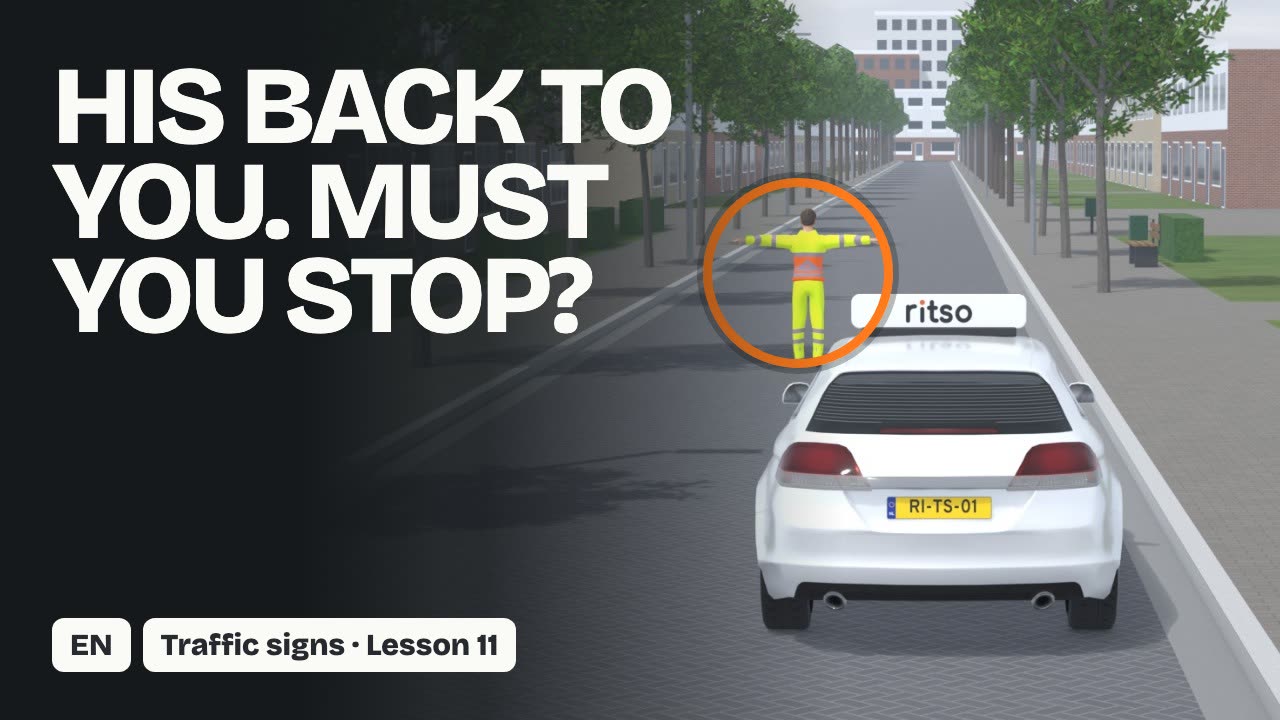
- Arms out to the side: stop if you see the traffic controller's chest or back.
- An arm moving up and down: slow down.
You follow the hand signals of the police, the Royal Military Police and a traffic controller (verkeersregelaar)Someone in a yellow vest saying verkeersregelaar who directs the traffic. You follow their signals, like a police officer's.All exam words. You must be able to see who it is. A traffic controller wears a yellow jacket with an orange lower part and a grey triangle.
Show DutchHide Dutch
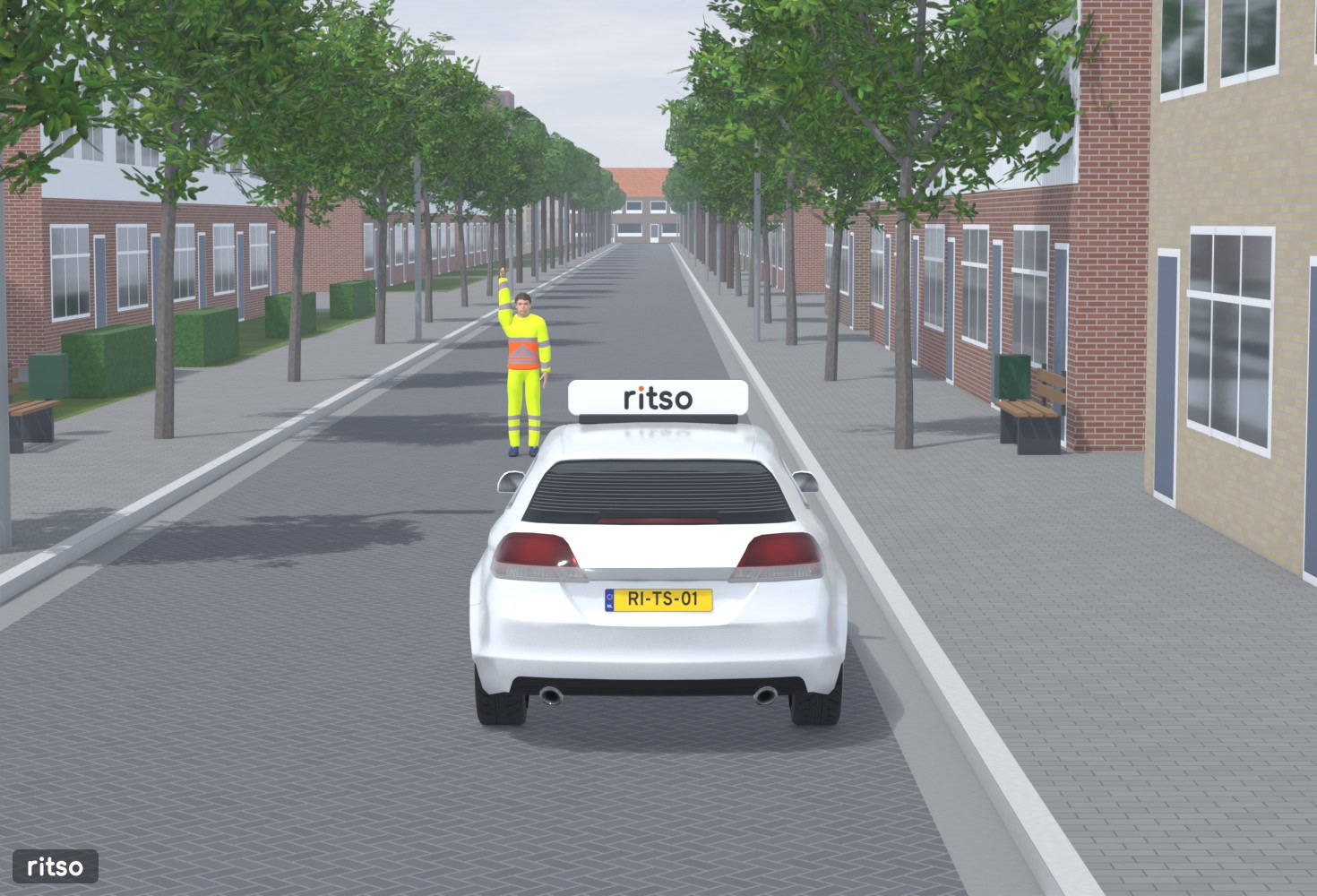
| Signal | What you do |
|---|---|
| One arm straight up | Stop, from every direction |
| One or both arms out to the side | Stop if you come from the front or from behind |
| Arm stretched forward | Stop if you come from the traffic controller's right |
| Arm up with the index finger up | Whoever could drive stops. If you are on the junction, clear it |
| Outstretched arm moving up and down | Slow down |
| Crossing guard with a round stop sign | Stop |
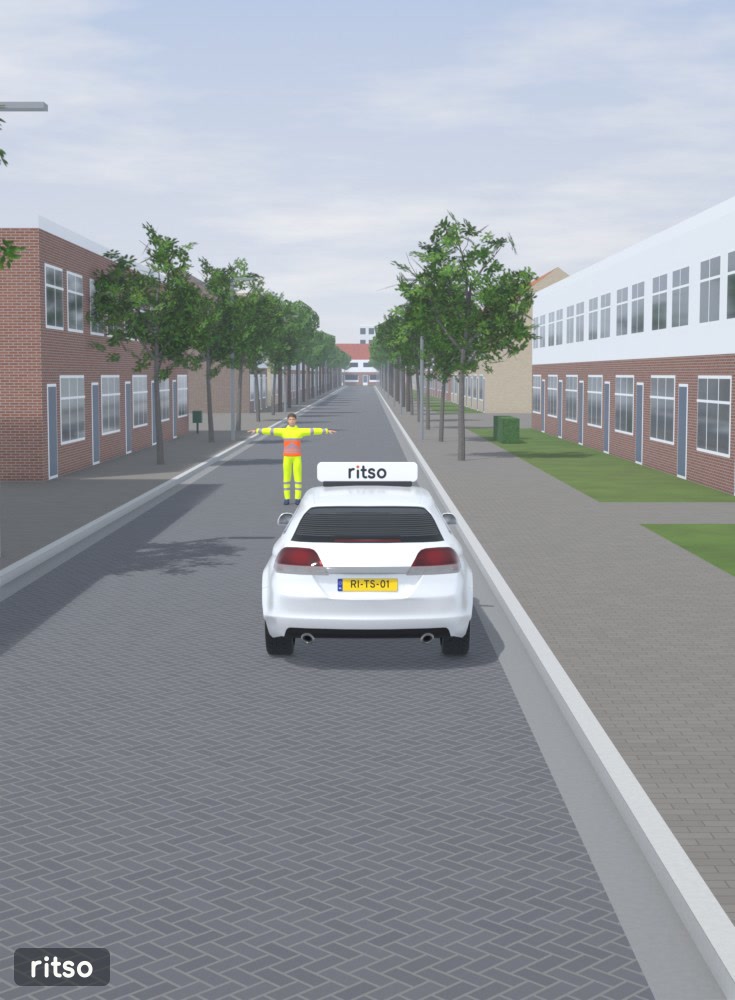 The rule applies
You see his chest. Both arms out and he faces you: you stop.
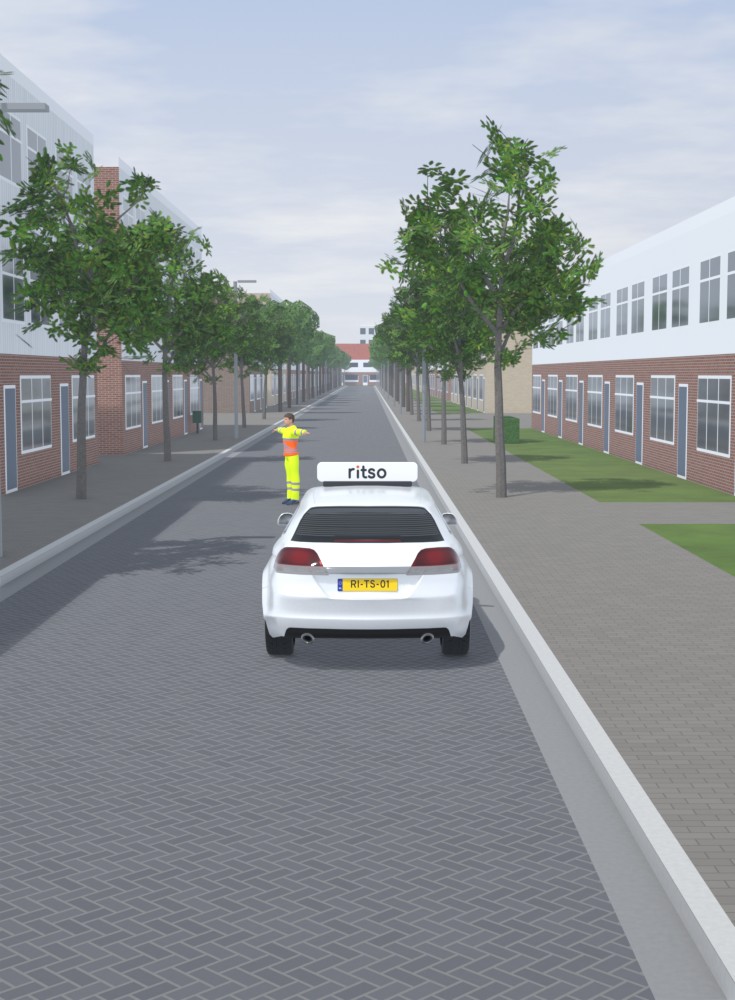 It doesn't
You see his side. His signal stops the traffic from the front and from behind, not you. The normal rules apply.
“I only see his back, so his signal isn't for me.”
Arms out to the side is a stop signal for the traffic from the front and from behind. So if you see his back, you stop too.
RVV 1990 bijlage 2, onderdeel 4
Show DutchHide Dutch
Different from home
In the Netherlands traffic controllers often stand at road works and events. They aren't police, but you follow their signals just the same.