Lines on the road, police and traffic controllers
The first lesson of every chapter is free to watch. The rest come with a free account.
In short
- You don't cross a solid line. If a broken line runs beside it on your side, you may.
- An instruction from the police or a traffic controller comes before lights, signs and rules.
- A STOP from the police or a road inspector means stop.
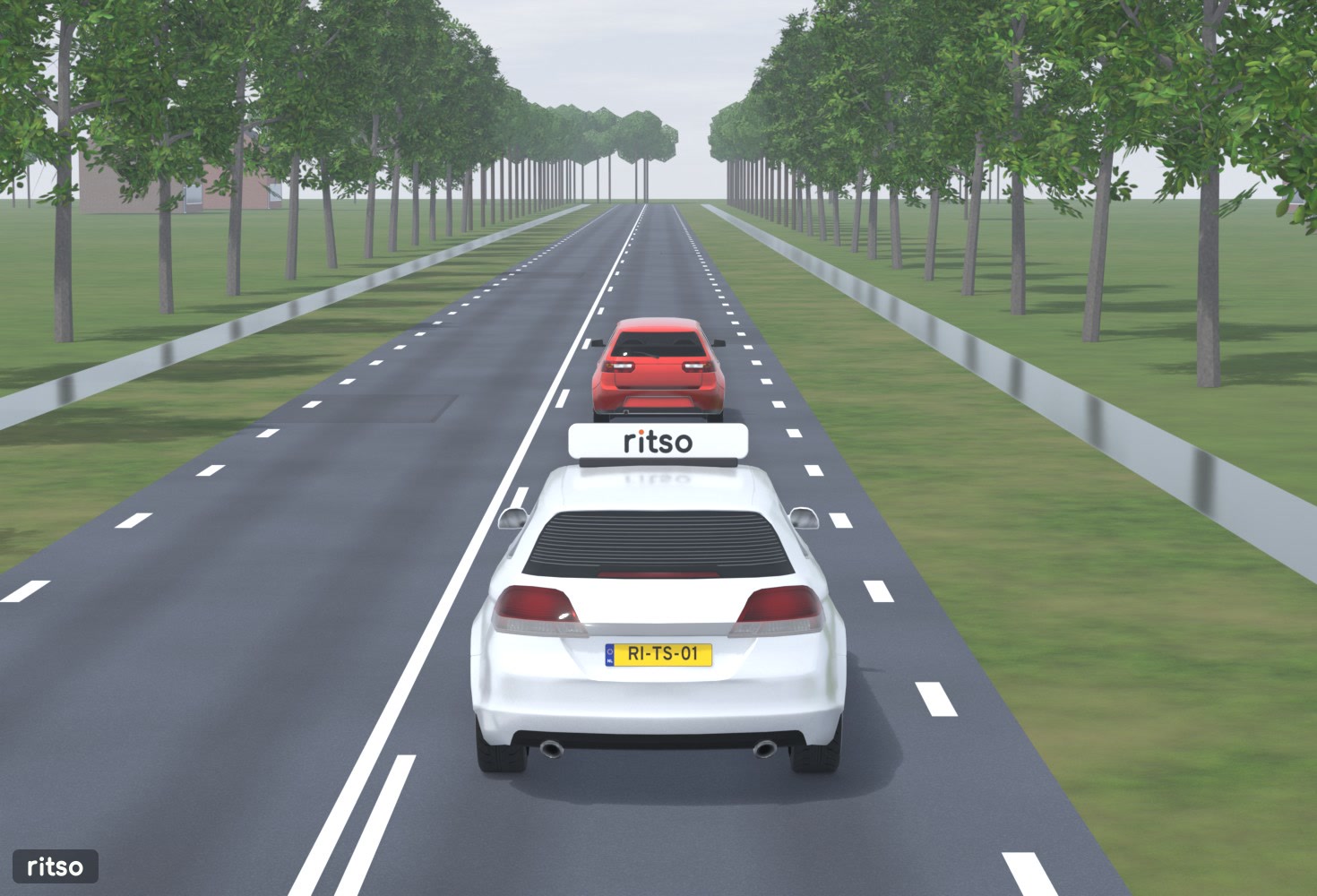
You don't cross a solid line, not even to overtake. If a broken line runs beside it on your side, you may cross. From the other side you may not.
RVV 1990 art. 76 lid 1RVV 1990 art. 76 lid 2 onderdeel b
Show DutchHide Dutch
You don't drive across a hatched area (verdrijvingsvlak)An area of white diagonal stripes on the road, often at an exit. You don't drive across it.All exam words. Not even to overtake a slow tractor.
Show DutchHide Dutch
“At a stop line I must always stop.”
Only when you have to stop, at a red light or sign B7 for example. Then you stop before the line. At green you simply drive on.
Show DutchHide Dutch
At road works, temporary yellow lines come before the white ones. If you can still see the old white lines, follow the yellow ones.
Show DutchHide Dutch
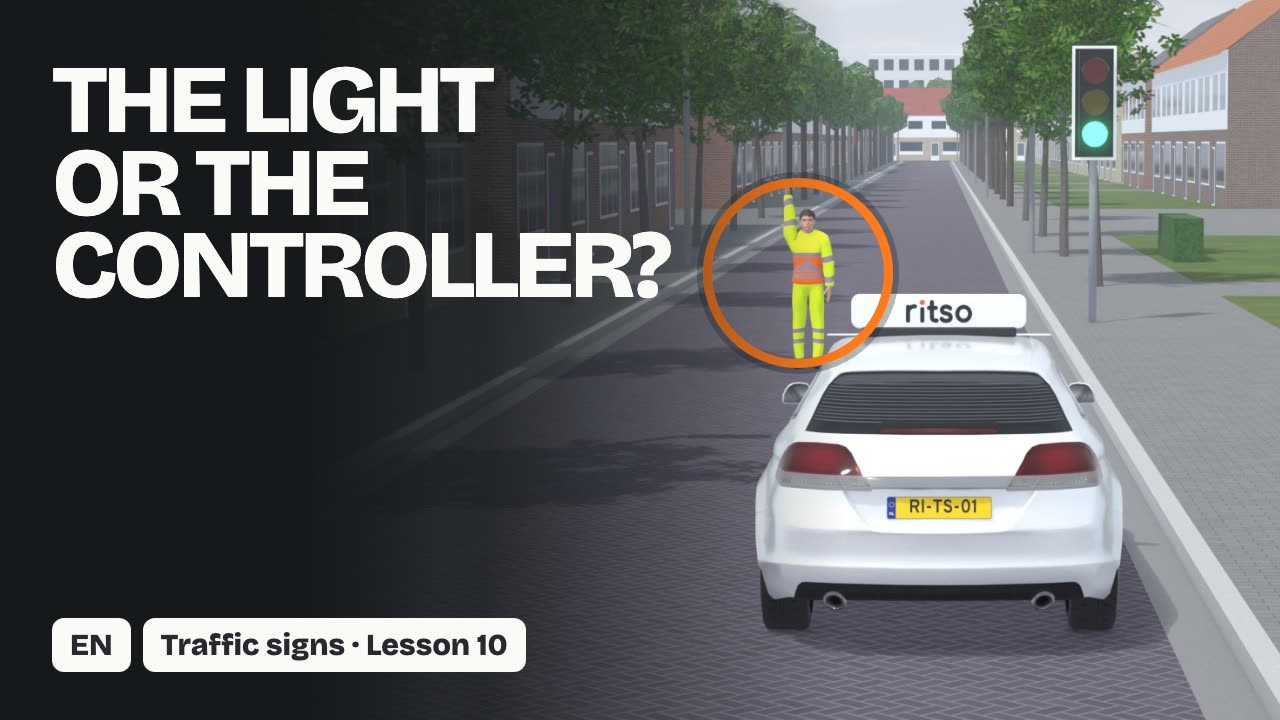
You always follow an instruction from the police or a traffic controller (verkeersregelaar)Someone in a yellow vest saying verkeersregelaar who directs the traffic. You follow their signals, like a police officer's.All exam words. It comes before lights, signs and rules. If he waves you on at red, you drive on.
RVV 1990 art. 82 lid 1RVV 1990 art. 84
Show DutchHide Dutch
| Who | When you stop |
|---|---|
| Police or road inspector | At a lit STOP or STOP POLITIE, or a red lamp |
| Police car with a lit board on its roof | You follow what it says |
| Crossing guard at a school | When he holds his stop sign up to you |
| Escort of a train or tram | At a stop sign, a red flag or a red lamp |
Different from home
Not only the police may stop you. If a Rijkswaterstaat road inspector lights up STOP, you stop as well.