Kinds of road and the built-up area (G, H)
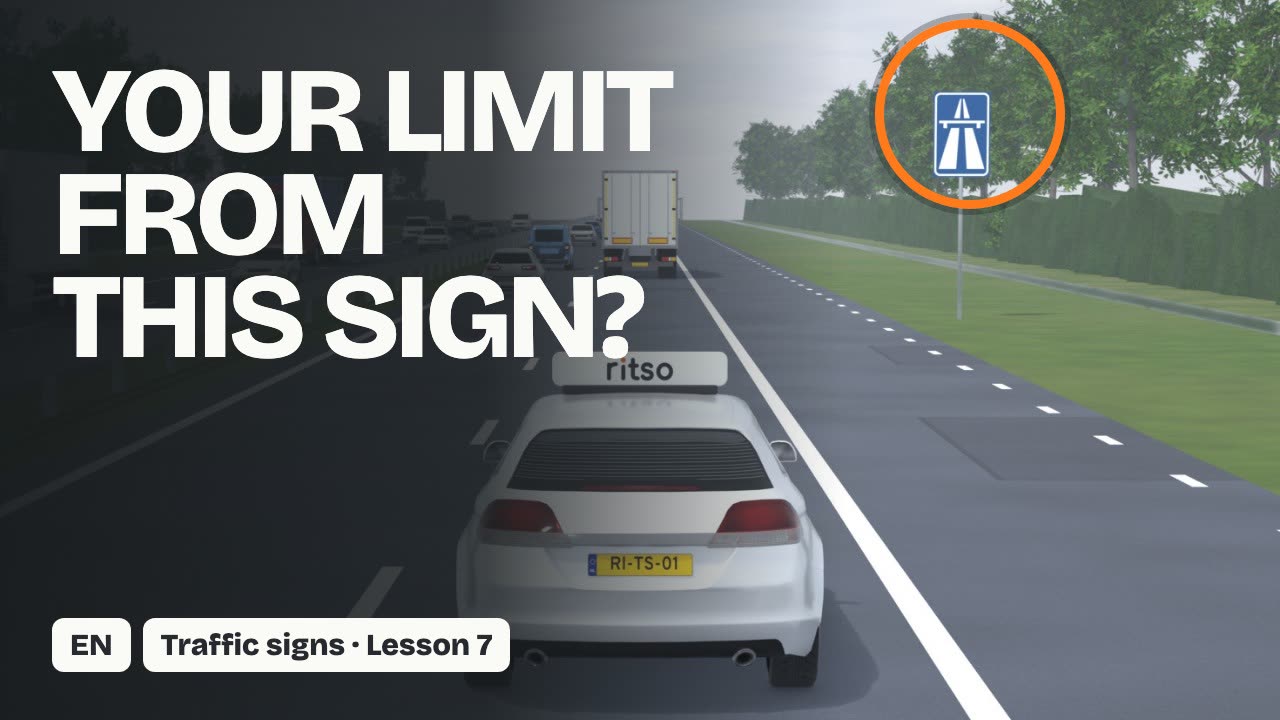
The first lesson of every chapter is free to watch. The rest come with a free account.
In short
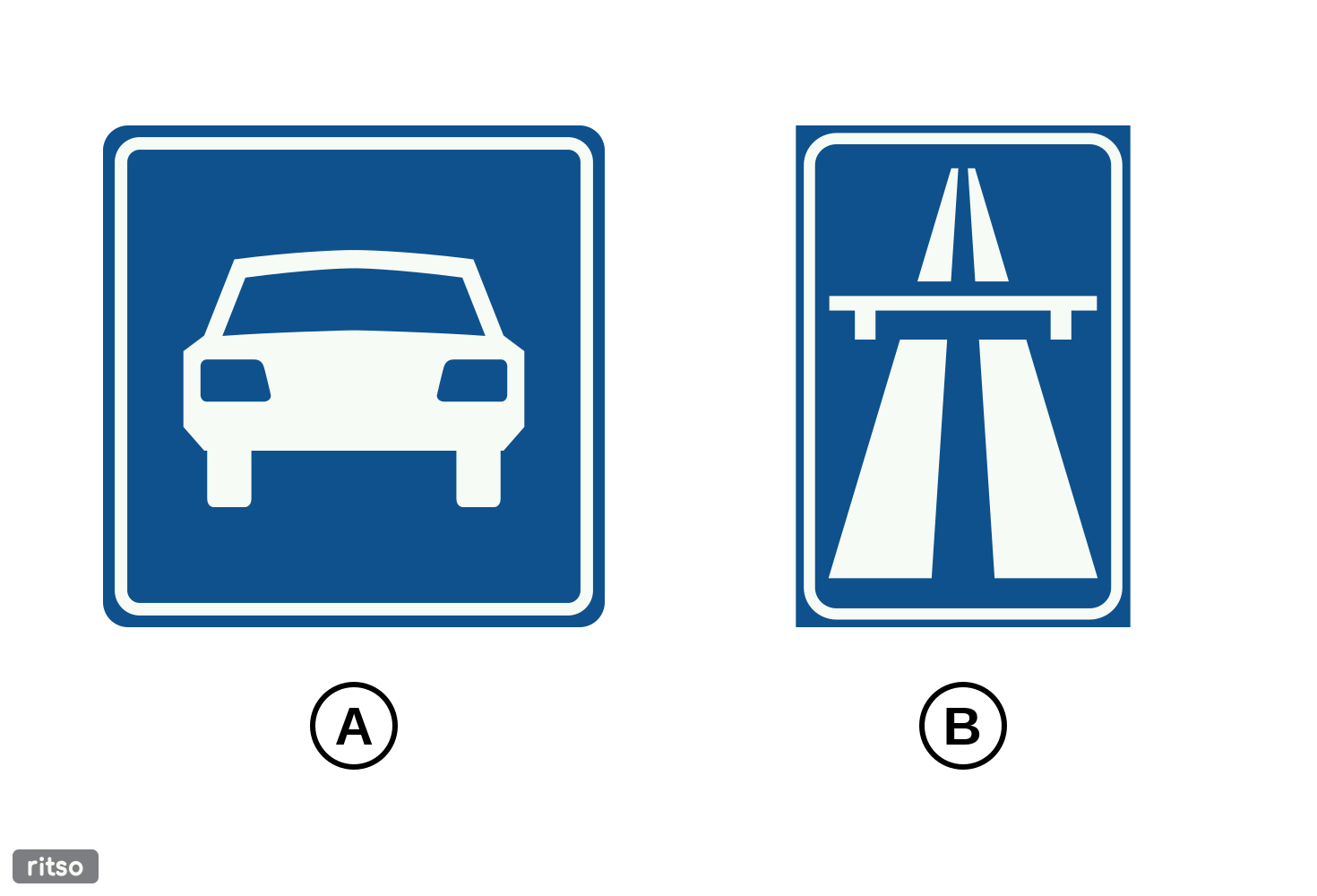
- A rectangular sign with a road on it says what kind of road starts. With a red bar through it, it ends.
- From sign H1, the place name, 50 applies. After H2 it is 80 again.
- From G1 the motorway rules apply, from G3 those of the autoweg.
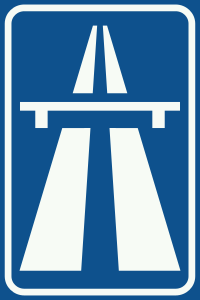
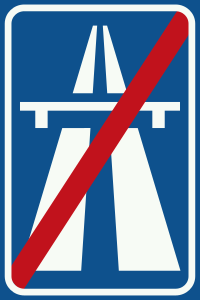
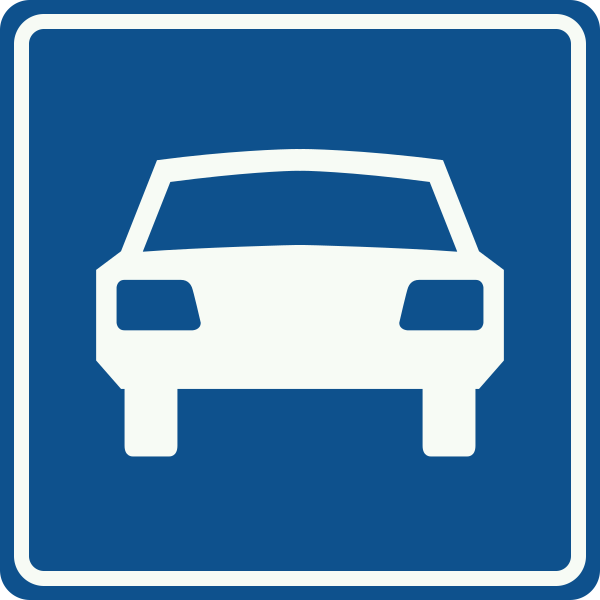
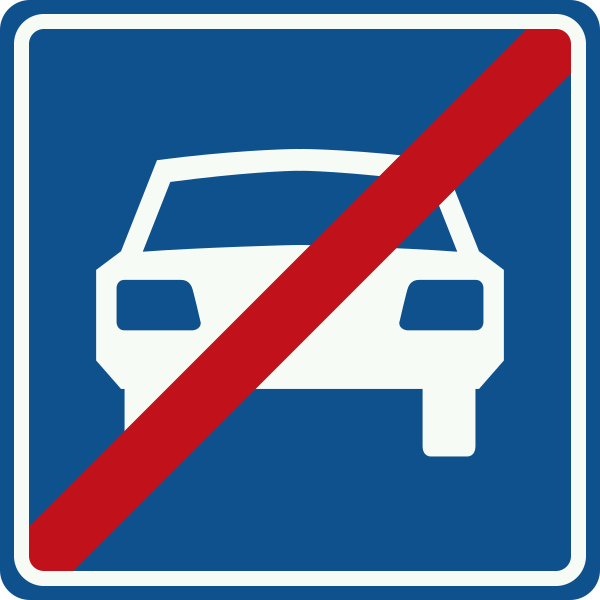
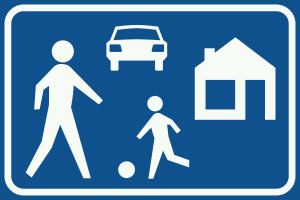
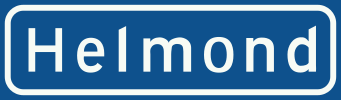

The rules of a kind of road apply from its sign. From G1 the motorway: 130 and no slow vehicles. From G3 the autowegA road with sign G3. Without other signs 100 km/h applies there.All exam words: 100. From G5 the erfA residential area with sign G5, where people walk and play on the street too. You drive at 15 km/h at most.All exam words: 15. From H1, the sign with the place name, the built-up area (bebouwde kom)The area between sign H1 and sign H2. Without other signs 50 km/h applies there.All exam words: 50.
RVV 1990 bijlage 1, G1RVV 1990 bijlage 1, H1
Show DutchHide Dutch
“G1 and G3 are both a motorway.”
G1 shows a bridge over two carriageways: the motorway, 130. G3 shows a car: the autoweg, 100. Without other signs that is the difference in speed.
RVV 1990 bijlage 1, G1RVV 1990 bijlage 1, G3
Show DutchHide Dutch
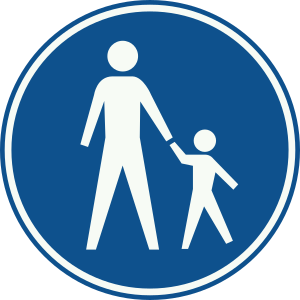
- G7Footpath
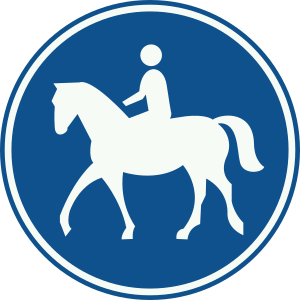
- G9Bridle path
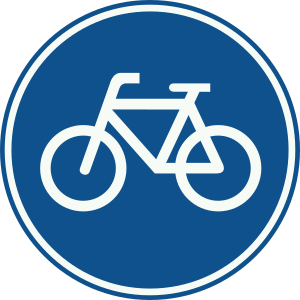
- G11Compulsory cycle path
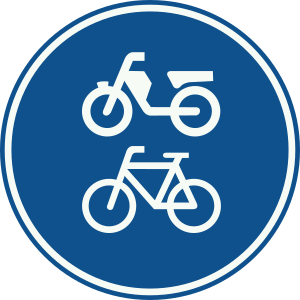
- G12aCycle and moped path
- G12bCycle/moped path ends
- G13Optional cycle path
- G14End optional cycle path
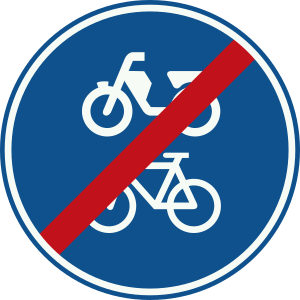
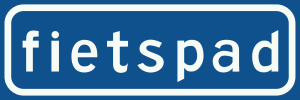
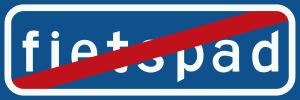
“A round blue sign and a black rectangular sign with a bicycle mean the same.”
The round blue G11 is a compulsory cycle path: cyclists must use it. The rectangular G13 saying "fietspad" is optional: cyclists may choose. A snorfiets with a petrol engine may only use it with the engine off.
RVV 1990 bijlage 1, G11RVV 1990 bijlage 1, G13
Show DutchHide Dutch
Different from home
In the Netherlands the place-name sign (H1) shows that you are entering a built-up area. There doesn't have to be a separate sign showing 50: it simply applies from the place name.