Narrow stretches, passing lanes and other F signs
The first lesson of every chapter is free to watch. The rest come with a free account.
In short
- Sign F5 faces you: you let oncoming traffic go first.
- Sign F6 faces you: oncoming traffic lets you go first.
- The sign decides, not which side the works are on.
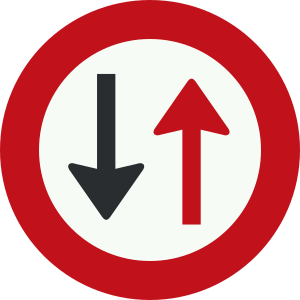
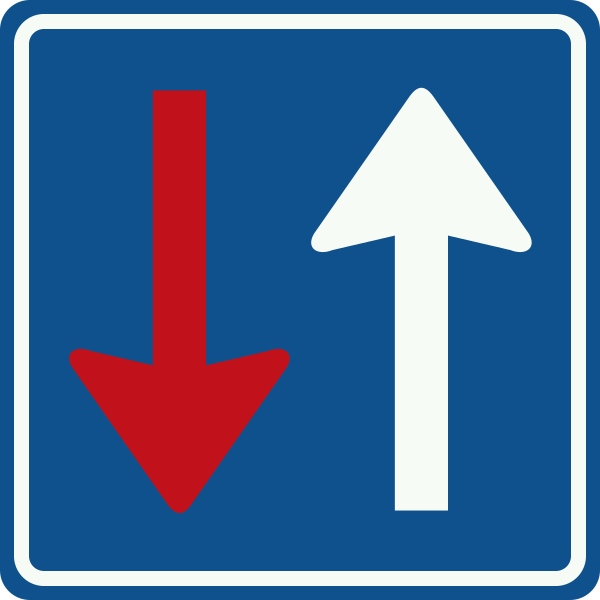
At a narrow stretch where only one car at a time can pass, the sign decides who goes first. If F5 faces you, you wait. If F6 faces you, the oncoming traffic lets you go.
RVV 1990 bijlage 1, F5RVV 1990 bijlage 1, F6
Show DutchHide Dutch
“The works are on my side, so I must wait.”
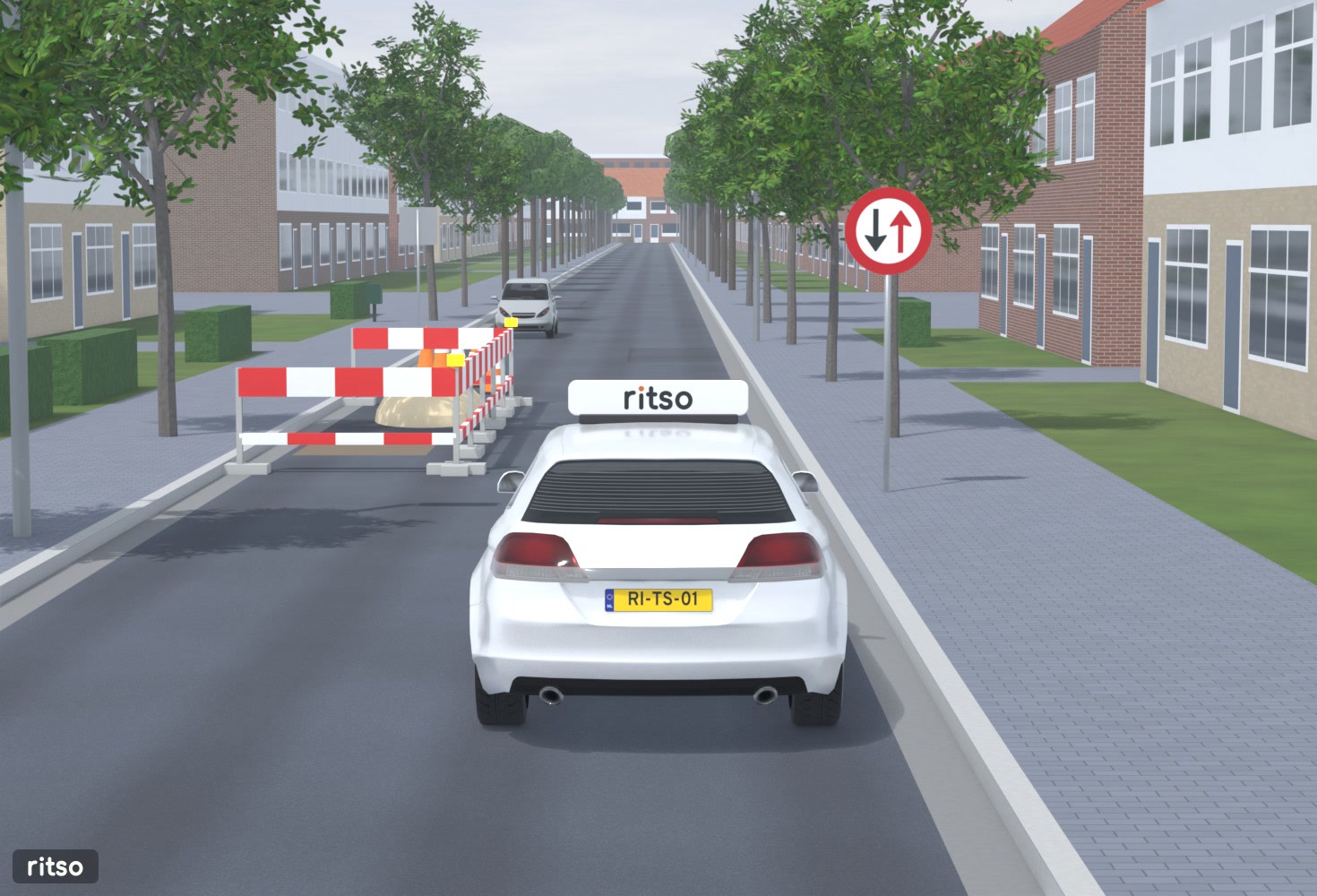
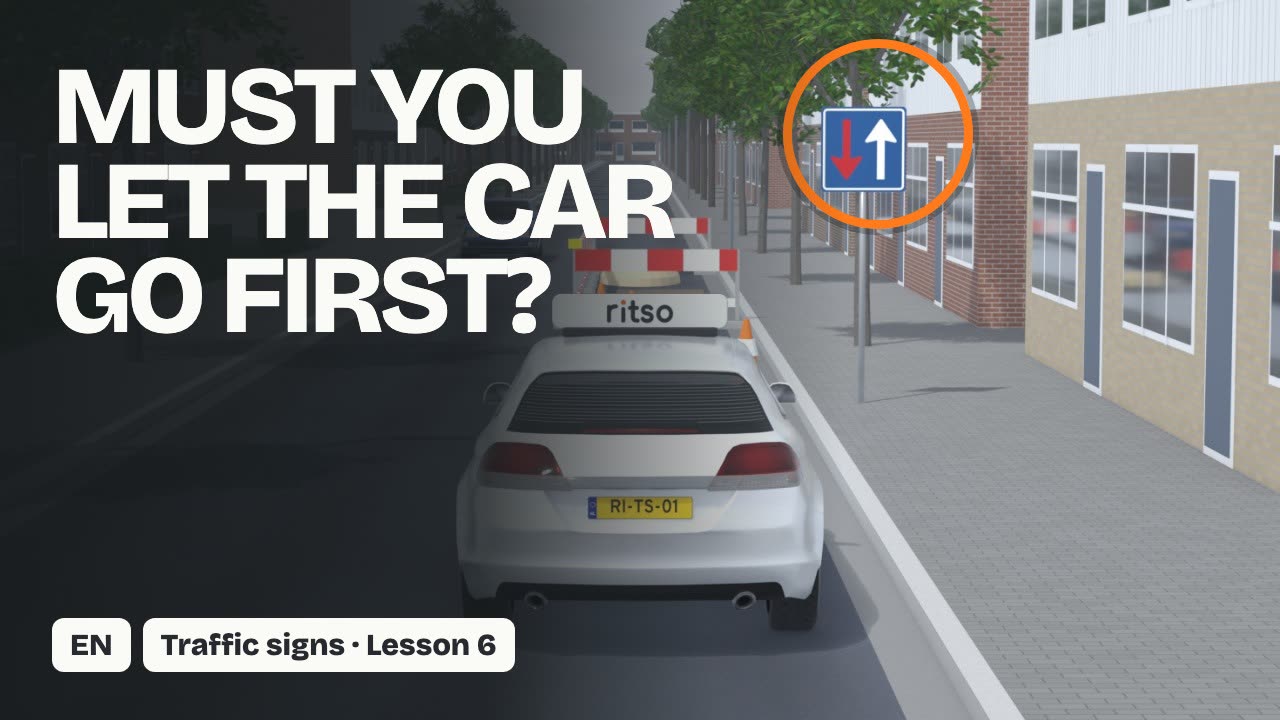
Not if F6 faces you: then you go first, even with the works on your side. And with F5 you wait, even if the works are on the other side. The sign comes first.
Show DutchHide Dutch
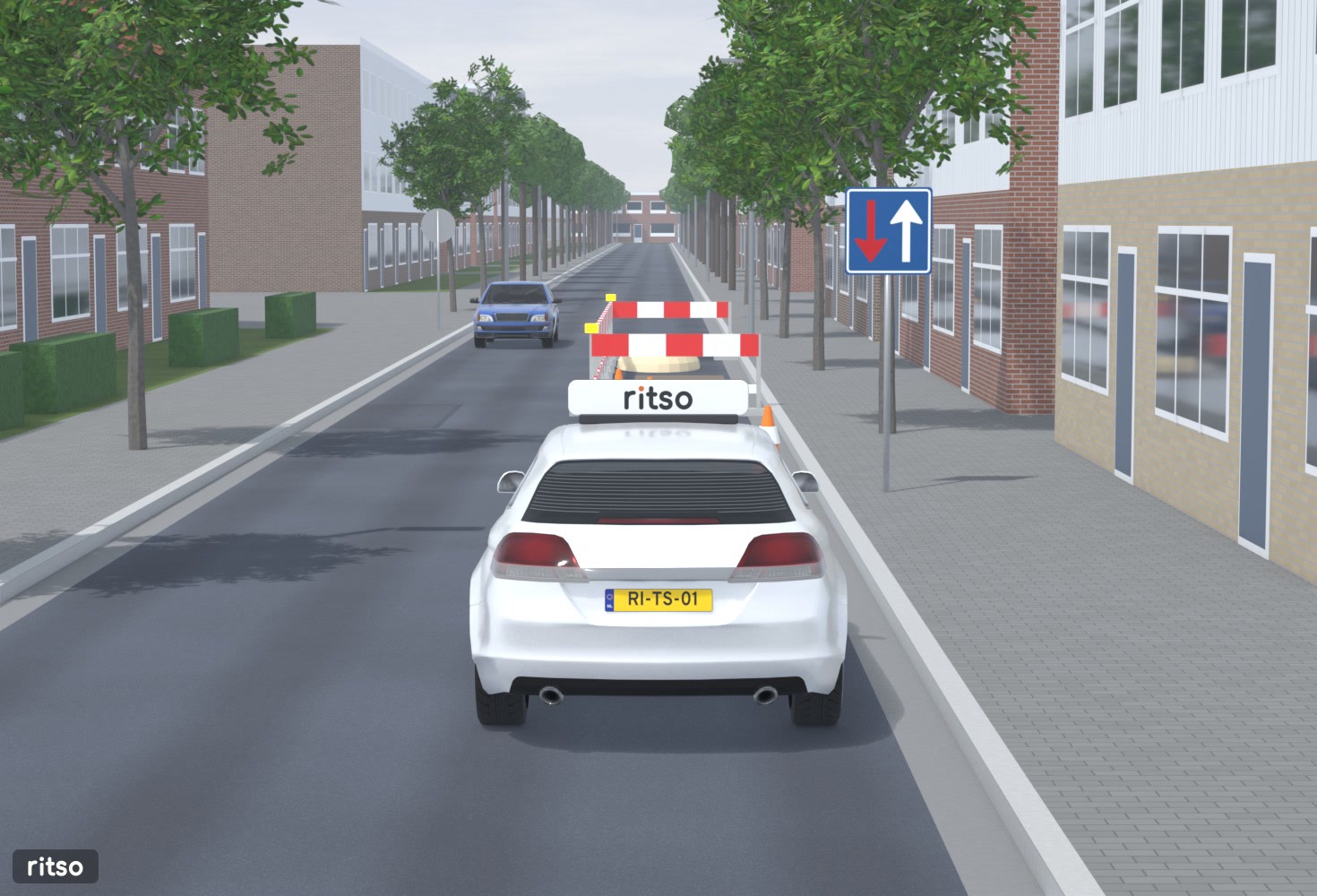 The rule applies
F6 facing you. You go first.
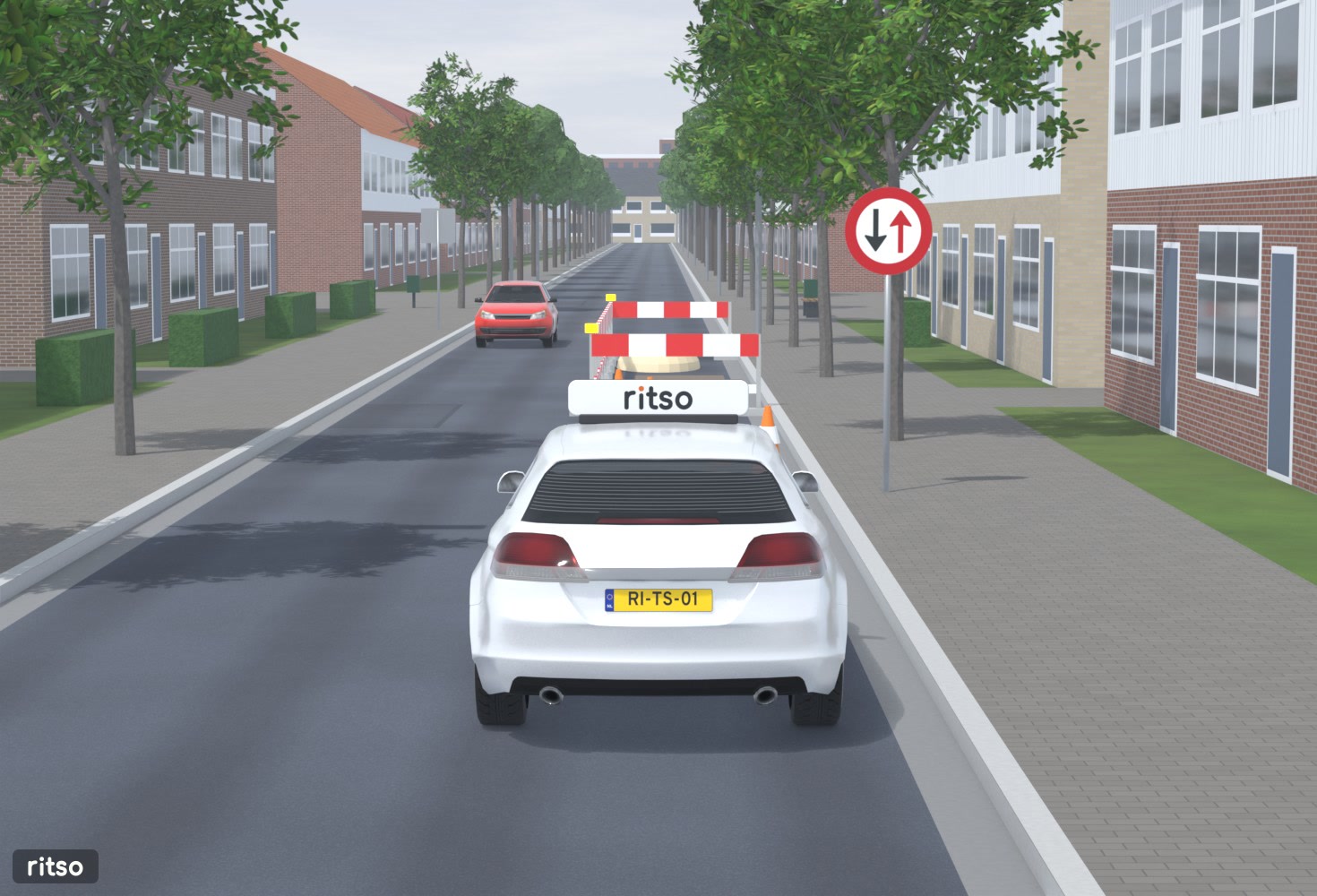 It doesn't
F5 facing you. The oncoming car goes first.
Sign F11 is for farm tractors, motor vehicles with limited speed and mobile machines. They must use the passing lane, so that you can overtake them. After F12 they are back on the ordinary road.
Show DutchHide Dutch
The other F signs are with their subject. You find the overtaking bans F1 to F4 with overtaking, the lanes for buses, trams and lorries with the bus lanes, turning (F7) with the commands, and the end of all bans (F8, F9) with the speed signs.