Roundabouts
The first lesson of every chapter is free to watch. The rest come with a free account.
In short
- Shark teeth at the entry: the traffic on the roundabout goes first.
- The cycle path round the roundabout: whoever has the shark teeth gives way.
- On and just before a roundabout you don't have to keep right.
Most roundabouts have shark teeth (haaientanden)White triangles on the road, pointing at you. You give way to the traffic on the road you are coming to.All exam words and sign B6 at the entry. Then the traffic on the roundabout goes first. Someone waiting at another entry is not in your way.
Show DutchHide Dutch
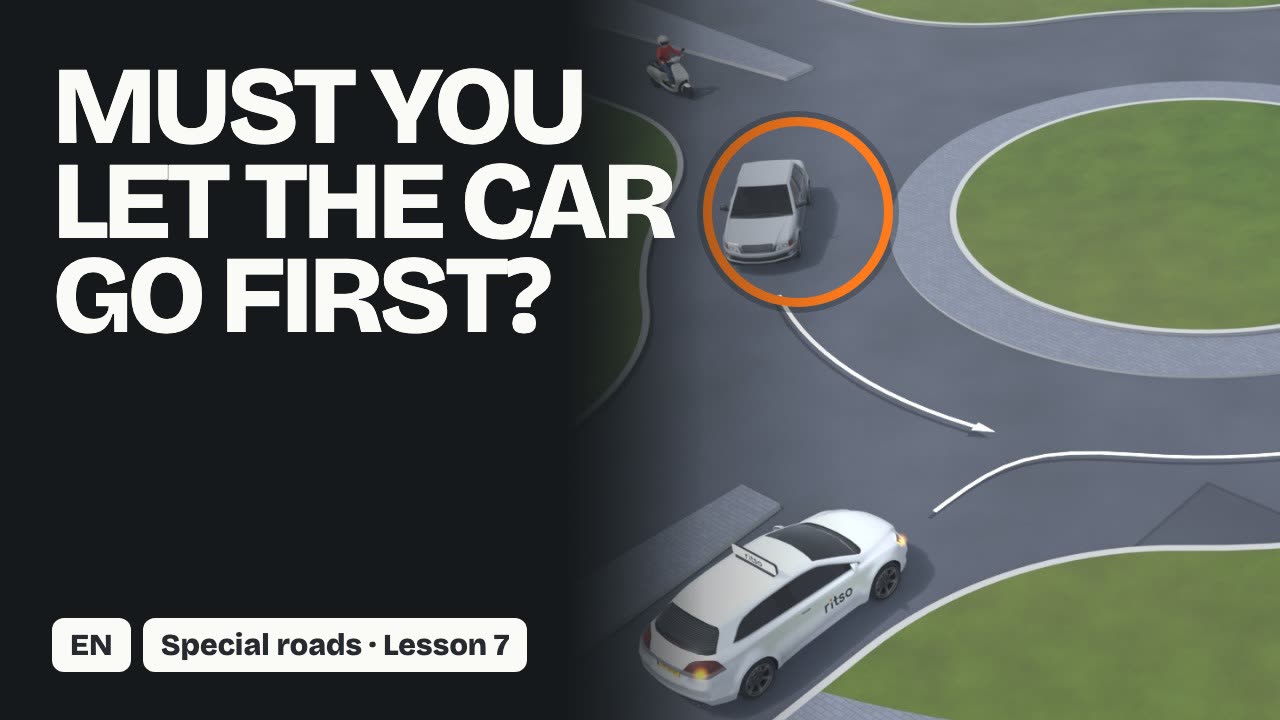
Shark teeth. The car on the roundabout goes first. Then you.
No signs. Without signs the rule from the right applies. You come from the right of the car on the roundabout, so you go first.
“On a roundabout the traffic on it always goes first.”
Only if there are shark teeth or sign B6 at your entry. Without signs the ordinary rule applies: traffic from the right goes first. The traffic on the roundabout then comes from your left, so you go first.
Show DutchHide Dutch
Many roundabouts have a cycle path round them. If the shark teeth face you, the cyclists go first, both when you drive on and when you drive off. If they are on the cycle path, the cyclists let you go.
Show DutchHide Dutch
When you drive off the roundabout, you turn off: you let a pedestrian crossing the road there go first. That holds without a zebra too. When you drive onto the roundabout, you only have to at a zebra. You always let a pedestrian on a zebra go first.
RVV 1990 art. 18 lid 1RVV 1990 art. 49 lid 2
Show DutchHide Dutch
Work it out
You drive onto a roundabout. Round it is a cycle path with priority. A cyclist is coming, and a car is on the roundabout.
- The cyclist first: before the cycle path there are shark teeth for you.
- Then the car: at your entry there are shark teeth and sign B6.
- Then you.
The order comes from our rules engine, not from a person.
On and just before a roundabout you don't have to keep right. If you take a later exit, you may drive on the left of the carriageway. Overtaking on the right is allowed there too.
RVV 1990 art. 47RVV 1990 art. 48
Show DutchHide Dutch
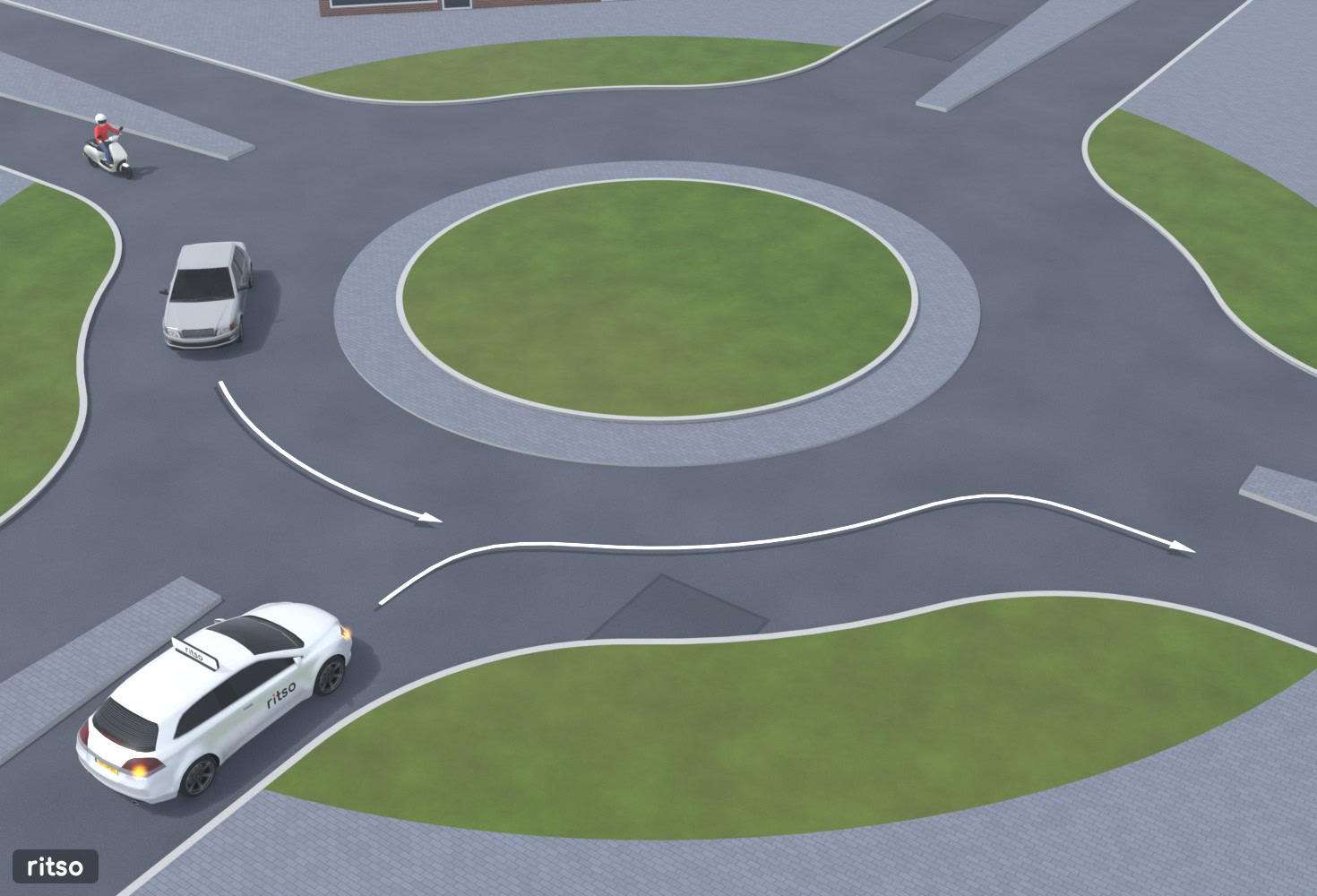
On a roundabout with two lanes and a broken line between them you may change lanes. That is a special manoeuvre (bijzondere manoeuvre)Moving off, reversing, turning round, coming out of an exit or changing lanes. You then let all other traffic go first.All exam words: you let the traffic in the other lane go first. If you leave the roundabout from the left lane, you cross the right one. Then too you let the traffic there go first.
RVV 1990 art. 54RVV 1990 art. 47
Show DutchHide Dutch
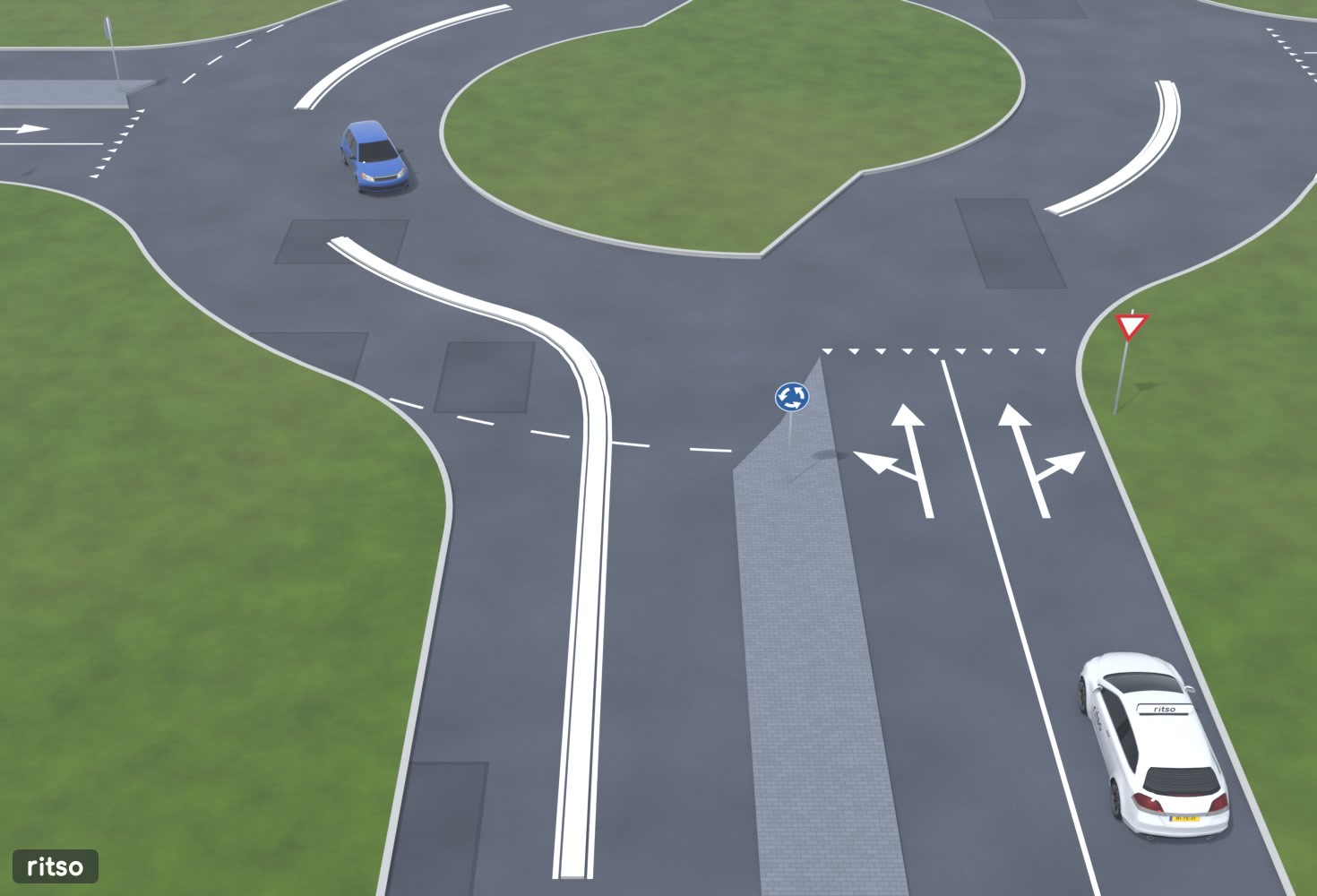
On a turbo roundabout (turborotonde)A roundabout with two lanes, separated by a raised divider. You choose your lane before you drive onto it.All exam words you choose your lane before you drive onto it. The arrows on the road show where each lane goes, and you must follow that direction. The left lane often goes straight on too. On the roundabout a raised divider with solid lines separates the lanes: you don't change lanes there. If you miss your exit, drive on to an exit you can take from your lane.
RVV 1990 art. 78 lid 1RVV 1990 art. 76 lid 1
Show DutchHide Dutch