Bus lanes, tram lanes and bus stops
The first lesson of every chapter is free to watch. The rest come with a free account.
In short
- In your car you don't drive on a bus lane.
- In a built-up area you let a bus that is indicating pull away from the stop.
- If people get out of a tram or bus on your side, you wait.
On a bus lane (bus-strook)A part of the carriageway between lines with BUS or LIJNBUS on it. Only for buses and trams.All exam words marked BUS go service buses, other buses and trams. If it says LIJNBUS, only service buses and trams. A taxi or a car doesn't belong there.
Show DutchHide Dutch
- F14End of bus lane
- F15Tram lane
- F16End of tram lane
- F17Bus and tram lane
- F18End of bus and tram lane
- F19Lorry and bus lane
- F20End of lorry and bus lane
- F21Lane for lorries
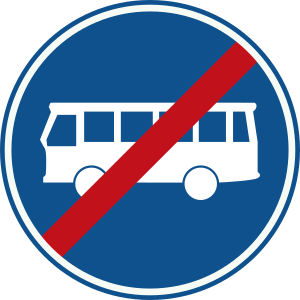
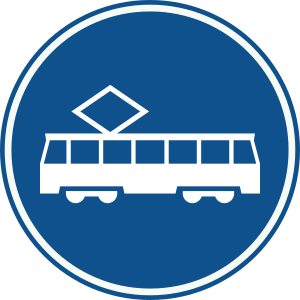
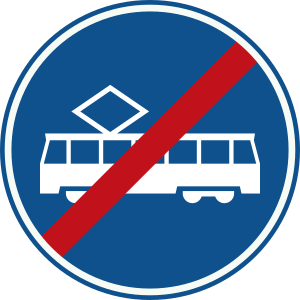
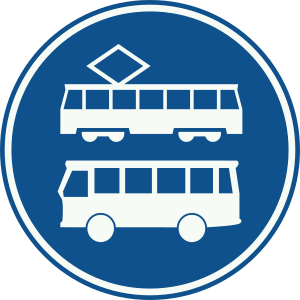
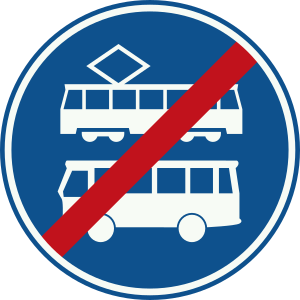
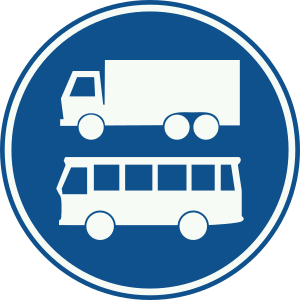
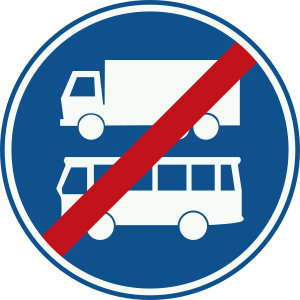
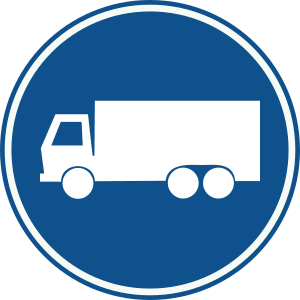
After a sign that ends such a lane, your car may use it again. Those are F14, F16, F18, F20 and F22. At F13, F15, F17, F19 and F21 you keep off it.
Show DutchHide Dutch
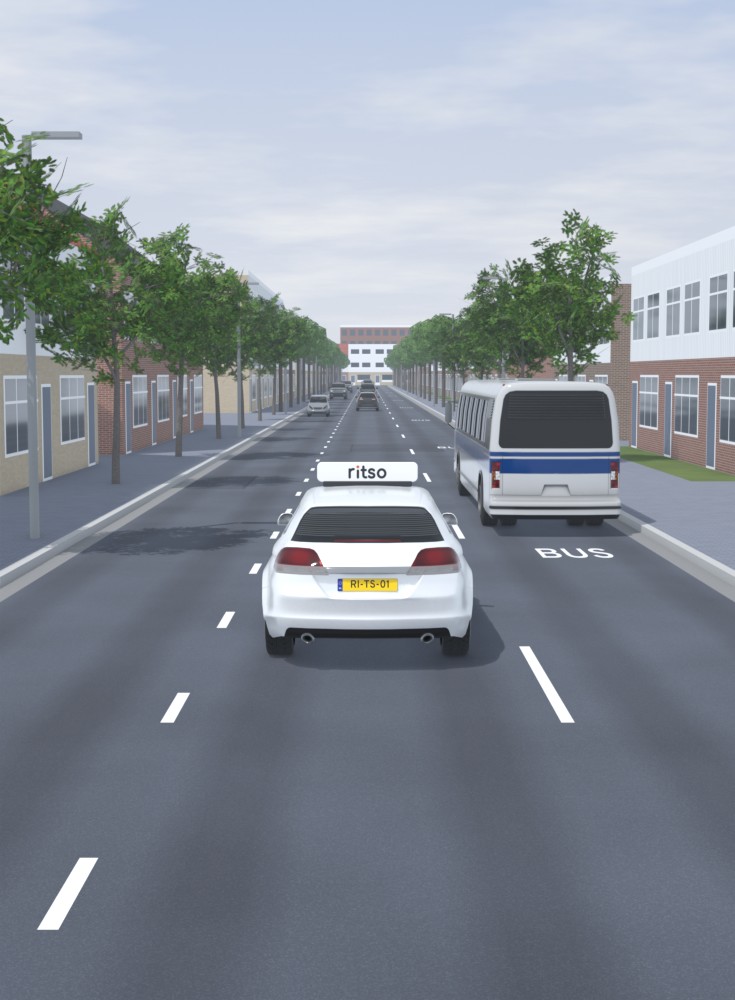 The rule applies
Broken line. The bus may move into your lane, but then lets you go first.
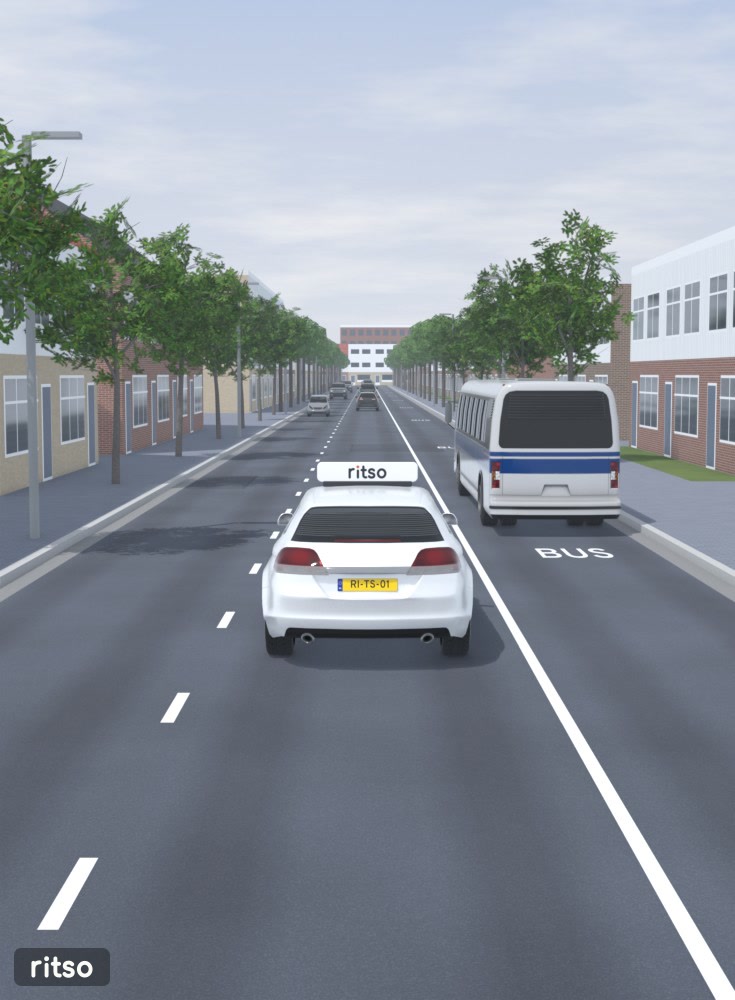 It doesn't
Solid line. Nobody may cross a solid line, the bus neither.
A bus following its bus lane may cross a hatched area (verdrijvingsvlak)An area of white diagonal stripes on the road, often at an exit. You don't drive across it.All exam words as it does. You may not in your car.
Show DutchHide Dutch
In a built-up area you let a bus pull away from the stop when it indicates. If it pulls away in its own bus lane, it is not in your way and you drive on.
Show DutchHide Dutch
“I always let a bus pulling away from a stop go first.”
Only in a built-up area. Outside one, pulling away is a special manoeuvre (bijzondere manoeuvre)Moving off, reversing, turning round, coming out of an exit or changing lanes. You then let all other traffic go first.All exam words: the bus then lets you go first. A military convoy or a funeral procession doesn't have to let the bus go either.
RVV 1990 art. 56 lid 1RVV 1990 art. 56 lid 2RVV 1990 art. 54
Show DutchHide Dutch
If a tram or bus has stopped and people get on or off on your side, you give them the chance. You stop and wait until they are safe. Only the side with the doors counts. A tram on the far side of the road that opens its doors on its other side doesn't concern you. If there is a platform between the tram and your lane, they don't come onto your road and you don't have to stop.