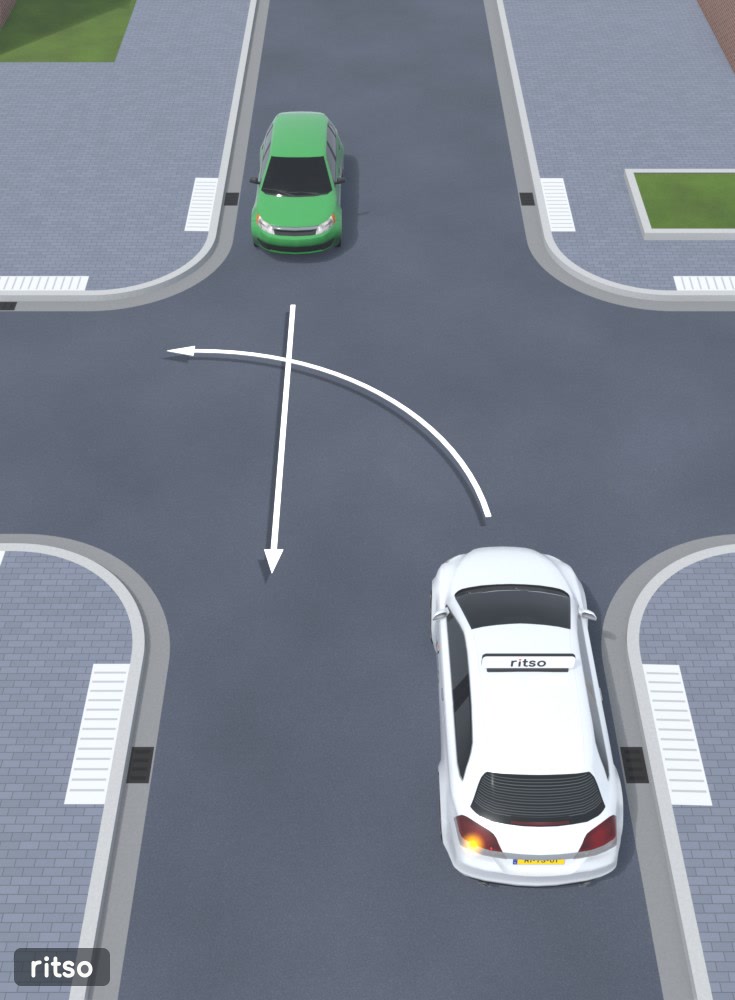
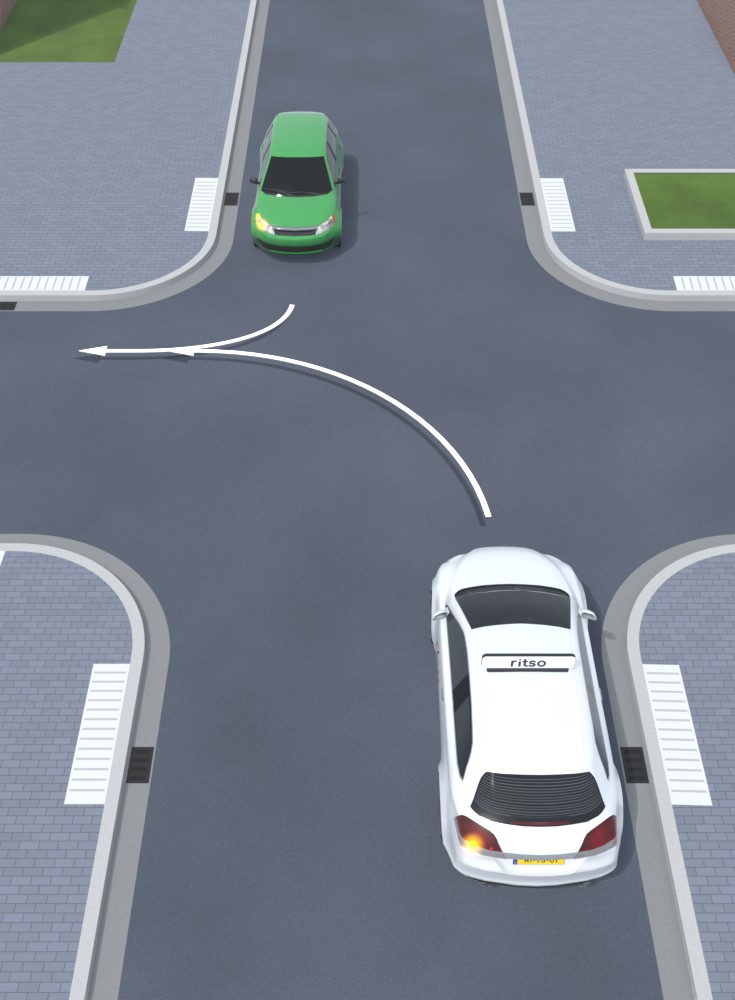
Turning: who do you let go first?
The first lesson of every chapter is free to watch. The rest come with a free account.
In short
- When you turn, you let the traffic on your road go first: oncoming and beside you.
- On a priority road too: when you turn, straight on along the same road goes first.
- Turning left? Then oncoming traffic turning right goes first as well.
When you turn off, you let the traffic on the same road go first. That is traffic coming towards you, and traffic beside you or just behind you. Think of a cyclist in the cycle lane or on the cycle path beside you. A tram that turns doesn't have to: this rule doesn't apply to the tram.
RVV 1990 art. 18 lid 1RVV 1990 art. 18 lid 3
Show DutchHide Dutch
When you turn left, you also let oncoming traffic go first that turns right at the same junction. You both want the same road, and the turn to the right is shorter.
Show DutchHide Dutch
Is a pedestrian crossing the road you are turning into? Let them cross first, also without a zebra crossing.
Show DutchHide Dutch
“I'm on the priority road, so when I turn left I go first.”
No. The priority road gives you priority over the side roads. Oncoming traffic on your own road still goes first when you turn. So does a cyclist going straight on. Someone coming out of a side road with shark teeth (haaientanden)White triangles on the road, pointing at you. You give way to the traffic on the road you are coming to.All exam words does wait for you while you turn.
Show DutchHide Dutch
Different from home
In the Netherlands, cyclists often ride on your right, in a cycle lane or on a cycle path. When you turn right, always check your mirror and look over your shoulder first.
Work it out
A junction with no signs. You turn left. An oncoming car goes straight on. A cyclist comes from the right.
- The car first: it goes straight on along your road and you turn.
- Then the cyclist: they come from your right.
- Then you.
The order comes from our rules engine, not from a person.