Where may you park?
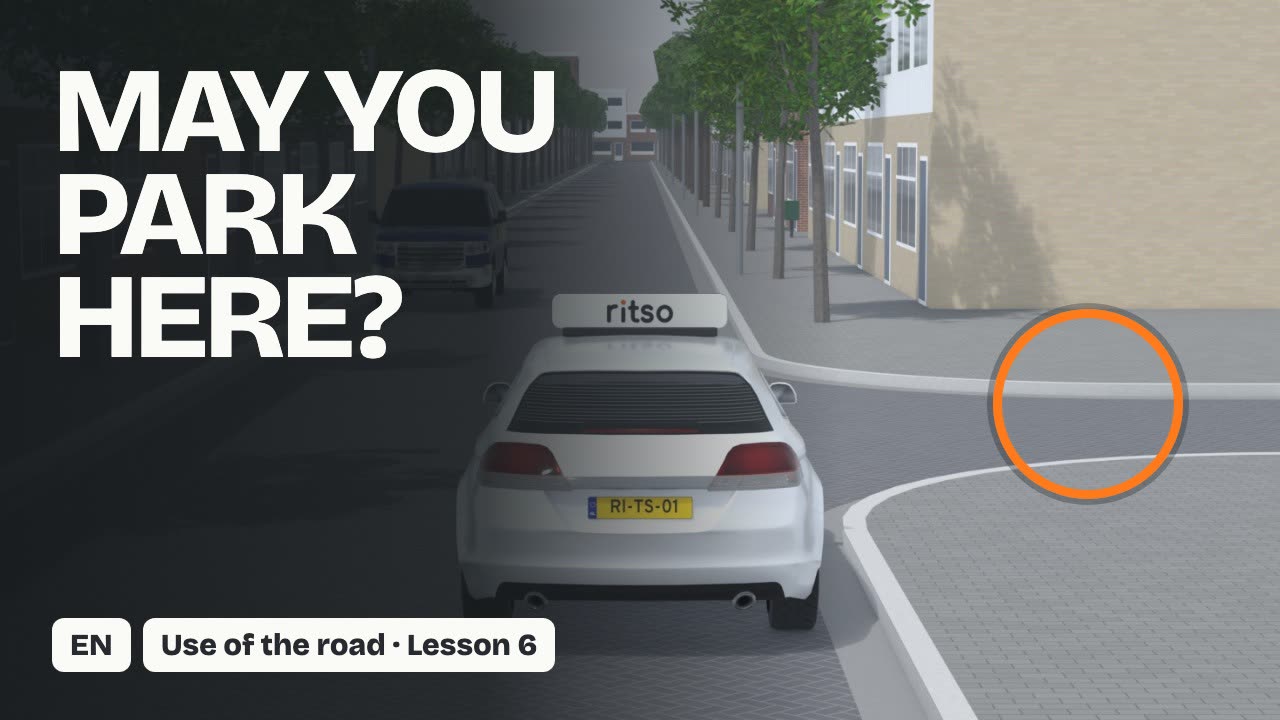
The first lesson of every chapter is free to watch. The rest come with a free account.
In short
- You park on the carriageway or beside it, never on the pavement, a footpath, cycle path or bridle path.
- Not within 5 metres of a junction, in front of an exit, along a broken yellow line, or double.
- Outside built-up areas a priority road's carriageway is no place to park.
You park on the carriageway or on another part of the road, such as the verge (berm)The strip beside the carriageway, often grass or gravel. It is not part of the carriageway.All exam words. Never on the pavement, a footpath, a cycle path or a bridle path. Not half on the pavement either, unless a sign allows it.
Show DutchHide Dutch
| You don't park here |
|---|
| Less than 5 metres from a junction (kruispunt)A place where roads cross or split. A T-junction is a junction too. An exit is not.All exam words |
| In front of an entrance or an exit (uitrit)Where you drive onto the road from a property, a car park or an erf. You then let all traffic go first.All exam words |
| A priority road (voorrangsweg)A road with sign B1. At the junctions along it, you have priority over traffic from the side roads.All exam words outside built-up areas: its carriageway |
| Along a broken yellow line |
| At a loading place (sign E7) |
| Double: beside a car that is already parked |
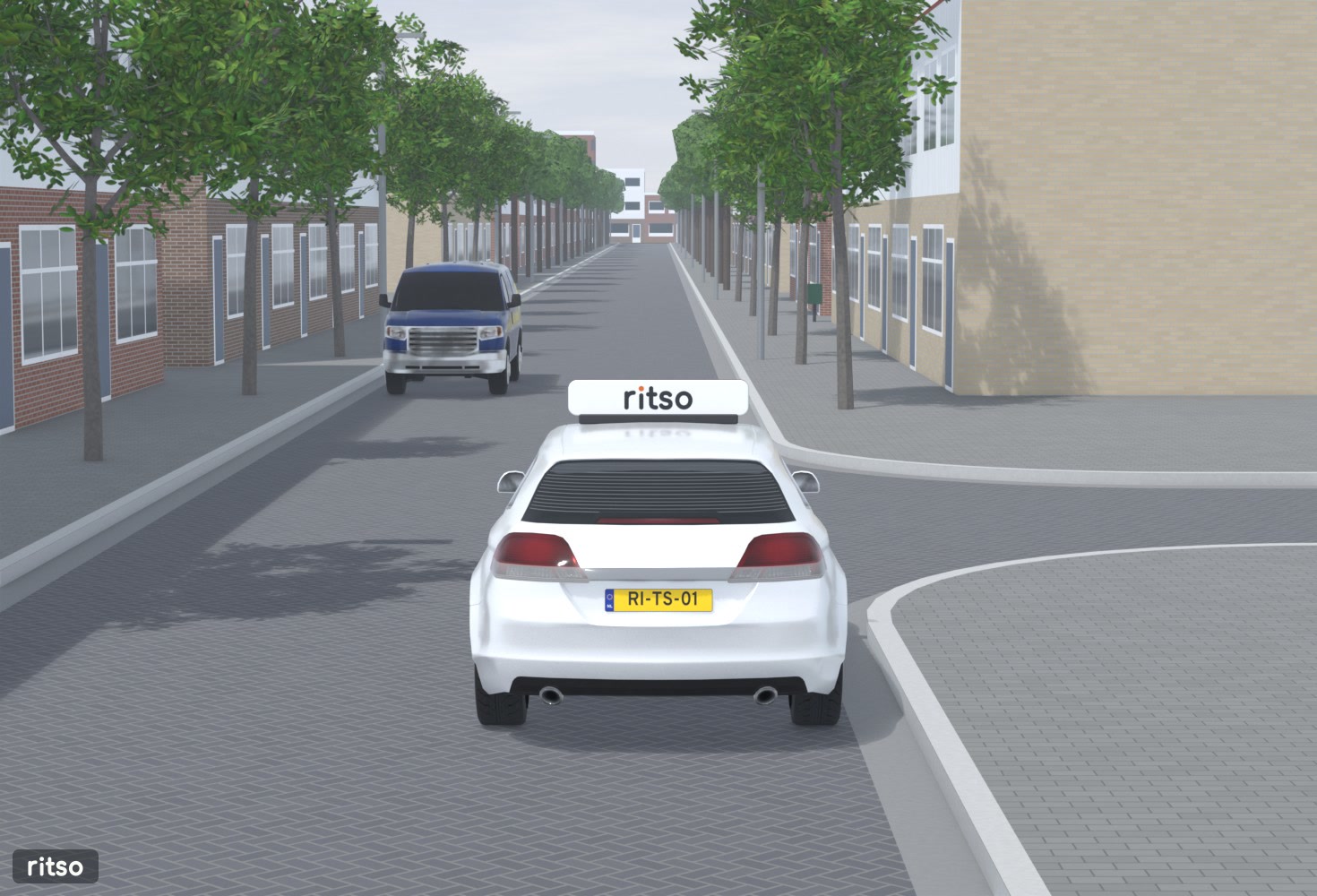
“Within 5 metres of a junction I may not stop either.”
The 5 metres are for parking. Stopping is only forbidden on the junction itself. A zebra crossing is different: within 5 metres of it you may not even stop.
RVV 1990 art. 24 lid 1 onderdeel aRVV 1990 art. 23 lid 1 onderdeel a
Show DutchHide Dutch
Outside built-up areas a priority road's carriageway is no place to park. Its verge is, if no sign or line says otherwise.
RVV 1990 art. 24 lid 1 onderdeel c
Show DutchHide Dutch
“With my hazard lights on I may double park for a moment.”
Double parking is never allowed, hazard lights or not. If you walk away to deliver a parcel, you are parking. Letting someone get out straight away is allowed. Hold up the traffic as briefly as you can.
Show DutchHide Dutch
Sign E1 only holds on the side of the road where it stands. If it is on the other side, you may park on your side. It doesn't hold for bays that are meant for parking either.
RVV 1990 art. 65 lid 2RVV 1990 art. 65 lid 3
Show DutchHide Dutch
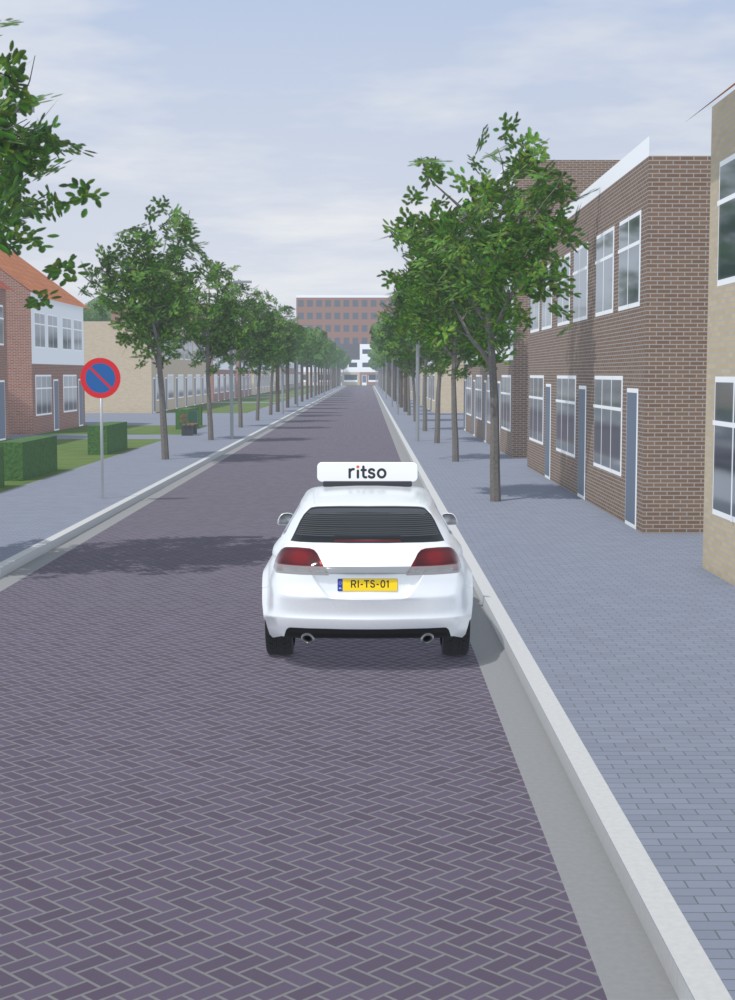 The rule applies
Sign across the road. The sign doesn't hold on your side. You may park here.
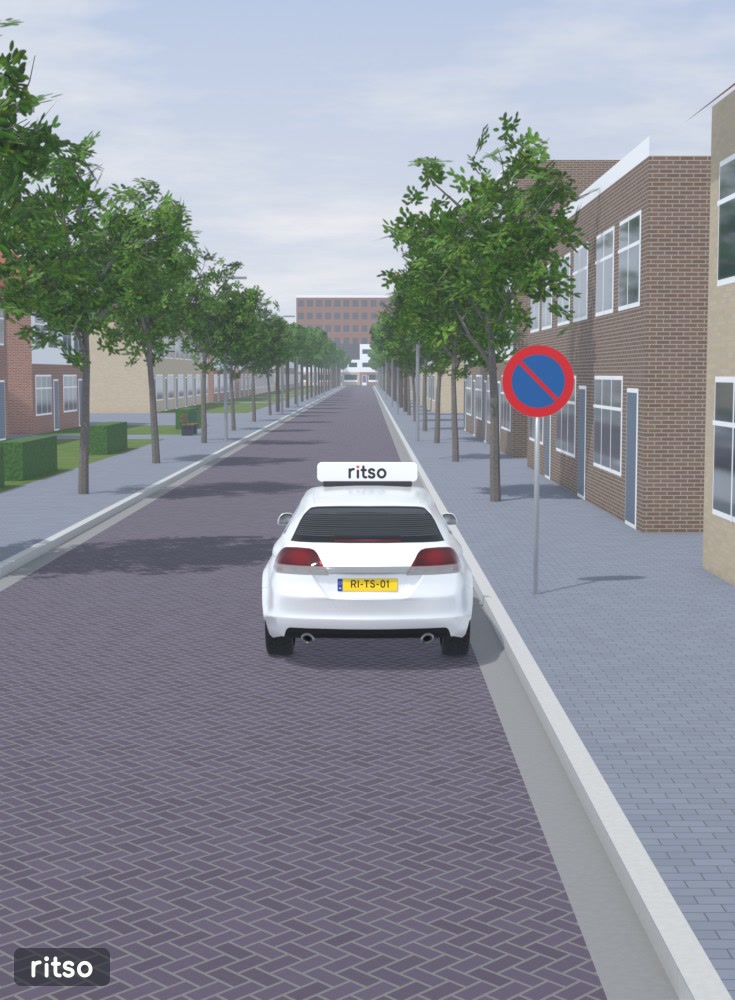 It doesn't
Sign on your side. The sign holds on your side. You may not park here.
If «zone» is above sign E1, the parking ban holds in the whole zone. So not only close to the sign. If the name of an area is added, that area is the zone. Otherwise the zone runs to the sign that shows its end. In the parking bays you may park. Letting someone get in or out straight away is allowed too: that isn't parking.
RVV 1990 art. 66 lid 1RVV 1990 art. 66 lid 2RVV 1990 art. 65 lid 3RVV 1990 art. 1
Show DutchHide Dutch
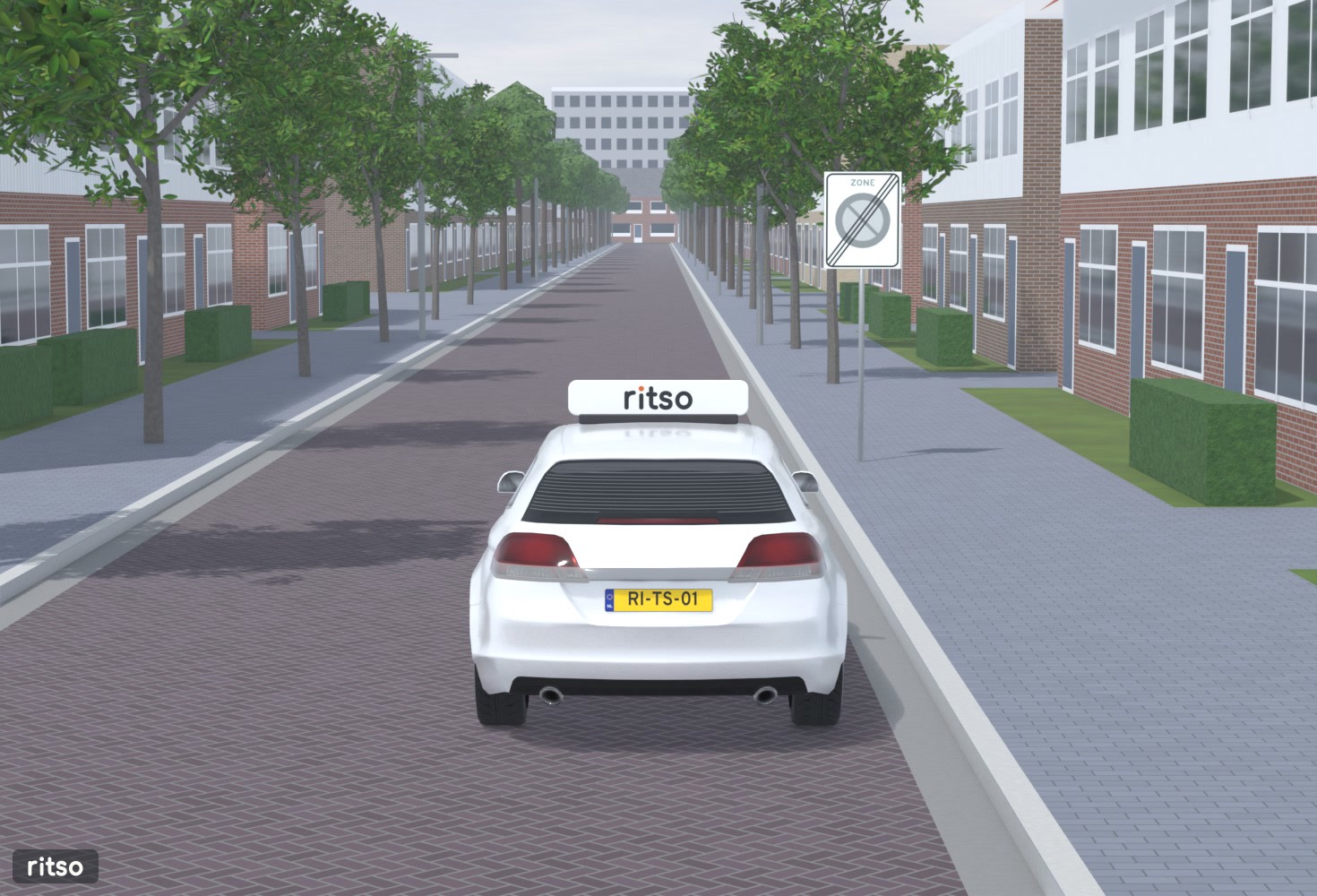 The rule applies
Past the end of the zone. The parking ban no longer holds. You may park here.
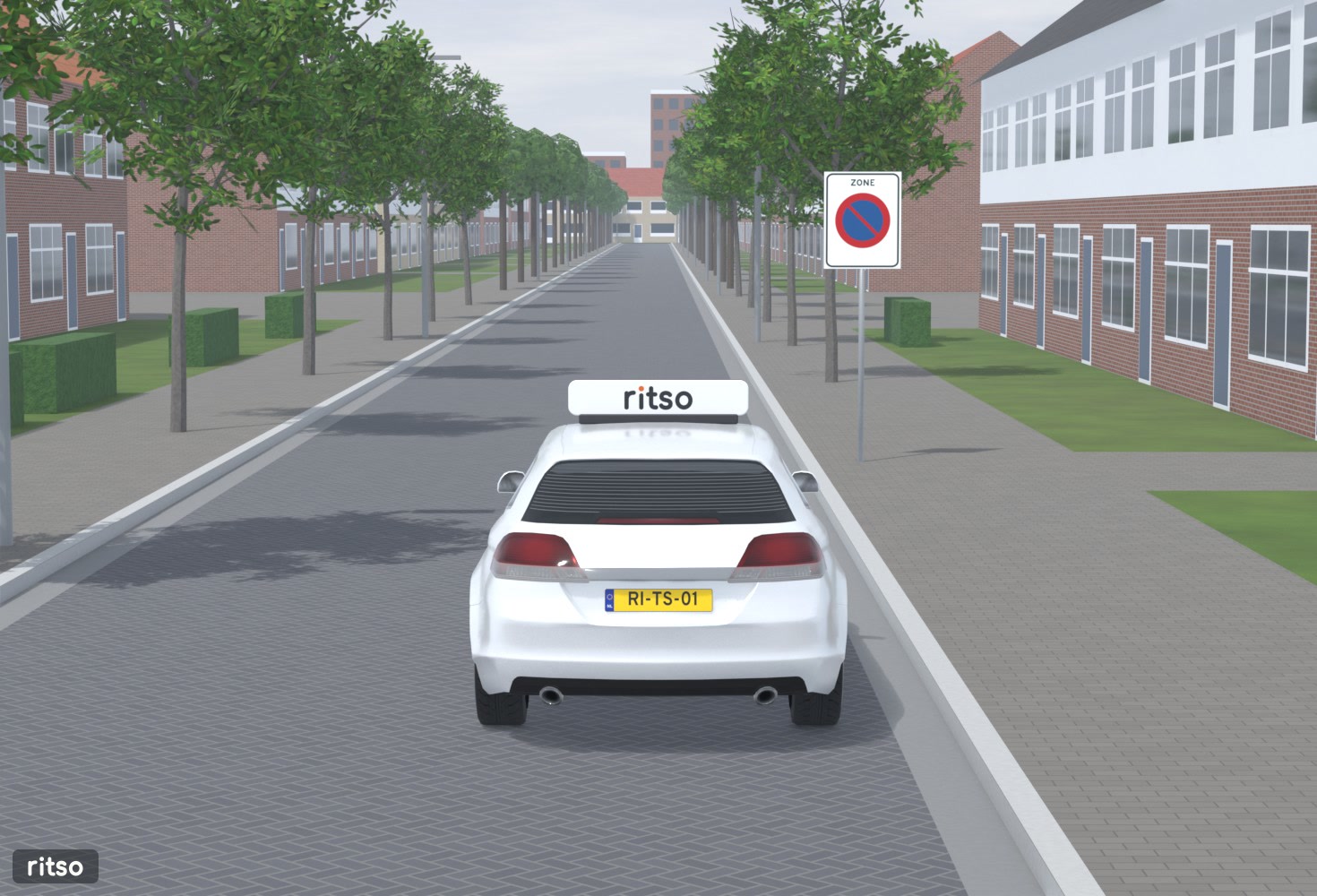 It doesn't
In the zone. The parking ban holds along the whole street, further on too. You may not park here.