Merging, leaving and the rush-hour lane
The first lesson of every chapter is free to watch. The rest come with a free account.
In short
- When merging or leaving, you give way to whoever is already in the lane.
- Once you are at the arrows in the exit lane, you follow their direction.
- An open rush-hour lane is a lane. A closed one is a hard shoulder again.
Moving from the acceleration lane (invoeg-strook)The strip beside the main carriageway, behind a block marking, that you use to join the road.All exam words onto the carriageway is a special manoeuvre (bijzondere manoeuvre)Moving off, reversing, turning round, coming out of an exit or changing lanes. You then let all other traffic go first.All exam words. You give way to the traffic on the carriageway, a lorry beside you too. If you are in the right lane and the left is free, you help merging traffic by moving one lane to the left in good time. If there is a traffic light on the slip road, it lets the cars through one by one: on red you wait, even if you see room.
RVV 1990 art. 54RVV 1990 art. 68 lid 1
Show DutchHide Dutch
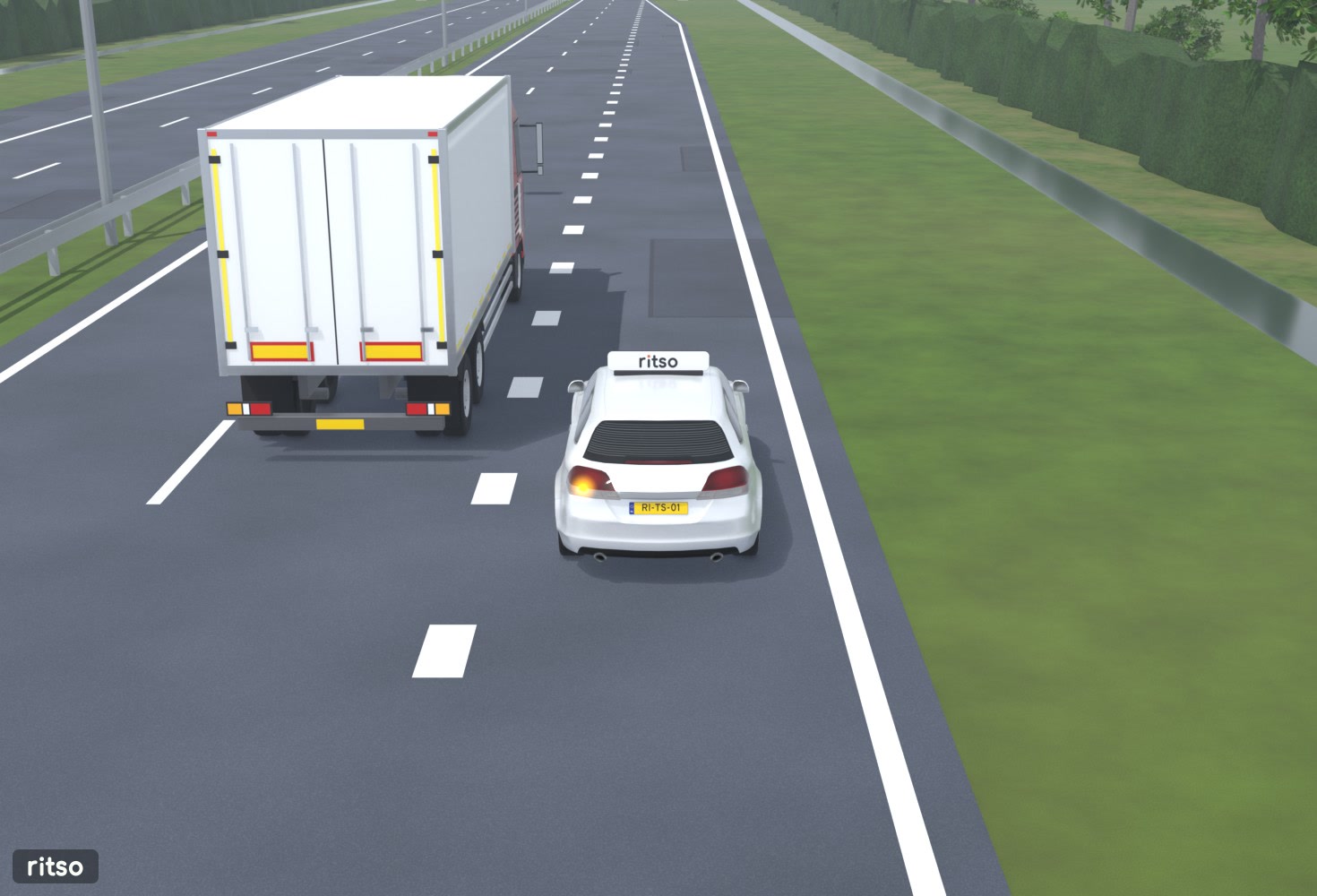
If your lane ends, you change lanes: you let the traffic in the other lane go first. Taking turns (zipping) is polite, but not a rule. If the lane you join the road on simply carries on as a lane, you don't merge. You keep driving on the right and nobody has to wait for you.
RVV 1990 art. 54RVV 1990 art. 3 lid 1
Show DutchHide Dutch
The acceleration lane and the exit lane (uitrij-strook)The strip beside the main carriageway, behind a block marking, that you use to leave the road.All exam words lie behind a block marking. There you may pass the traffic on your left on the right, along a queue for example. If you move back to the carriageway, you give that traffic way.
Show DutchHide Dutch
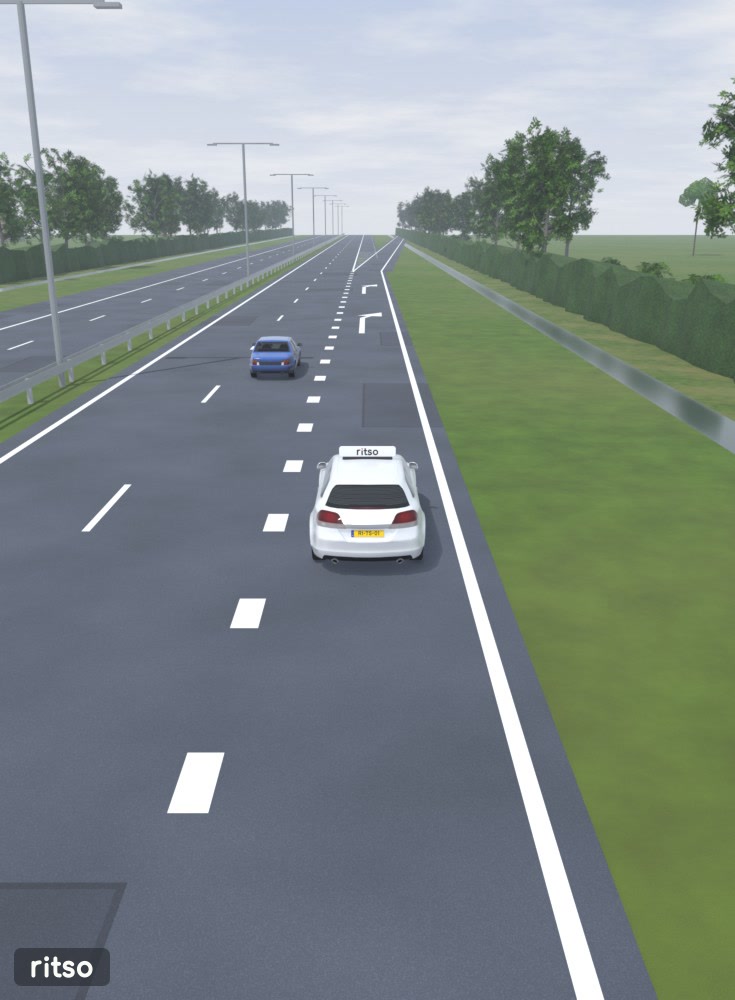 The rule applies
Before the arrows. You may still go back to the carriageway, if you let its traffic go first.
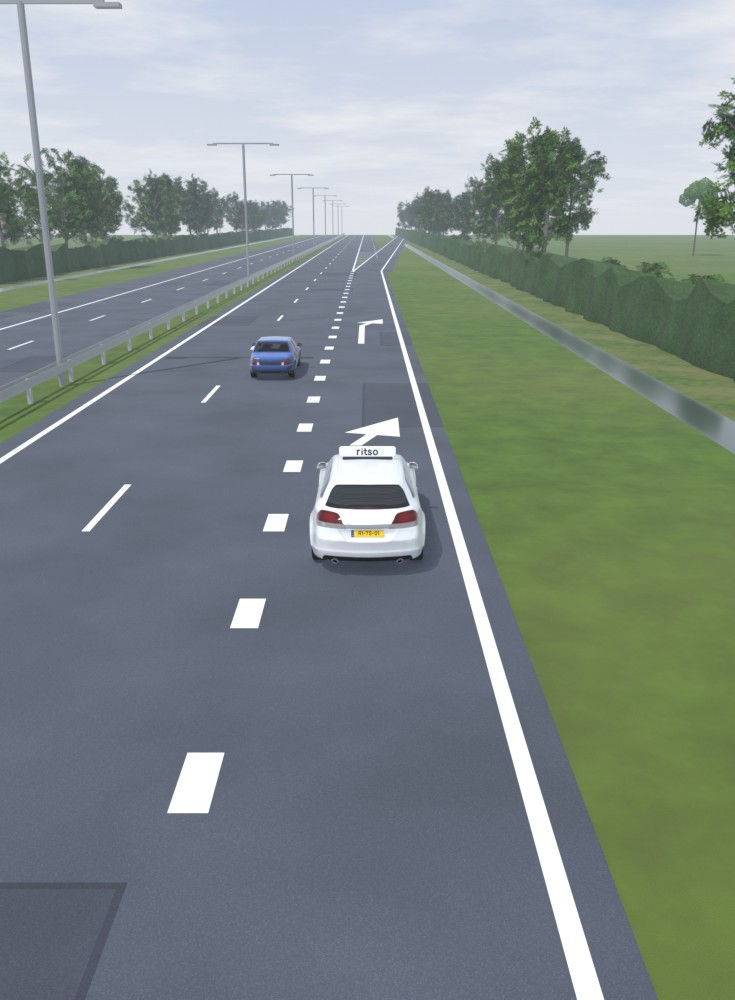 It doesn't
At the arrows. From the arrows on you follow their direction: you take the exit.
“I have just passed the exit, so I cut across the white stripes.”
You don't drive across a hatched area (verdrijvingsvlak)An area of white diagonal stripes on the road, often at an exit. You don't drive across it.All exam words, nor across a solid line between lanes. If you are too late for the exit, you drive on to the next one.
RVV 1990 art. 77 lid 1RVV 1990 art. 76 lid 1
Show DutchHide Dutch
In a queue you don't have to keep right. You may stay in your lane, even when there is room on the right.
Show DutchHide Dutch
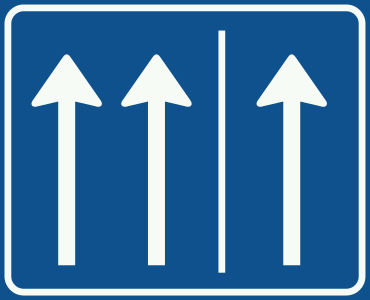
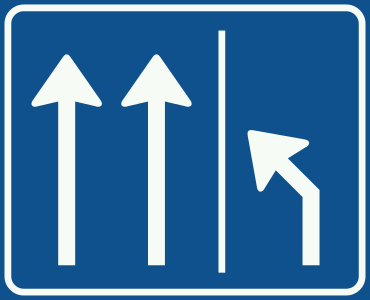
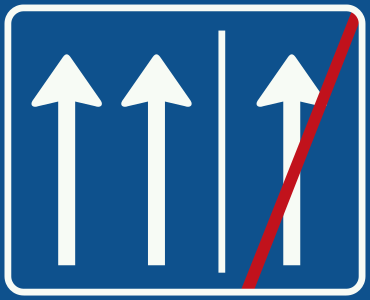
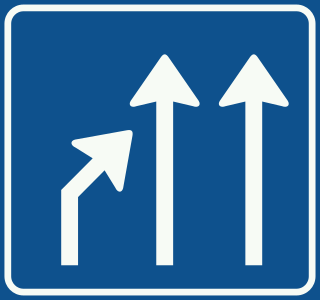
A rush-hour lane (spits-strook)A hard shoulder that is a lane while sign C23-01 is shown above it.All exam words is a hard shoulder that can open as a lane. With sign C23-01 above it, you may drive on it. You may then cross the solid line to get on or off it. If it runs past an exit across a hatched area, you may follow it.
RVV 1990 art. 1RVV 1990 art. 76 lid 2 onderdeel aRVV 1990 art. 77 lid 2
Show DutchHide Dutch
“A rush-hour lane doesn't count, so the road only has two lanes.”
An open rush-hour lane is a lane. Two lanes and an open rush-hour lane make three. With a caravan of more than 7 metres you then stay in the two on the right.
Show DutchHide Dutch
When you see a vehicle with a big arrow board, keep room free. It closes a lane, for a breakdown or road works for example. The traffic in that lane has to move into yours. Let it merge.