Skip to content
Section 6 of 6

First aid, getting out and damage
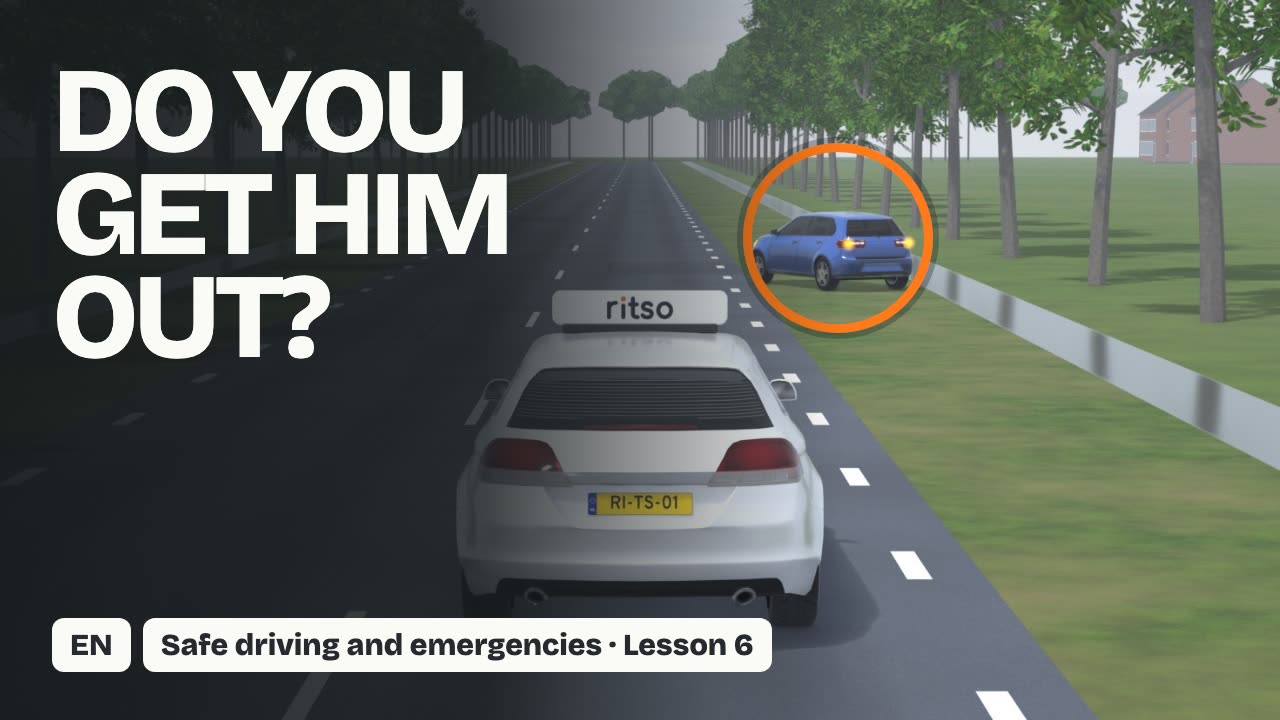
Video lesson · 4:17Sign up free to watch

The first lesson of every chapter is free to watch. The rest come with a free account.

In short

  • At an accident you first watch out for danger to yourself. For a seriously injured person you call 112.
  • You only move an injured person when they are in danger.
  • Before you open your door, you look in your mirror and over your shoulder.

If you come upon an accident, first watch out for danger to yourself. Park where you don't hinder anyone, let your hazard warning lights flash and look out for the traffic. Only then do you go to the injured person. If someone is seriously hurt, call 112.

Show Dutch
In Dutch, as on the examKom je bij een ongeval, let dan eerst op gevaar voor jezelf. Parkeer op een plek waar je niemand hindert, laat je waarschuwingslichten knipperen en kijk uit voor het verkeer. Pas daarna ga je naar de gewonde. Is iemand ernstig gewond, bel dan 112.
Trap · The exception

“I always get an injured person out of the car as quickly as possible.”

No. Moving them can make the injuries worse. You leave an injured person sitting or lying where they are, unless they are in danger there, as in a fire. Then you get them away if you can do so safely.

Show Dutch
In Dutch, as on the examNee. Verplaatsen kan het letsel erger maken. Je laat een gewonde zitten of liggen, tenzij hij daar in gevaar is, zoals bij brand. Dan haal je hem weg als dat voor jou veilig kan.

Until the ambulance arrives, you stay with the injured person. You reassure them and keep them warm with a coat or blanket.

Show Dutch
In Dutch, as on the examTot de ambulance er is, blijf je bij de gewonde. Je stelt hem gerust en houdt hem warm met een jas of deken.

Before you open your door, you look in your mirror and over your shoulder. A cyclist can crash into an open door, even one opened only a little.

WVW 1994 art. 5

Show Dutch
In Dutch, as on the examVoordat je je portier opent, kijk je in je spiegel en over je schouder. Een fietser kan tegen een open portier botsen, ook als het maar op een kier staat.

If you park on a downhill slope, put the parking brake on firmly and turn your front wheels towards the kerb. If the car starts to roll after all, the kerb stops it.

Show Dutch
In Dutch, as on the examParkeer je op een helling naar beneden, zet dan de parkeer-rem stevig aan en draai je voorwielen naar de stoep. Gaat de auto toch rollen, dan houdt de stoeprand hem tegen.

If you have broken down on the hard shoulder, get out on the right if you can and wait behind the crash barrier. Preferably wearing a safety vest. Staying in the car is dangerous. On any other road too you wait outside the car when you break down, in the verge or behind the crash barrier, not next to the car.

Show Dutch
In Dutch, as on the examSta je met pech op de vluchtstrook, stap dan als het kan rechts uit en wacht achter de vangrail. Het liefst met een veiligheidshesje aan. In de auto blijven zitten is gevaarlijk. Ook op een andere weg wacht je bij pech buiten de auto, in de berm of achter de vangrail, niet naast de auto.

If a collision causes only damage, move the cars to the side. There you exchange your details, for example with an accident report form. The police don't need to come.

WVW 1994 art. 5WVW 1994 art. 7 lid 1

Show Dutch
In Dutch, as on the examIs er na een aanrijding alleen schade, zet de auto's dan aan de kant. Daar wissel je je gegevens uit, bijvoorbeeld met een schadeformulier. De politie hoeft dan niet te komen.
Why?If you come up fast on the tail of a jam, briefly switch on your hazard warning lights. That way the traffic behind you sees in time that it has to brake.

Check yourself

Try one question from this section. Pick an answer to see if it's right.

You are driving on a provincial road. Just ahead of you a car has hit a tree. You stop to help. What do you do first?

Now practise it

Create a free account