Skip to content
Section 3 of 6

Horn, flashing your lights and indicating
Video lesson · 3:54Sign up free to watch

The first lesson of every chapter is free to watch. The rest come with a free account.

In short

  • You only use the horn and flash your lights to prevent danger.
  • You indicate when pulling away, overtaking, changing lanes and turning.
  • Even when you see nobody, you indicate.

You only sound your horn or flash your lights to prevent danger. If a child walks between parked cars towards the road without seeing you, you may. Slow down as well.

RVV 1990 art. 28

Show Dutch
In Dutch, as on the examJe claxonneert of knippert met je lichten alleen om gevaar te voorkomen. Loopt een kind tussen geparkeerde auto's door naar de weg zonder jou te zien, dan mag het. Rem dan ook af.
Trap · Who or where

“With a flash of my lights I let someone know they may go first.”

That is not allowed. A flash of your lights or the horn is only for danger. Thanking, greeting or letting someone go first is not a reason.

RVV 1990 art. 28

Show Dutch
In Dutch, as on the examDat mag niet. Een lichtsignaal of de claxon is alleen voor gevaar. Iemand bedanken, groeten of voor laten gaan is geen reden.

You indicate when you pull away, overtake, join or leave the carriageway, change lanes or turn. For other sideways movements too. Driving straight on or braking is not a sideways movement.

RVV 1990 art. 55RVV 1990 art. 17 lid 2

Show Dutch
In Dutch, as on the examJe geeft richting aan als je wegrijdt, inhaalt, de rijbaan op of af gaat, van rij-strook wisselt of afslaat. Ook bij andere bewegingen opzij. Rechtdoor rijden of remmen is geen beweging opzij.

On a roundabout you indicate right just before you leave it. When you drive onto it you don't indicate: indicating left makes others think you want to turn left.

RVV 1990 art. 55

Show Dutch
In Dutch, as on the examOp een rotonde geef je richting aan naar rechts, vlak voordat je eraf gaat. Bij het oprijden geef je geen richting aan: naar links aangeven laat anderen denken dat je linksaf wilt.
Trap · Who or where

“There is nobody behind or beside me, so I don't need to indicate.”

You always indicate. You can miss someone, such as a cyclist in your blind spot or a pedestrian about to cross.

RVV 1990 art. 55RVV 1990 art. 17 lid 2

Show Dutch
In Dutch, as on the examJe geeft altijd richting aan. Je kunt iemand over het hoofd zien, zoals een fietser in je dode hoek of een voetganger die wil oversteken.
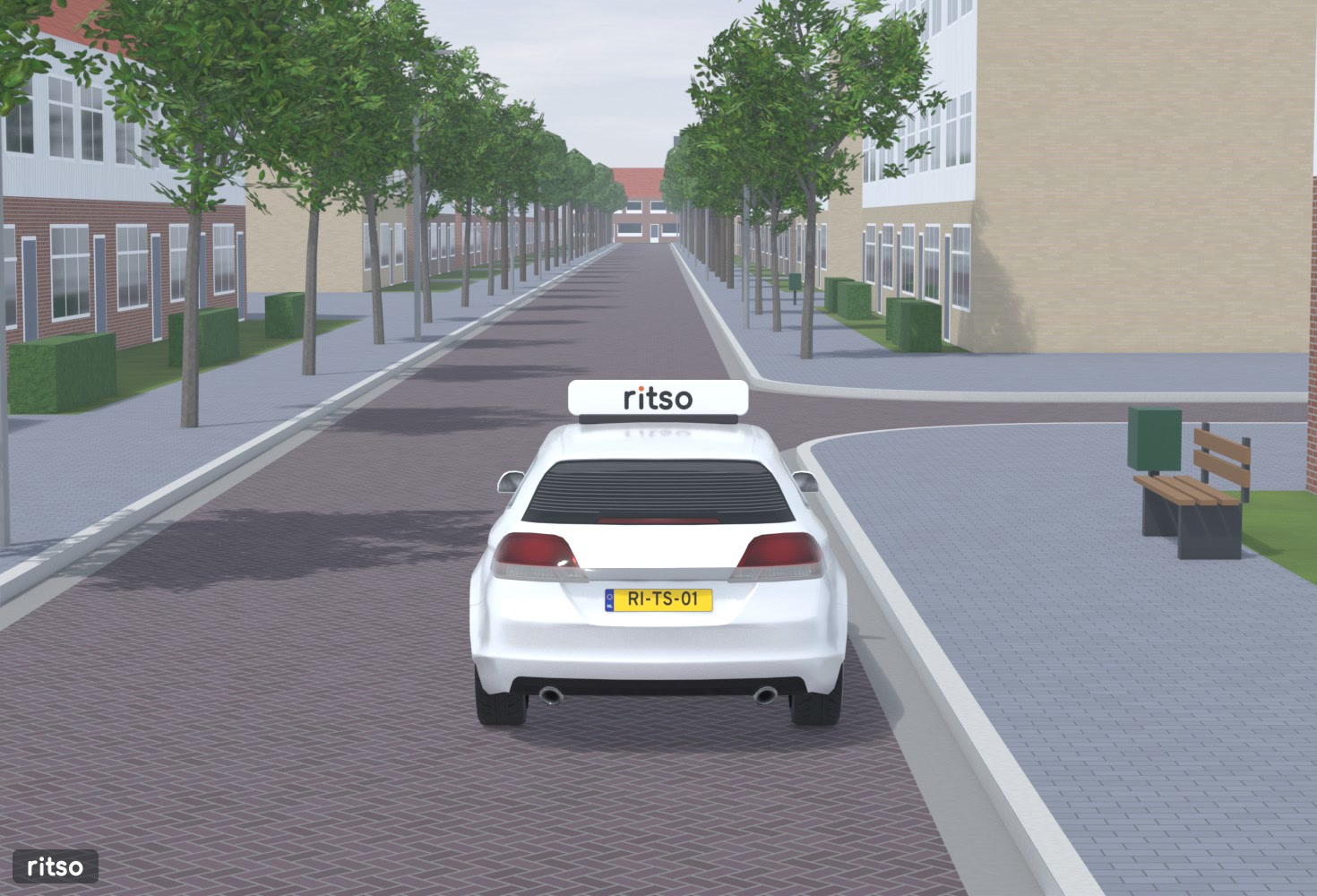
Ahead on the right is a side street. Nobody is behind or beside you.
You want to turn right here. You indicate, even though you see nobody.

Check yourself

Try one question from this section. Pick an answer to see if it's right.

The picture for the question

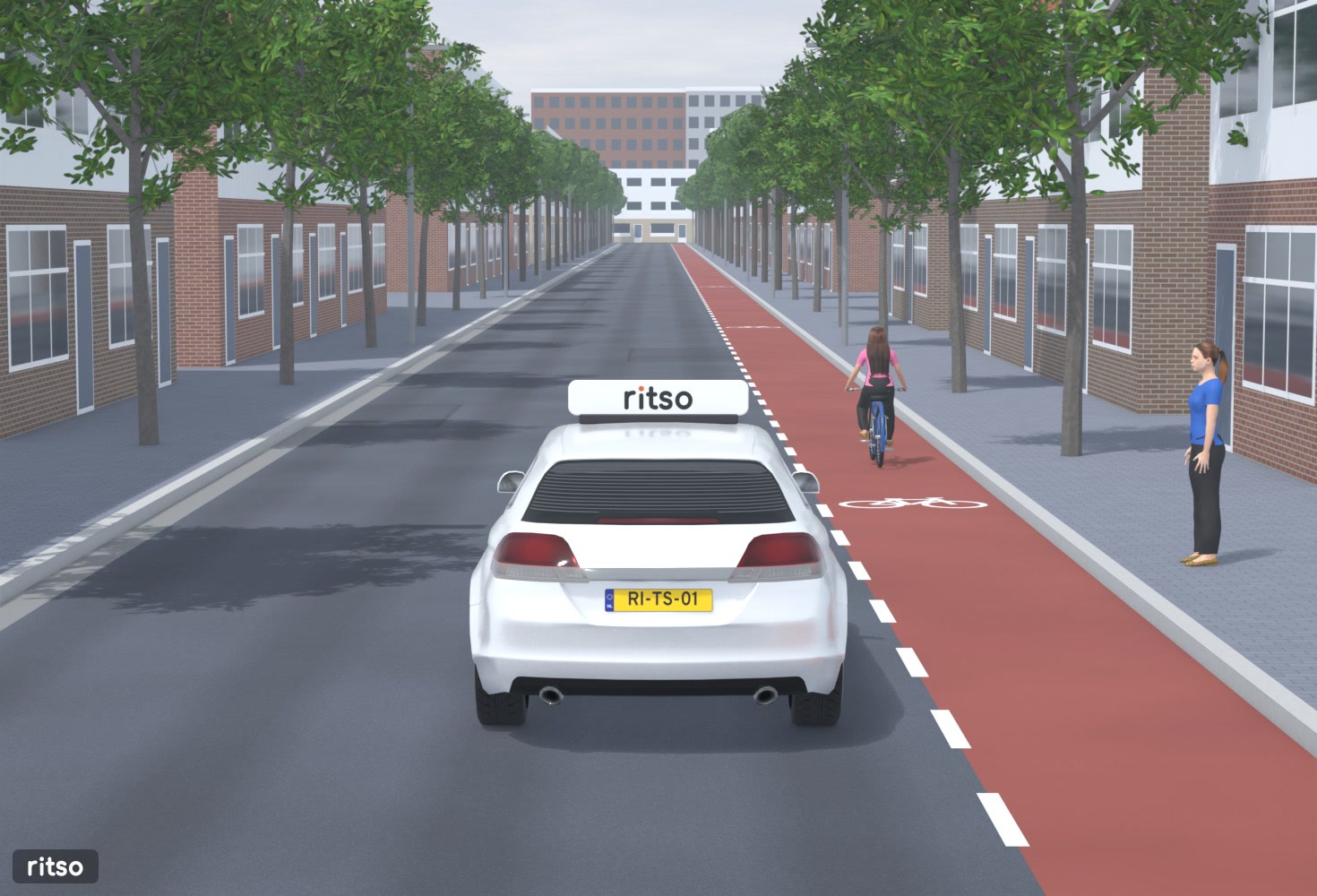
You are driving through a residential area. You see a friend on the pavement. May you sound your horn to greet her?

Now practise it

Create a free account