Phone, medicines, drugs and how you feel
The first lesson of every chapter is free to watch. The rest come with a free account.
In short
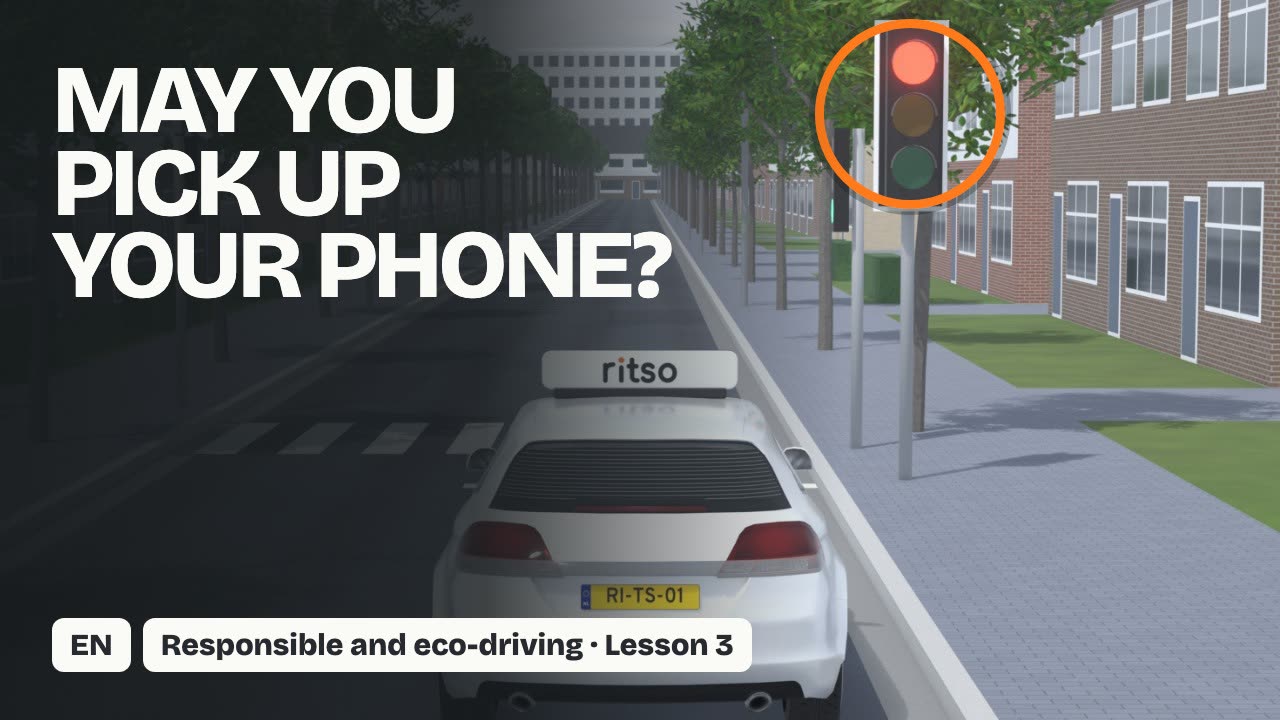
- While driving you don't hold your phone. When you are standing still, at a red light for example, you may.
- Medicines and drugs reduce your driving ability, even when you feel fine.
- If you are tired, angry, in a hurry or upset, don't drive, or drive calmly and stop somewhere safe.
While driving you don't hold your phone, not even to answer it. The same holds for a tablet or a media player.
Show DutchHide Dutch
“You may not hold your phone at a red light.”
The ban applies while driving. When you are standing still at a red light or in a queue, or you are parked, you may pick up your phone, even with your engine running. Put it away before you drive on: in a queue that creeps forward you are driving too.
Show DutchHide Dutch
“Calling while driving is always forbidden.”
The ban is about holding it. A phone in a fixed holder for navigation is allowed; do set the route before you drive off. If it lies on your lap and you call on the speaker without touching it, that is allowed too. It isn't safe: a conversation distracts you.
Show DutchHide Dutch
Whatever takes your attention off the road, you do while stopped. Entering a new address in your satnav or sorting out a fight on the back seat you do at a safe place, not while driving and not at a red light either.
Show DutchHide Dutch
A medicine can reduce your driving ability. If the box has a yellow sticker, read the leaflet and ask your doctor or pharmacist whether you may drive. Alcohol and medicines often strengthen each other: one glass can then have far more effect.
Show DutchHide Dutch
You don't drive on drugs. Cannabis makes you slower: you react later and judge distances less well, even if you feel calm. Cocaine or speed make you think you can handle anything, so you take more risks. Drugs together with alcohol or other drugs make it even worse.
WVW 1994 art. 8 lid 1WVW 1994 art. 8 lid 5
Show DutchHide Dutch
“Once I feel normal again, I may drive.”
The limit is about what the police measure in your blood, not about how you feel. Someone who uses cannabis often can still have too much in their blood the next morning.
Show DutchHide Dutch
Driving tired is dangerous: you react more slowly. If you keep yawning, stop somewhere safe and take a break or a short nap. An open window or loud music only help for a very short time.
Show DutchHide Dutch
Anger makes you less attentive and you take more risks. If someone drives close behind you flashing their lights, stay calm, drive on normally and let them past when it is safe.
Show DutchHide Dutch
If you are in a hurry or upset, you pay less attention and take more risks. Running late? Accept that you'll be late and drive calmly. Just had bad news? Wait until you are calm or let someone else drive. If your passengers push you, say you'll keep driving calmly: you are responsible.