Section 3 of 11
Commands and directions (D)
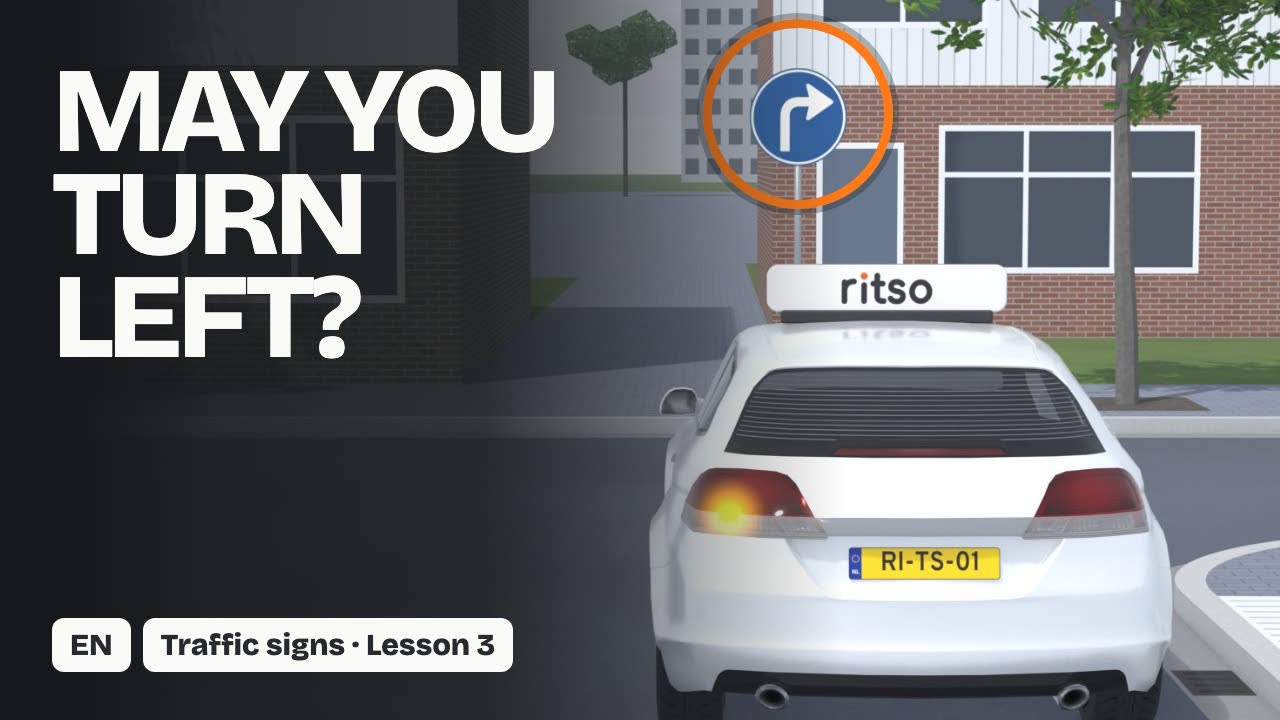
Video lesson · 4:13Sign up free to watch
The first lesson of every chapter is free to watch. The rest come with a free account.
In short
- A round blue sign says what you must do: the arrow gives the only ways you may go.
- A direction sign holds at the junction where it stands.
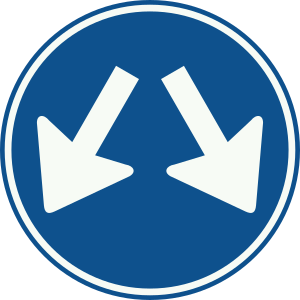
- D2: pass on the side of the arrow. D3: pass on either side.
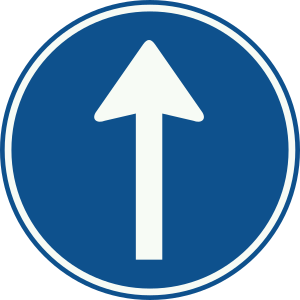
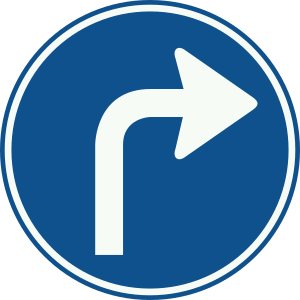
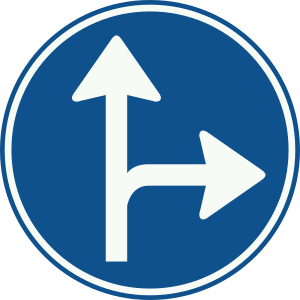
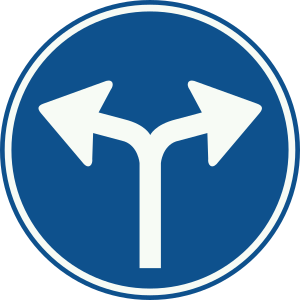
A round blue sign is a command: you must do what it says. The arrows are the only ways you may go at that junction. If you want to go another way, you find another route.
Show DutchHide Dutch
In Dutch, as on the examEen rond blauw bord is een gebod: je moet doen wat het zegt. De pijlen zijn de enige richtingen die je op dat kruispunt mag. Wil je een andere kant op, dan zoek je een andere route.
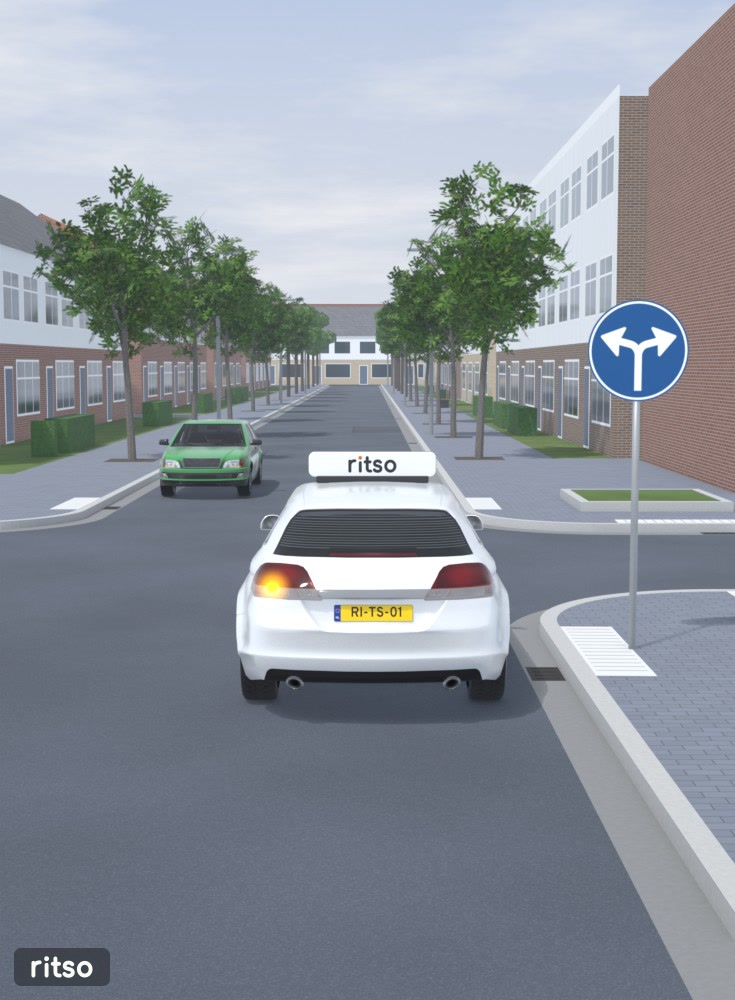 The rule applies
Sign D7. Turning left is allowed here.
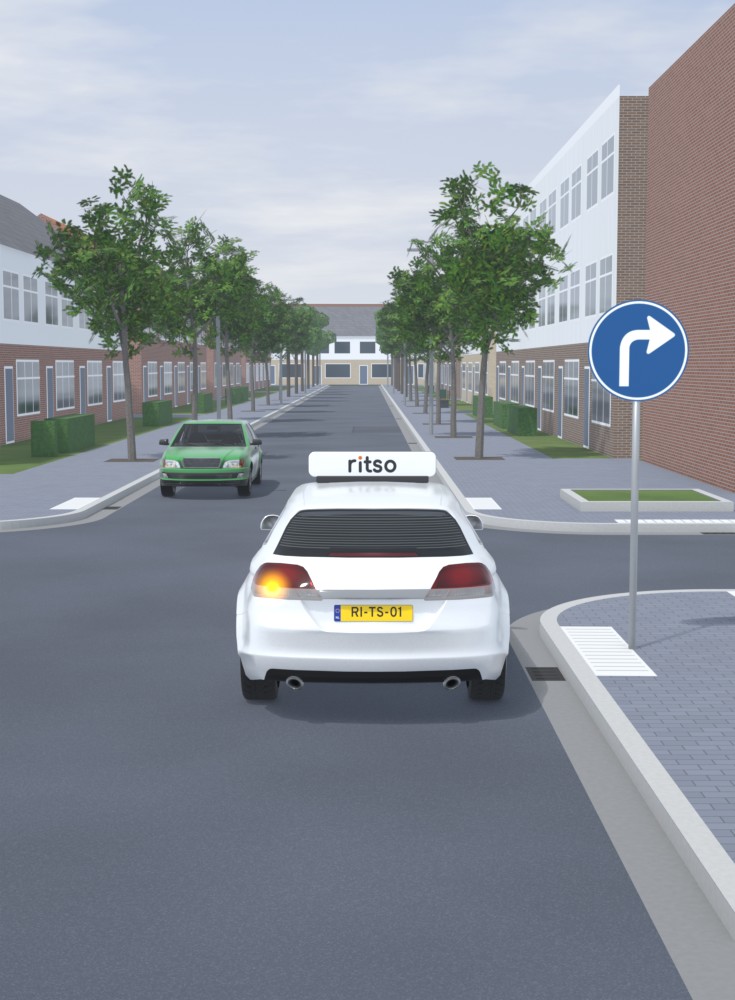 It doesn't
Sign D5. Right only: you may not turn left here.
Trap · Look-alikes
“Sign D5 with an arrow only means the road bends there.”
No, a round blue sign is a command. If D5 stands across a T-junction, you may only go the way of the arrow there. A sign warning of a bend is triangular, with a red border (J2, J3).
Show DutchHide Dutch
In Dutch, as on the examNee, een blauw rond bord is een gebod. Staat D5 aan de overkant van een T-splitsing, dan mag je daar alleen de kant van de pijl op. Een bord dat een bocht aankondigt is driehoekig, met een rode rand (J2, J3).
If there is no sign, you may go any way the road offers. A D6 for straight on and right lets you turn right, but not left.
Show DutchHide Dutch
In Dutch, as on the examStaat er geen bord, dan mag je elke richting op die de weg je geeft. Een D6 met rechtdoor en rechtsaf staat je rechtsaf toe, maar linksaf niet.
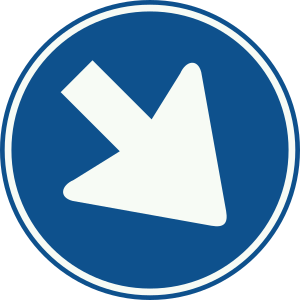
Why?Commands keep busy or blind junctions simple: fewer directions, fewer crashes.